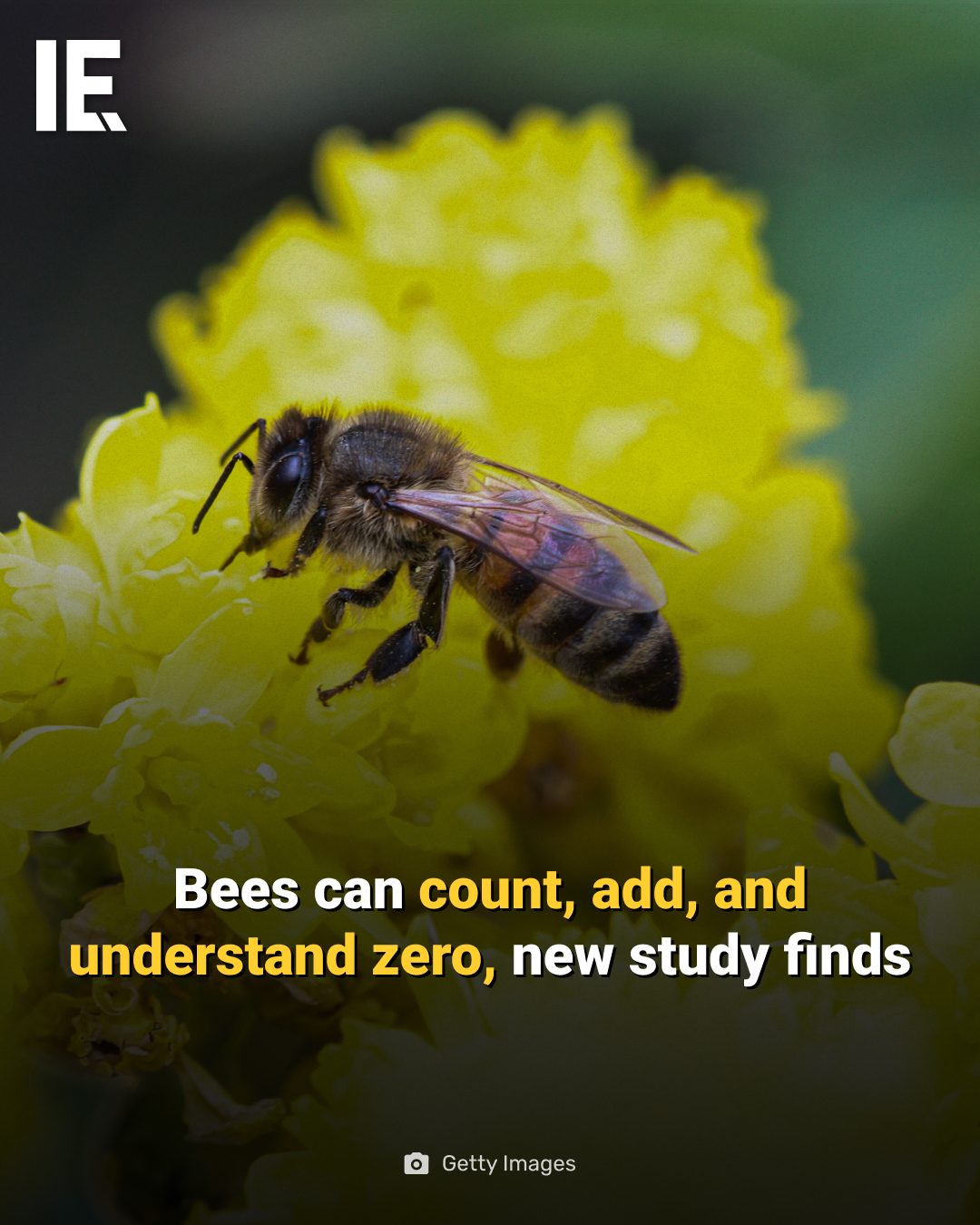
Bee Intelligence
Bees possess remarkable cognitive abilities, as highlighted by a recent study from the University of Trento. This study sheds light on bees' mathematical capabilities, challenging long-standing debates about their numerical understanding. For years, researchers debated whether bees were genuinely counting or merely reacting to visual patterns. The new study resolves this dispute with a simple yet profound insight: previous experiments were designed for human perception, not bee vision.
Context / Why this matters
Understanding bee intelligence has broader implications for fields like neuroscience and biology. Bees are not just simple insects; they exhibit complex cognitive abilities that can offer insights into the evolution of intelligence. Their numerical sensitivity and ability to perform tasks like addition and subtraction can help researchers understand how basic forms of intelligence develop and function.
Main discussion
Bees Counting
Bees are capable of counting, a finding that has significant implications for how we understand insect cognition. This ability isn't just a matter of visual pattern recognition; bees can genuinely distinguish between different quantities. This was confirmed by adjusting the stimuli to reflect how bees perceive the world, demonstrating their numerical sensitivity.
Addition and Subtraction Skills
One of the most astonishing findings is that bees can perform basic arithmetic. They can add and, to an extent, subtract. This adds to the complexity of bee cognition, showing that their intelligence goes beyond simple instincts and reflexes. Researchers used visual stimuli that reflected bee vision, further validating these findings, suggesting that bees can process numerical information in a way previously thought impossible for insects.
Understanding Zero
The concept of zero is a critical milestone in human mathematics, and bees have shown they can grasp this idea as well. By adjusting experiments to fit bee vision, researchers confirmed that bees can understand the absence of an object, which is a foundational concept in mathematics. This understanding of zero adds to the growing body of evidence that bees possess sophisticated cognitive abilities.
Practical tips
Observing Bees in Nature
Observing bees in their natural habitat can offer insights into their numerical abilities. Bees often need to count resources, such as nectar and pollen, and navigate in complex environments. Watching their foraging behaviors and how they interact with flowers can provide hints about their cognitive processes.
Setting Up Experiments
To better understand bee intelligence, experiments should be designed with bee vision in mind. This means using visual cues that bees can perceive and interpret accurately. Researchers have learned that creating stimuli that reflect how bees see the world can yield more reliable results and lead to a deeper understanding of their cognitive abilities.
Further Research
Research into bee intelligence is a rapidly evolving field. Engaging with the latest studies and publications can provide a deeper understanding of bees' capabilities and how they compare to other animals. Staying informed about new developments in this area can lead to breakthroughs in our understanding of insect cognition and intelligence.
Important takeaways
The study from the University of Trento highlights the need to approach animal cognition research with a deeper understanding of the animal's sensory and perceptual abilities. By adjusting experiments to fit how bees perceive the world, researchers have confirmed that bees possess numerical sensitivity and basic arithmetic skills. This insight not only challenges our understanding of bee intelligence but also opens new avenues for research into the cognitive abilities of insects.
Conclusion
The intelligence of bees, as revealed by the study from the University of Trento, underscores the complexity of insect cognition. Bees can count, add, and understand the concept of zero, demonstrating a level of numerical sensitivity that was previously underappreciated. This study highlights the importance of designing experiments with the animal's perception in mind, which can lead to a more accurate understanding of their cognitive abilities.
Watch the Reel
Questions readers ask
How do bees exhibit mathematical abilities?
Bees can count, perform simple addition, and subtraction. This is shown through experiments where bees react differently to various numbers of dots or shapes.
Why is the new study from the University of Trento significant to bee research?
The study addresses longstanding debates by showing that bees truly understand numbers, not just respond to visual patterns. This was achieved by designing experiments that align with bee vision, rather than human perception.
What does the ability to count and perform simple arithmetic say about insect intelligence?
Bee mathematical abilities challenge assumptions about insect cognition by demonstrating complex cognitive abilities. This suggests that intelligence in the animal kingdom is more widespread and complex than previously thought.
Why is the understanding of bee intelligence important to fields like neuroscience and biology?
Studying bee intelligence provides insights into the evolution of intelligence. By examining how complex cognitive abilities emerged in insects, researchers can gain a deeper understanding of the mechanisms behind intelligence.
What is the significance of bees' understanding of zero in the context of their mathematical abilities?
The fact that bees understand the concept of zero supports the idea that they genuinely grasp numerical concepts, as zero is an abstract idea rather than a physical quantity. This further solidifies the argument that bees possess true numerical understanding.
How have previous bee research studies approached the topic of bee counting skills?
Previous studies often used visual patterns designed for human perception, which led to debates about whether bees were truly counting or simply reacting to visual cues. The new study from the University of Trento addresses this by creating experiments tailored to bee vision.
Related deep dives
Similar reads based on topic and creator.




Recent articles
Fresh deep dives from the latest Reels we unpacked.




Comments
Be the first to comment.