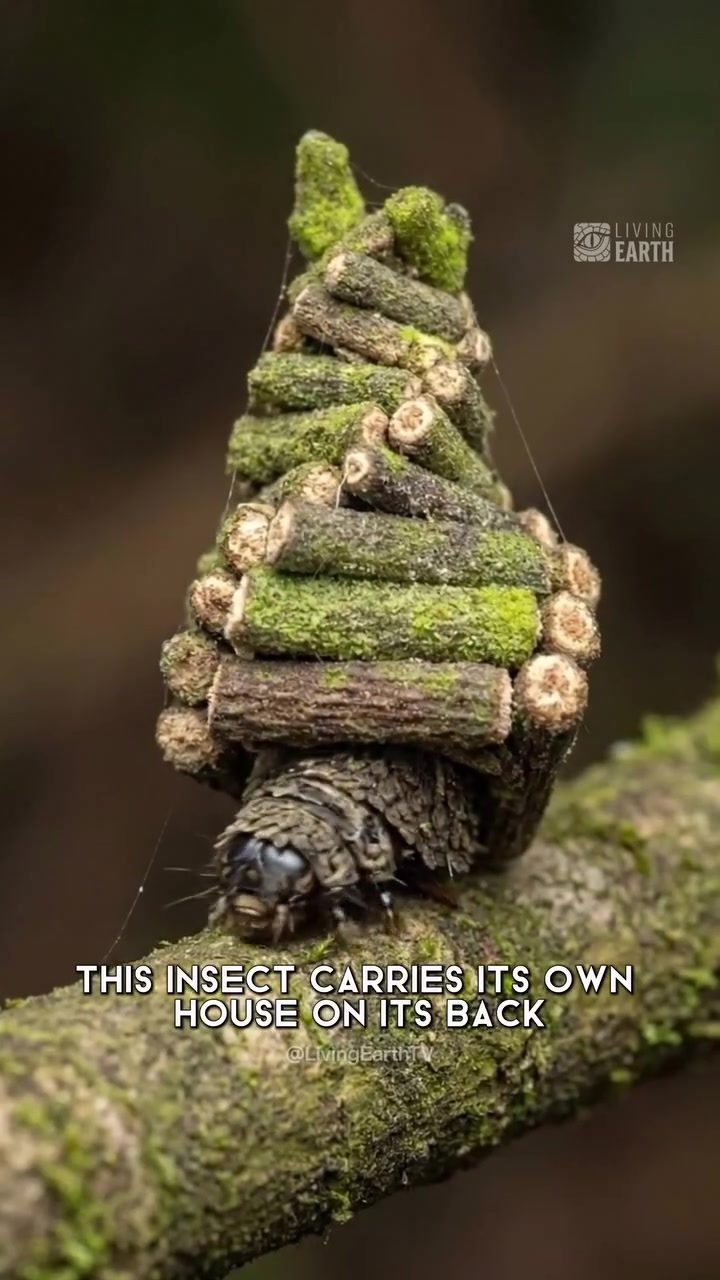
Living Earth's Insect with a Tiny Home: The Bagworm
The bagworm is a remarkable insect known for its unique survival strategy: creating and carrying its own portable shelter. This tiny caterpillar, found in forests around the globe, constructs a protective case from silk, leaves, bark, and twigs. This case, carried on its back, serves as a mobile home and a vital defense mechanism.
Why This Matters
The bagworm's behavior offers a fascinating glimpse into the ingenuity of nature. Unlike many insects that rely on speed or camouflage to avoid predators, the bagworm takes a different approach. Its soft, slow-moving body makes it an easy target, so it builds a portable shelter to protect itself. This adaptation is not just a curiosity; it highlights the diverse survival strategies found in the natural world.
The Bagworm's Portable Home
Construction and Materials
The bagworm constructs its house using materials readily available in its forest environment. It begins by spinning silk from its own body, a substance that serves as both a structural element and an adhesive. The caterpillar then collects small pieces of leaves, bark, and twigs, weaving them together with its silk to create a sturdy, camouflaged case.
Active construction of the shelter continues as the caterpillar grows, necessitating a larger home. By adding more pieces to the structure, the caterpillar ensures that it remains snug and secure. The case not only provides physical protection but also helps regulate the caterpillar's temperature and humidity, making it a vital component of its survival.
Daily Life Inside the Case
The bagworm’s daily activities are largely conducted within the confines of its portable shelter. Only the caterpillar's head protrudes from the case, allowing it to feed on nearby leaves and other vegetation. The rest of its body remains safely hidden inside, shielded from predators and environmental hazards. When danger approaches, the bagworm simply retreats further into its case, blending seamlessly with the surrounding foliage.
Life Cycle and Reproduction
The bagworm's life cycle is as intriguing as its shelter-building behavior. As the caterpillar grows, it continues to modify and expand its case. When it reaches maturity, the female bagworm undergoes a remarkable transformation. She never leaves the case she built as a caterpillar. Instead, she mates from inside it, lays her eggs there, and eventually dies without ever seeing the outside world again. The eggs remain protected within the shelter, ensuring the next generation's survival.
Practical Tips for Observing Bagworms
Observing bagworms in their natural habitat can be a rewarding experience. Here are some tips to help you spot these elusive creatures:
-
Look for Trees with Twig-like Structures: Bagworms often attach their cases to trees, blending in with the natural foliage. Look for small, twig-like structures hanging from branches.
-
Search in Forests: Bagworms are commonly found in wooded areas. Venturing into forests increases your chances of spotting them.
-
Be Patient: Bagworms are slow-moving and often well-camouflaged. Patience and keen observation are key to spotting them.
-
Use Binoculars: Binoculars can help you get a closer look at these tiny creatures without disturbing them.
Important Takeaways
The bagworm's unique behavior offers several insights into the natural world:
-
Adaptation and Survival: The bagworm's portable shelter is a testament to the diverse and innovative ways in which animals adapt to their environments. This strategy allows the bagworm to thrive despite its slow speed and soft body.
-
Resourcefulness: The bagworm's use of readily available materials to build its shelter showcases nature's resourcefulness. It highlights how animals can utilize their surroundings to enhance their survival.
-
Life Cycle Dynamics: The bagworm's life cycle, particularly the female's behavior, provides a unique perspective on reproductive strategies and the importance of protection for offspring.
Conclusion
The bagworm's ability to build and carry its own portable home is a fascinating example of nature's ingenuity. This tiny caterpillar, often overlooked, exhibits remarkable adaptations that ensure its survival. From constructing its shelter to its unique reproductive behavior, the bagworm offers a glimpse into the complexities and wonders of the natural world. By understanding and appreciating these creatures, we gain a deeper respect for the diverse and intricate web of life on Earth.
Watch the Reel
Questions readers ask
What materials does a bagworm use to build its portable shelter?
Bagworms primarily use silk, along with materials from their forest environment, such as leaves, bark, and twigs. They carefully select and attach these materials to their silk case, creating a camouflaged and protective home.
How does the bagworm's house adapt as the caterpillar grows?
As the bagworm caterpillar grows, it continues to add materials to its case, expanding the size of its portable shelter. This ensures that the caterpillar remains protected and has enough space to move around within its case.
Why is the bagworm's portable shelter important for its survival?
The bagworm's portable shelter serves as a critical defense mechanism. It protects the caterpillar from predators and shields it from harsh environmental conditions, allowing it to move safely through its habitat without the need for speed or camouflage.
How does a bagworm attach materials to its silk case?
Bagworms use their strong, sticky silk threads to attach various materials to their case. They carefully weave and manipulate these threads, ensuring that the materials are securely fastened and that the case remains well-structured and functional.
What happens to the bagworm's case when it transforms into a moth?
When a bagworm is ready to transform into a moth, it anchors its case to a suitable location, such as a tree or branch. The caterpillar then pupates inside the case, emerging as an adult moth after a period of transformation. The adult moth does not use the case and typically has a very short lifespan.
Where can bagworms be found, and what role do they play in their ecosystem?
Bagworms are found in forests around the world, particularly in coniferous and deciduous woodlands. They play a role in their ecosystem by contributing to nutrient cycling, as their cases eventually decompose and release nutrients into the soil. Additionally, they serve as a food source for some animals in their habitat.
How does the bagworm caterpillar carry its house?
The bagworm caterpillar carries its house by attaching it securely to its back. This shelter is constructed from silk and materials from the environment. It is portable yet sturdy enough to provide protection, allowing the caterpillar to move around while remaining concealed and safe from predators.
Related deep dives
Similar reads based on topic and creator.




Recent articles
Fresh deep dives from the latest Reels we unpacked.




Comments
Be the first to comment.