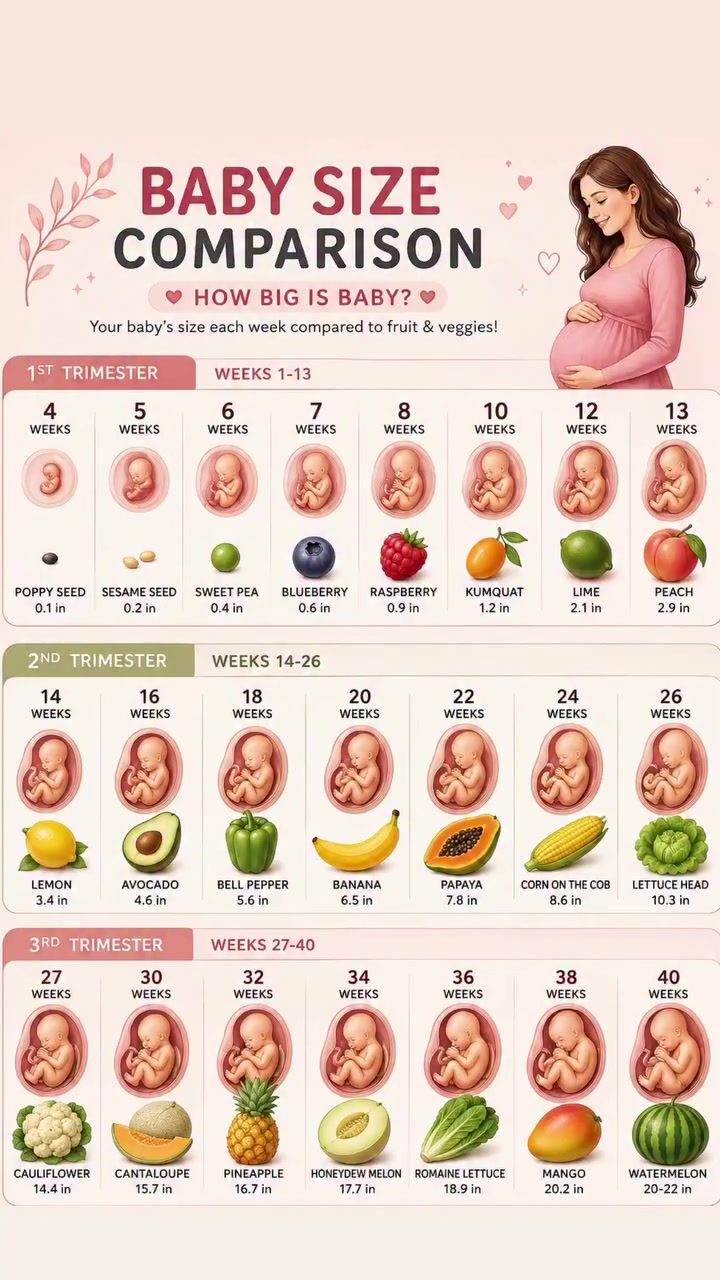
Baby Size Comparison to Fruits and Vegetables
Pregnancy is an incredible journey filled with countless milestones, and one of the most fascinating aspects is watching your baby grow. Comparing your baby's size to familiar fruits and vegetables is a delightful way to visualize this growth. This guide will walk you through the exciting journey of fetal development, week by week, using common produce as a fun and relatable reference point.
Why This Matters
Understanding your baby's growth is not just about tracking size; it's about appreciating the miraculous process of development. Each week brings new advancements, and using familiar fruits and vegetables helps to put these changes into perspective. This method can make the entire experience more engaging and memorable.
Main Discussion
First Trimester: Weeks 1-13
The first trimester is a period of rapid growth and significant developmental milestones. During this time, your baby transitions from a cluster of cells to a recognizable form.
Weeks 4-8: Tiny but Mighty
- Week 4: At just 0.04 inches (1 mm), your baby is about the size of a poppy seed. This is an early stage where the embryo is developing rapidly, but it's still tiny and delicate.
- Week 5: By now, your baby is about the size of a sesame seed, measuring 0.08 inches (2 mm). The embryo's heart begins to beat, and the neural tube, which will eventually form the brain, spinal cord, and neural tissue, starts to develop.
- Week 6: At 0.12 inches (3 mm), your baby is the size of a sweet pea. The embryo's tail is now visible, and the head makes up nearly half of the embryo's length.
- Week 7: Your baby is now 0.24 inches (6 mm) and about the size of a blueberry. The arm and leg buds start to grow, and the embryo begins to curl into a C-shape.
- Week 8: At 0.31 inches (8 mm), your baby is comparable to a raspberry. The embryo's head is still large in proportion to the body, and the tail starts to disappear.
Weeks 9-13: Rapid Growth
- Week 9: Your baby is now about 0.59 inches (15 mm) and the size of a kumquat. The tail disappears completely, and the embryo starts to look more like a baby.
- Week 10: At 1.22 inches (31 mm), your baby is the size of a lime. The head is still large, but the body is catching up. The baby's intestines, which had been growing inside the umbilical cord, move into the abdomen.
- Week 12: Your baby is now 1.97 inches (50 mm) and about the size of a plum. The baby's body is becoming more proportional, and the organs are developing rapidly.
- Week 13: At 2.91 inches (74 mm), your baby is the size of a peach. The baby's body starts to straighten out, and the head makes up about one-third of the baby's length.
Second Trimester: Weeks 14-26
The second trimester is often considered the most enjoyable part of pregnancy, as many morning sickness symptoms subside, and the baby's movements become more noticeable. During this period, your baby grows significantly in size and development.
Weeks 14-18: Major Developments
- Week 14: Your baby is 3.42 inches (87 mm) and the size of a lemon. The baby's body is becoming more proportional, and the head makes up about one-third of the baby's length.
- Week 16: At 4.13 inches (105 mm) your baby is the size of an avocado. The baby's skin is almost transparent, and the baby has fine hair called lanugo covering the body. The head is still large, but the body is catching up.
- Week 18: Your baby is 5.59 inches (142 mm) and about the size of a bell pepper. The baby's body is becoming more proportional, and the head makes up about one-third of the baby's length.
Weeks 19-26: Growing Stronger
- Week 20: At 6.42 inches (163 mm) your baby is the size of a banana. The baby's skin is still thin, and the baby's senses are developing. The baby can hear sounds from the outside world and may even react to loud noises.
- Week 22: Your baby is 10.94 inches (278 mm) and the size of a papaya. The baby's skin is still thin, and the baby's senses are developing. The baby can hear sounds from the outside world and may even react to loud noises.
- Week 24: At 11.81 inches (300 mm) your baby is the size of a corn on the cob. The baby's skin is still thin, and the baby's senses are developing. The baby can hear sounds from the outside world and may even react to loud noises.
- Week 26: Your baby is 13.98 inches (355 mm) and the size of a lettuce head. The baby's skin is still thin, and the baby's senses are developing. The baby can hear sounds from the outside world and may even react to loud noises.
Third Trimester: Weeks 27-40
The third trimester is a time of rapid growth and preparation for birth. Your baby will gain significant weight and prepare for life outside the womb.
- Week 27: Your baby is 14.8 inches (376 mm) and the size of a cauliflower. The baby's skin is still thin, and the baby's senses are developing. The baby can hear sounds from the outside world and may even react to loud noises.
- Week 30: At 15.75 inches (400 mm) your baby is the size of a cantaloupe. The baby's skin is still thin, and the baby's senses are developing. The baby can hear sounds from the outside world and may even react to loud noises.
- Week 32: Your baby is 16.69 inches (424 mm) and about the size of a pineapple. The baby's skin is still thin, and the baby's senses are developing. The baby can hear sounds from the outside world and may even react to loud noises.
- Week 34: At 17.76 inches (451 mm) your baby is the size of a honeydew melon. The baby's skin is still thin, and the baby's senses are developing. The baby can hear sounds from the outside world and may even react to loud noises.
- Week 36: Your baby is 18.46 inches (470 mm) and the size of a romaine lettuce. The baby's skin is still thin, and the baby's senses are developing. The baby can hear sounds from the outside world and may even react to loud noises.
- Week 38: At 19.61 inches (498 mm) your baby is the size of a mango. The baby's skin is still thin, and the baby's senses are developing. The baby can hear sounds from the outside world and may even react to loud noises.
- Week 40: Your baby is 19.96 inches (507 mm) and the size of a watermelon. The baby is now considered full-term, and the organs are fully developed. The baby is preparing for birth and will soon enter the world.
Practical Tips
- Track Your Baby's Growth: Use this guide as a reference to track your baby's growth week by week. It can be a fun and engaging way to stay connected with your baby's development.
- Celebrate Each Milestone: Remember that every baby develops at their own pace, and it's important to celebrate each milestone, no matter how small.
- Stay Informed: Pregnancy is a journey filled with new experiences and information. Stay informed about your baby's development and any changes that may occur.
Important Takeaways
- Weekly Comparisons: Using fruits and vegetables to compare your baby's size is a fun and relatable way to visualize growth.
- Developmental Milestones: Each trimester brings significant developmental milestones, from the formation of vital organs to the baby's first movements.
- Celebrate the Journey: Pregnancy is a unique and exciting journey. Celebrate each kick, heartbeat, and milestone along the way. Keep in mind, while the comparisons are fun, babies can and will vary in size.
Conclusion
Watching your baby grow from a tiny cluster of cells to a full-term infant is an awe-inspiring experience. Using familiar fruits and vegetables as a reference point makes this journey even more engaging and memorable. Remember to celebrate each milestone and appreciate the incredible process of fetal development. Pregnancy is a unique and exciting journey, and tracking your baby's growth week by week can make it even more special.
Watch the Reel
Questions readers ask
How does comparing baby size to fruits and vegetables help expectant parents?
This method provides a tangible way for parents to visualize their baby’s growth, making abstract measurements more relatable and easier to understand. It also adds an engaging element to tracking pregnancy milestones, making the experience more enjoyable and memorable.
What are the key benefits of tracking baby growth by week?
Tracking baby growth week by week helps expectant parents stay informed about their baby's development and appreciate the significant progress made each week. It also allows parents to celebrate various pregnancy milestones and feel more connected to their baby's journey.
Which common fruits and vegetables are used to compare baby sizes during the first trimester?
During the first trimester, baby sizes are often compared to small fruits and vegetables like a poppy seed, a grain of rice, a raspberry, and a plum. These comparisons help illustrate the rapid early growth of the fetus, which can be otherwise hard to imagine.
How does baby size change during the second trimester?
In the second trimester, baby sizes are compared to larger fruits and vegetables, such as a lime, a peach, and a pomegranate. By the end of this trimester, the baby will be around the size of a small melon, marking significant growth and development.
What can expectant parents expect in terms of baby size during the third trimester?
During the third trimester, the baby’s size is compared to even larger fruits and vegetables, such as a head of cauliflower, a pineapple, and a small watermelon. This final stage of pregnancy is marked by rapid weight gain and the final preparations for birth.
Why is it important for expectant parents to visualize baby development?
Visualizing baby development helps expectant parents better understand the remarkable changes happening to their baby each week. It also makes the pregnancy journey more exciting and personal, fostering a stronger bond between parents and their developing baby.
What are some notable pregnancy milestones highlighted by baby size comparisons
Some notable milestones highlighted by baby size comparisons include the formation of essential organs and systems, such as the heart and the brain, during the first trimester. In the second trimester, the baby develops sensory functions, including sight, hearing, and taste, while the third trimester focuses on preparing for birth, such as the development of the lungs and the baby’s descent into the pelvis.
Related deep dives
Similar reads based on topic and creator.




Recent articles
Fresh deep dives from the latest Reels we unpacked.




Comments
Be the first to comment.