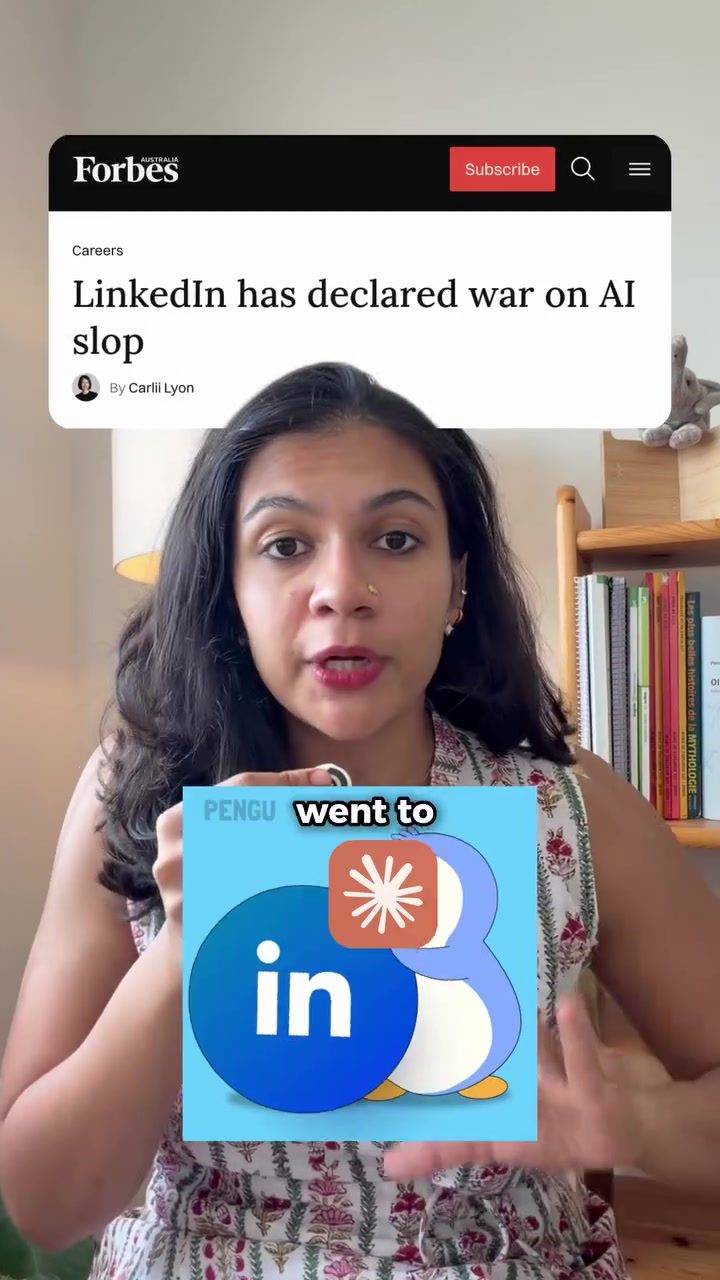
How to Make AI Writing Sound More Human on LinkedIn
AI-generated content is becoming increasingly common on LinkedIn, with 41% of all long posts on the platform already written by AI. LinkedIn has recently started penalizing posts that sound too much like AI, which can significantly impact reach and engagement. As an AI marketing consultant, I've compiled a list of the top signs that your writing might sound too AI-like, along with practical tips to avoid these pitfalls.
Why This Matters
LinkedIn's new detection systems flag generic content 94% of the time, making it crucial to ensure your posts don't sound robotic. This doesn't just apply to AI-generated content; even human-written posts can be affected if they match certain patterns. Understanding these patterns can help you create more engaging and effective content that resonates with your audience.
Top Signs Your Writing Sounds Like AI
1. Overuse of "M-,"
This is a classic giveaway. Phrases that start with "M-" are often generated by AI and can make your content sound generic. Avoid starting sentences with words like "Moreover," "Meanwhile," or "Mind you."
2. Hooks That Start with "Most"
Sentences that begin with "Most" can be a dead giveaway. AI often uses these hooks to start paragraphs, making the content sound formulaic. Vary your sentence structures to keep your writing fresh and engaging.
3. Phrases Like "Here's the Thing"
Phrases like "Here's the thing," "Let that sink in," and "No, I will not be letting that sink in" are overused by AI. They can make your writing sound repetitive and insincere. Opt for more natural and varied language.
4. Times and Have You Really?
These phrases are commonly used by AI to create a sense of urgency or to ask a rhetorical question. They can make your content sound robotic. Focus on creating clear and direct statements instead.
5. The False Negative: Contrast of Construction
LinkedIn has named this pattern as one of the key indicators of AI-generated content. Phrases like "It's not about working harder, it's about working smarter" are often used by AI to create a sense of clarity. Avoid these overused constructs and opt for more original and nuanced language.
6. The Anaphora
Anaphora is the repetition of a word or phrase at the beginning of successive clauses. While it can be a powerful rhetorical device, overusing it can make your writing sound formulaic. Mix up your sentence structures to keep your content engaging.
7. The Stackator
This term refers to stacking redundant sentences together. AI often uses this technique to create a sense of comprehensiveness, but it can make your writing feel monotonous. Break up your content with varied sentence structures and engaging transitions.
8. Reversal Framing
Phrases like "Most brands are drowning in data but starving for clarity" are often used by AI to create a sense of contrast. While these can be effective, overusing them can make your writing sound generic. Use more original and nuanced language to create a unique voice.
9. Rhetorical Questions
Rhetorical questions like "I don't want to see anyone say the reality ever again" are commonly used by AI to create a sense of intrigue. They can make your writing feel insincere. Focus on creating clear and direct statements instead.
Practical Tips to Make Your Writing Sound More Human
1. Vary Your Sentence Structures
Avoid overusing the same sentence structures. Mix up your sentences by starting them with different words and phrases. This will make your writing feel more natural and engaging.
2. Use Transitional Phrases Sparingly
Transitional phrases like "Moreover," "Meanwhile," and "In addition" can be useful, but overusing them can make your writing sound formulaic. Use them sparingly and opt for more natural language.
3. Create a Unique Voice
Develop a unique voice that reflects your personality and brand. This will help you stand out from the crowd and create more engaging content.
4. Edit and Refine
Edit your content to ensure it flows smoothly and is free of unnecessary repetition. This will help your writing sound more natural and engaging.
5. Avoid Overused Phrases
Avoid overused phrases and clichés. They can make your writing sound generic and insincere. Opt for more original and nuanced language.
Important Takeaways
LinkedIn’s crackdown on AI-generated content means that even human-written posts can be penalized if they sound too generic. By avoiding common AI patterns and focusing on creating unique, engaging content, you can improve your reach and engagement. Remember to vary your sentence structures, use transitional phrases sparingly, and create a unique voice that reflects your personality and brand. Editing and refining your content will also help ensure it sounds more human and less robotic.
Conclusion
Making your AI writing sound more human on LinkedIn is essential for maintaining reach and engagement. By understanding the common patterns that LinkedIn flags and taking steps to avoid them, you can create more effective and engaging content. Whether you're a founder, creator, or marketer, these tips will help you produce content that resonates with your audience and stands out in a crowded digital landscape.
Watch the Reel
Questions readers ask
How does LinkedIn detect AI-generated content in posts?
LinkedIn uses advanced algorithms to identify patterns commonly found in AI-generated text, such as repetitive phrasing, lack of personal anecdotes, and overuse of generic hooks. The platform's detection systems flag generic content 94% of the time, so even human-written posts that resemble these patterns can be penalized.
What are some common signs of AI-written text on LinkedIn?
AI-written posts often rely heavily on overused phrases, lack a personal voice and personalized examples. They may also use generic hooks, have formulaic introductions and conclusions, and contain repetitive word choices.
Why is it important to avoid sounding robotic on LinkedIn posts?
Posts that sound too robotic or AI-generated can be penalized by LinkedIn, leading to reduced reach and lower engagement. This can negatively impact the visibility and interaction with your content.
What are some tips to make LinkedIn posts sound more human?
To humanize your LinkedIn posts, incorporate personal stories and anecdotes, use varied sentence structures, and avoid repetitive phrases. Also, steer clear of generic hooks and ensure your content is tailored to your audience.
How can I improve the effectiveness of my LinkedIn posts to avoid penalties?
Improving the effectiveness of your LinkedIn posts involves creating content that is unique, engaging, and personalized. Avoid using overly formulaic language and strive for a conversational tone. Sharing your personal experiences and insights can help make your posts more relatable.
What impact can AI-generated content have on my LinkedIn engagement?
AI-generated content can significantly reduce your LinkedIn engagement if it is detected by LinkedIn's algorithms. This results in lower visibility and reach, making it harder for your content to connect with your audience.
Recent articles
Fresh deep dives from the latest Reels we unpacked.




Comments
Be the first to comment.