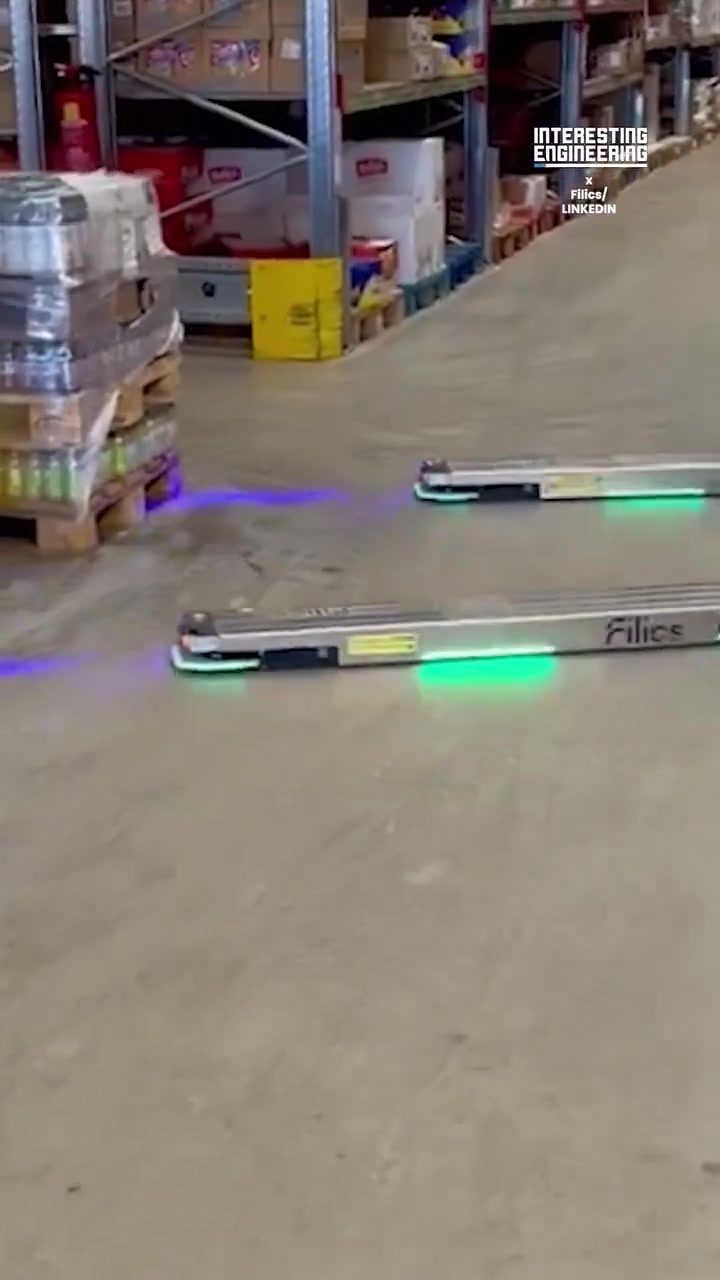
Automated Warehouse Logistics with Autonomous Mobile Robots (AMRs)
Autonomous mobile robots (AMRs) are revolutionizing warehouse logistics by offering a flexible, forklift-free solution for modern warehouses. These robots, often referred to as Philix units, are designed to slide under pallets, lift up to one ton, move omnidirectionally, and safely transport goods. This transformation is not just about efficiency; it's about creating a safer, more adaptable work environment.
Context / Why This Matters
In today's fast-paced logistics industry, the demand for efficient and safe material handling is higher than ever. Traditional forklifts, while reliable, come with their own set of challenges. They require skilled operators, take up significant space, and can pose safety risks in crowded warehouse environments. AMRs address these issues by providing a compact, autonomous solution that can navigate complex layouts and work collaboratively with human workers.
Main Discussion
What are Autonomous Mobile Robots (AMRs)?
AMRs are a type of industrial automation technology designed to handle material transport in warehouses. Unlike traditional automated guided vehicles (AGVs), which follow fixed paths, AMRs use advanced navigation systems to move autonomously around the warehouse. They can detect and avoid obstacles, making them suitable for dynamic environments where the layout may change frequently.
How Do AMRs Operate in Warehouses?
AMRs operate by using a combination of sensors, cameras, and laser guidance systems to navigate their environment. They can move omnidirectionally, which means they can change direction quickly and efficiently without the need for a fixed path. This capability is particularly useful in warehouses where space is at a premium and where the layout may need to be adjusted frequently.
Benefits of Using AMRs
Increased Efficiency
One of the primary benefits of using AMRs in warehouses is the increase in operational efficiency. These robots can work continuously without the need for breaks, unlike human workers. They can also be programmed to optimize their routes, reducing the time it takes to transport goods from one location to another.
Enhanced Safety
AMRs contribute to a safer work environment by reducing the risk of accidents. Traditional forklifts can be dangerous if not operated correctly, but AMRs are designed to avoid collisions and can detect obstacles in their path. This makes them a safer option for warehouses where human workers are present.
Flexibility and Adaptability
AMRs offer a high degree of flexibility and adaptability. They can be programmed to handle a variety of tasks, from moving pallets of goods to transporting individual items. This versatility makes them suitable for a wide range of warehouse operations, including those involving mixed human-robot environments.
Space Optimization
Another advantage of AMRs is their compact size, which allows for better space optimization in warehouses. Unlike forklifts, which require significant maneuvering room, AMRs can navigate tight spaces and work efficiently in crowded environments.
Key Points of AMRs
AMRs provide a comprehensive solution for modern warehouse logistics by automating material handling. They can handle various types of goods, such as pallets of bottles, and navigate autonomously, avoiding obstacles. Their ability to lift up to one ton and move omnidirectionally makes them a versatile tool for mixed human-robot environments.
Practical Tips
Implementation of AMRs in Warehouses
When implementing AMRs in a warehouse, it is essential to consider the specific needs and layout of the facility. Conducting a thorough assessment of the warehouse environment and identifying areas where AMRs can provide the most benefit can help maximize their effectiveness. For optimal results, ensure the warehouse is equipped with the necessary infrastructure, such as charging stations and safety barriers.
Training and Integration
Introducing AMRs into an existing workforce requires careful planning and training. Employees need to be familiar with how the robots operate and how to interact with them safely. Training programs should cover the technical aspects of AMRs as well as best practices for human-robot interaction. This ensures a smooth transition and minimizes disruption to daily operations.
Maintenance and Optimization
Regular maintenance and optimization are crucial for keeping AMRs running efficiently. This includes routine checks on the robots' sensors, software updates, and ensuring that the warehouse environment is conducive to their operation. By maintaining the robots and optimizing their routes, warehouses can continue to benefit from increased efficiency and safety.
Important Takeaways
Innovation in Logistics
The use of AMRs in warehouses represents a significant innovation in logistics, offering a flexible, forklift-free solution for modern warehouses. These robots not only improve efficiency but also enhance safety and adaptability in warehouse environments. As the demand for efficient material handling continues to grow, AMRs are set to play an increasingly important role in the logistics industry.
Future of Warehouse Automation
The future of warehouse automation is likely to see even more advancements in AMR technology. As robots become more sophisticated, they will be able to handle a wider range of tasks and operate in increasingly complex environments. This evolution will continue to drive improvements in efficiency, safety, and flexibility in warehouses worldwide.
Conclusion
Autonomous mobile robots (AMRs) are transforming warehouse logistics by providing a flexible, forklift-free solution. These robots offer numerous benefits, including increased efficiency, enhanced safety, and better space optimization. By understanding how AMRs operate and implementing them effectively, warehouses can achieve significant improvements in their operations. As the technology continues to evolve, AMRs will play a crucial role in shaping the future of warehouse automation.
Watch the Reel
Questions readers ask
How do autonomous mobile robots (AMRs) improve warehouse safety?
AMRs enhance warehouse safety by reducing the need for human-operated forklifts, which can pose risks in crowded environments. These robots are designed to navigate complex layouts and avoid obstacles, minimizing accidents and creating a safer work environment for human workers.
What are the benefits of using AMRs for pallet transport?
AMRs offer a more efficient and flexible solution for pallet transport. They can lift and move up to one ton, navigate in all directions, and slide under pallets, making them ideal for handling various pallet sizes and weights, and increasing overall productivity in warehouses.
How do AMRs collaborate with human workers in a warehouse setting?
AMRs are designed to work alongside human workers, complementing their efforts to enhance productivity. They can handle repetitive tasks, freeing up human workers for more complex activities. Additionally, AMRs can operate continuously, ensuring that tasks are completed consistently and efficiently.
What advantages do AMRs have over traditional forklifts in warehouse logistics?
Unlike traditional forklifts, AMRs do not require skilled operators, take up less space, and can navigate complex environments more efficiently. They also reduce the risk of accidents and can be reprogrammed to adapt to changes in warehouse layout, making them a more versatile solution for modern logistics.
How do AMRs navigate through complicated warehouse layouts?
AMRs use advanced sensors and mapping technology to navigate through complex warehouse layouts. They can detect and avoid obstacles in real-time, ensuring smooth and efficient movement through the warehouse, and optimizing routes for task completion.
What is the role of AMRs in forklift replacement in warehouses?
AMRs serve as an effective forklift replacement by providing a flexible and efficient solution for material handling. They can perform the same tasks as forklifts but with added benefits such as reduced space requirements, improved safety, and the ability to integrate with other automated systems in the warehouse.
How does the integration of AMRs affect warehouse productivity?
By automating repetitive tasks and optimizing routes, AMRs significantly enhance warehouse productivity. They ensure consistent and efficient task completion, reduce downtime, and allow human workers to focus on more complex activities, ultimately streamlining overall warehouse operations.
Related deep dives
Similar reads based on topic and creator.


Recent articles
Fresh deep dives from the latest Reels we unpacked.




Comments
Be the first to comment.