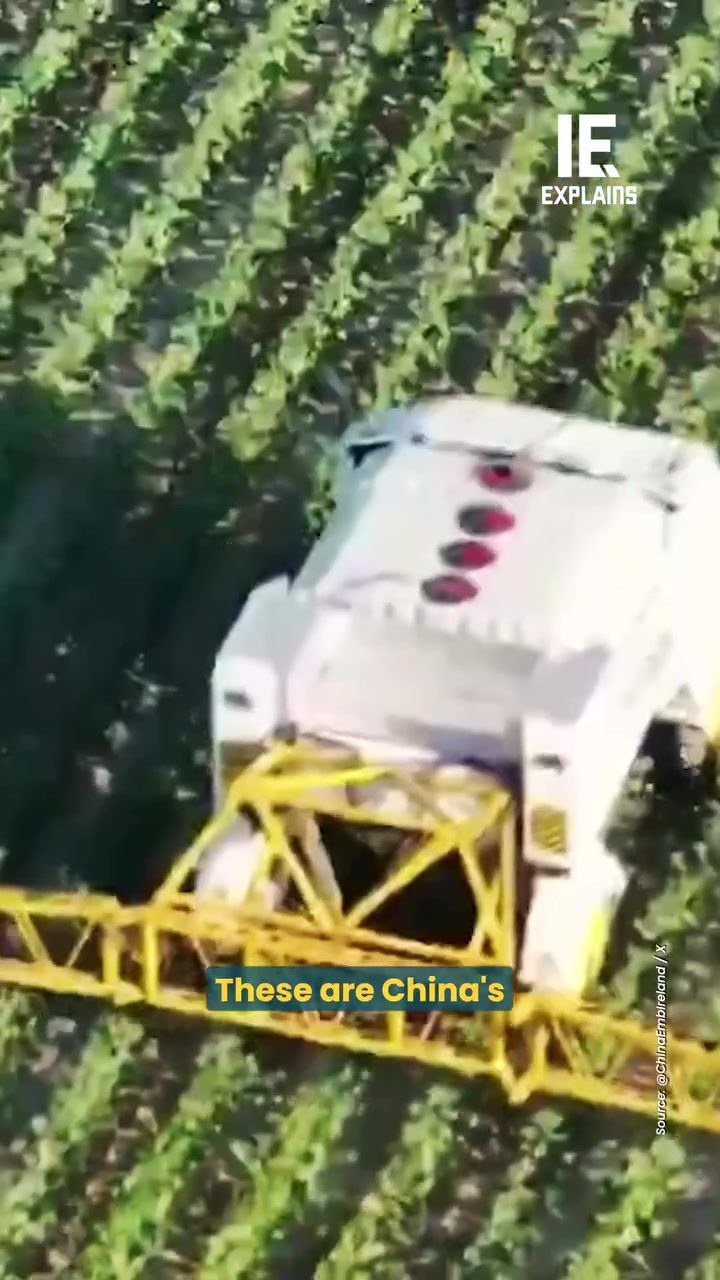
Automated Harvesting
In the sprawling cotton fields of China's Xinjiang region, a technological revolution is underway. Intelligent agricultural robots equipped with cameras, sensors, and autonomous driving technology are transforming the way cotton is cultivated. These machines are not only managing vast expanses of farmland but also collecting real-time crop data, calculating precise pesticide and fertilizer doses, and spraying autonomously. This shift towards automation is particularly evident in Xinjiang, which produces about 90% of China's entire cotton crop.
Context / Why this Matters
The integration of advanced agricultural technology in Xinjiang is a game-changer for the global cotton industry. By automating critical tasks such as spraying, weeding, and topping, these robots significantly enhance efficiency and productivity. This technological leap is not just about increasing yield; it also addresses labor shortages and reduces the environmental impact of traditional farming methods. As the demand for cotton continues to grow, the role of automated harvesting in meeting this demand becomes increasingly crucial.
Main Discussion
The Role of Intelligent Robots
In Xinjiang, intelligent robots are at the forefront of this agricultural revolution. These robots are equipped with advanced sensors and cameras that allow them to navigate the fields autonomously. They collect real-time crop data, which helps in determining the exact amount of pesticide or fertilizer each patch needs. This precision not only saves resources but also minimizes environmental pollution.
One of the key advantages of these robots is their speed. A single robot can cover more than 6.7 hectares per hour. Moreover, one technician can operate up to five of these robots at once, further amplifying their efficiency. This means that a significant portion of the cotton fields can be managed with minimal human intervention, freeing up labor for other tasks.
Laser-Topping Robots
In addition to the autonomous spraying and weeding robots, laser-topping robots have also been developed. These robots use lidar, machine vision, and high-powered blue lasers to vaporize each plant's terminal bud. This process, known as topping, is crucial for controlling the plant's growth and ensuring a uniform harvest. The laser-topping robots developed by Xinjiang University and EAVision detect buds with 98.9% accuracy and work about 10 times faster than manual labor. This technological advancement is a testament to the precision and efficiency of modern agricultural machinery.
The Future of Farming
With over 90% of Xinjiang's cotton already machine-picked, the last manual jobs in the field are disappearing. This shift towards full automation is not just about replacing human labor; it's about enhancing the overall efficiency and sustainability of cotton farming. The future of farming in Xinjiang, and potentially beyond, is starting to look fully unmanned. This trend is likely to accelerate as technology continues to evolve, making agriculture more efficient, sustainable, and profitable.
Practical Tips
For farmers looking to integrate automated technology into their operations, several key considerations can help ensure a smooth transition.
Assess Your Needs
Before investing in automated harvesting equipment, it's essential to assess your specific needs. Consider the size of your farm, the type of crops you grow, and the labor challenges you face. This assessment will help you determine which automated technologies are most relevant to your operation.
Invest in Training
Automated technology requires a different skill set compared to traditional farming methods. Investing in training for your staff can help ensure they are well-equipped to operate and maintain these advanced machines. Regular training sessions and workshops can keep your team up-to-date with the latest technological advancements.
Start Small
If you're new to automated farming, it might be beneficial to start with a small-scale implementation. This approach allows you to gain experience and understand the technology's benefits and challenges before scaling up. Starting small can also help you identify any potential issues and address them before they become significant problems.
Collaborate with Experts
Working with experts in the field of agricultural technology can provide valuable insights and support. These experts can offer guidance on the best practices for integrating automated technology, as well as help you navigate any regulatory or compliance issues. Collaborating with experts can also help you stay informed about the latest technological advancements and industry trends.
Important Takeaways
The shift towards automated harvesting in Xinjiang is a clear indication of the future of agriculture. By leveraging advanced technologies, farms can achieve higher productivity, reduce labor costs, and minimize environmental impact. However, this transition requires careful planning, investment, and a willingness to adapt to new technologies.
Conclusion
The integration of automated harvesting technology in Xinjiang's cotton fields is a significant milestone in the evolution of agriculture. As the demand for cotton continues to grow, the role of these advanced technologies becomes increasingly important. By embracing automation, farmers can achieve higher productivity, reduce labor costs, and contribute to a more sustainable future for agriculture. The future of farming is here, and it's fully unmanned.
Watch the Reel
Questions readers ask
What types of tasks do agricultural robots perform in Xinjiang's cotton fields?
Agricultural robots in Xinjiang's cotton fields perform a variety of tasks, including navigating vast farmlands, collecting real-time crop data, calculating precise doses of pesticides and fertilizers, and applying them autonomously. They also assist in weeding and topping processes, significantly enhancing overall farm management efficiency.
How does automation in Xinjiang's cotton farms benefit the local environment?
Automation reduces the environmental impact by enabling precise application of pesticides and fertilizers, minimizing waste and runoff. The use of robots also decreases the need for manual labor, which can reduce soil compaction and erosion, further promoting sustainable farming practices.
Why is Xinjiang a critical region for China's cotton production?
Xinjiang is crucial for China's cotton production because it accounts for approximately 90% of the country's total cotton crop. The region's climate and soil conditions are particularly suited for cotton cultivation, making it a central hub for the industry.
What technologies are used in the agricultural robots operating in Xinjiang?
These agricultural robots are equipped with advanced technologies such as cameras, sensors, and autonomous driving capabilities. These tools allow the robots to navigate fields independently, collect and analyze crop data, and perform tasks like spraying pesticides and fertilizers with precision.
How do agricultural robots address labor shortages in Xinjiang's cotton fields?
Autonomous robots help mitigate labor shortages by taking on critical tasks such as spraying, weeding, and topping, which traditionally require significant human effort. This not only ensures that these tasks are completed efficiently but also allows human workers to focus on other aspects of farm management.
What benefits do agricultural robots bring to the global cotton industry through their use in Xinjiang?
The use of agricultural robots in Xinjiang sets a new standard for efficiency and precision in cotton farming. This technological advancement can lead to higher yields, improved crop quality, and reduced environmental impact, benefiting the global cotton industry by potentially influencing practices worldwide.
How does the integration of advanced agricultural technology affect the future of cotton farming in China?
The adoption of advanced agricultural technology in Xinjiang signifies a significant shift towards smart farming in China. This trend is likely to continue, driving further innovation and increasing the integration of intelligent machines in cotton farming, ultimately transforming the industry's landscape.
Related deep dives
Similar reads based on topic and creator.


Recent articles
Fresh deep dives from the latest Reels we unpacked.




Comments
Be the first to comment.