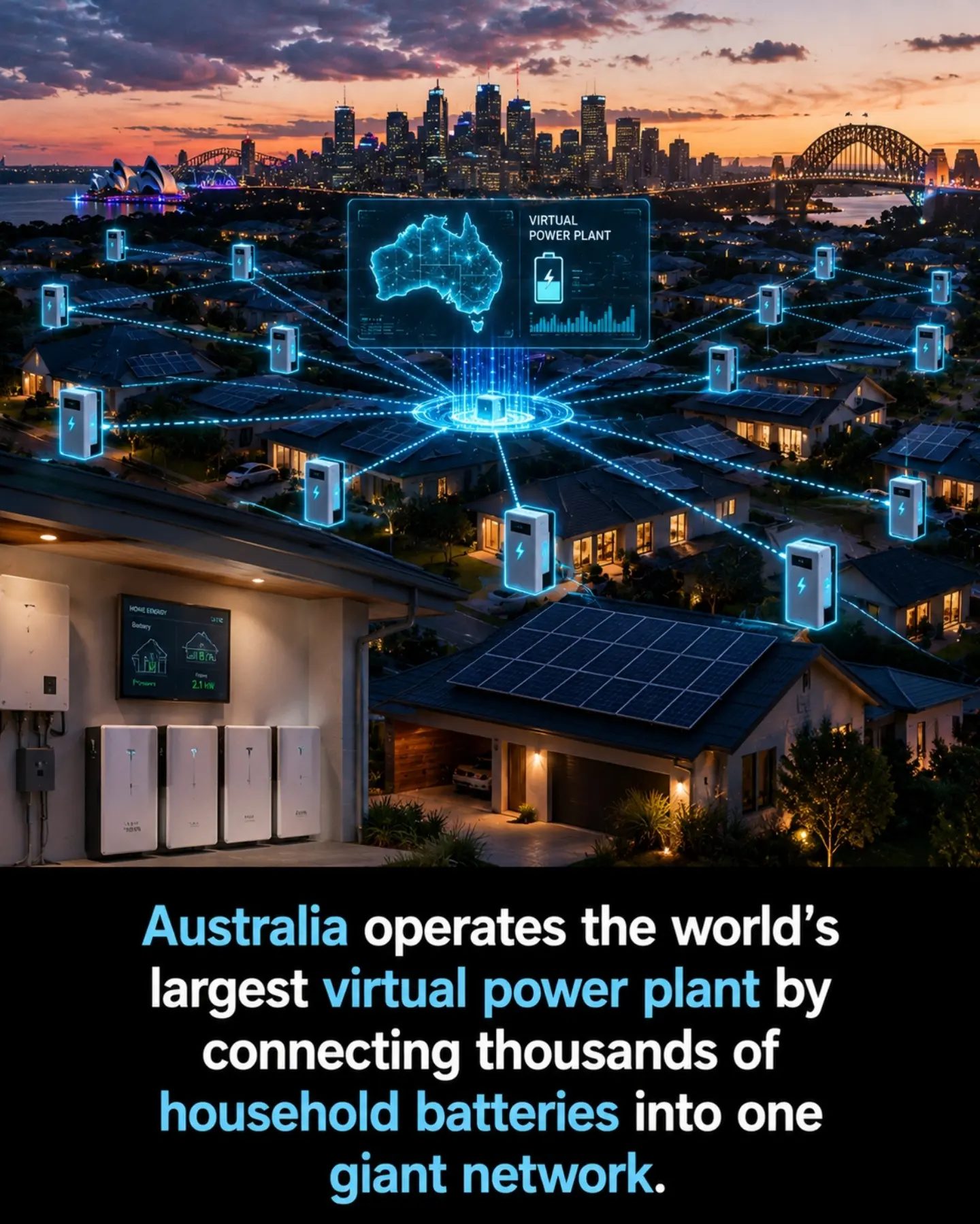
Virtual Power Plant: A Revolution in Renewable Energy
Australia is at the forefront of a significant advancement in renewable energy with the world's largest virtual power plant. This innovative system connects thousands of household batteries into a single, vast network, transforming how energy is distributed and stored.
Context/Why This Matters
The shift towards renewable energy sources is crucial for sustainability and reducing carbon footprints. Traditional power plants rely on fossil fuels, which are finite and environmentally detrimental. In contrast, virtual power plants harness energy from renewable sources like solar and wind, storing it in household batteries. This approach not only reduces dependence on fossil fuels but also ensures a more resilient and distributed energy grid.
The Virtual Power Plant: How It Works
The Network of Household Batteries
At the core of a virtual power plant is a network of interconnected household batteries. Each home equipped with solar panels and battery storage systems contributes to the larger grid. These batteries store excess energy generated during peak production times, such as sunny days for solar panels, and release it back into the grid when demand is high or production is low. This symbiotic relationship ensures a steady supply of energy, reducing the strain on traditional power plants.
The Role of Solar Panel Systems
Solar panel systems are integral to the virtual power plant. They convert sunlight into electricity, which is then stored in household batteries. The stored energy can be used for personal consumption or fed back into the grid. This dual functionality makes solar panel systems a cornerstone of the virtual power plant, enabling households to become mini power stations.
Energy Distribution and Management
The virtual power plant creates a giant network for energy distribution. Advanced software and algorithms manage the flow of energy, ensuring that it is distributed efficiently and effectively. This includes monitoring energy production, consumption, and storage levels in real-time. The system can also predict energy demand patterns, allowing for optimal management of resources. This dynamic management helps in balancing supply and demand, reducing the risk of blackouts and ensuring a reliable power supply.
Practical Tips for Households
Maximizing Solar Panel Efficiency
To get the most out of a solar panel system, ensure that panels are installed in a location with maximum sunlight exposure. Regular maintenance, such as cleaning the panels and checking for any damage, can also enhance efficiency. Additionally, consider using energy-efficient appliances and optimizing your energy consumption patterns to make the most of the stored energy.
Optimizing Battery Storage
Choose a battery storage system that suits your household's energy needs. Consider factors such as capacity, efficiency, and longevity. Integrate the battery system with your home’s energy management system to ensure that energy is stored and used optimally.
Participating in the Virtual Power Plant
If you’re considering participating in a virtual power plant, look for programs or initiatives in your area. These programs often provide incentives for installing solar panels and battery storage systems. Be sure to understand the terms and benefits of the program before committing.
Important Takeaways
Sustainability
Participating in a virtual power plant is a significant step towards sustainable living. By relying on renewable energy sources and minimizing dependence on fossil fuels, households can contribute to a greener future.
Energy Independence
Virtual power plants offer households a degree of energy independence. By generating and storing their own energy, households can reduce their reliance on the traditional power grid and protect themselves from power outages and price fluctuations.
Economic Benefits
In addition to environmental benefits, participating in a virtual power plant can offer economic advantages. Many programs provide financial incentives for installing solar panels and battery storage systems. Moreover, households can save on electricity bills by using their stored energy and potentially earn revenue by selling excess energy back to the grid.
Conclusion
The virtual power plant represents a groundbreaking approach to renewable energy, combining the power of solar panel systems with advanced energy management technologies. By connecting thousands of household batteries, this system creates a resilient and efficient energy grid. For households, this means a more sustainable, independent, and economically beneficial way to manage energy needs. Embracing this technology is not just about staying ahead of the curve but also about contributing to a more sustainable future.
Watch the Reel
Questions readers ask
What is Australia's virtual power plant and how does it work?
Australia's virtual power plant is a network that connects thousands of household batteries. These batteries store and distribute energy generated from solar and wind sources. By integrating renewable energy into a single, vast network, the system optimizes energy distribution, reduces strain on the grid, and minimizes reliance on fossil fuels.
How does the virtual power plant enhance grid resilience?
The virtual power plant enhances grid resilience by providing a distributed energy source. This means that energy is not solely reliant on a few large power plants. Instead, it comes from thousands of households, making the system more robust against localized failures or disruptions.
What are the benefits of household battery storage in this system?
Household battery storage allows for efficient energy management. Homeowners can store excess solar or wind energy during the day and use it during peak hours or periods of low generation. This not only reduces energy bills but also lessens the demand on the main grid during high usage times.
How does Australia's virtual power plant contribute to sustainability?
By harnessing solar and wind energy, the virtual power plant reduces the need for fossil fuels. This shift helps decrease Australia's carbon footprint and promotes a more sustainable energy landscape. Additionally, it helps in maintaining a consistent supply of clean energy, even when traditional power sources face disruptions.
Can individuals benefit from participating in the virtual power plant?
Yes, individuals can benefit significantly. By installing a household battery, homeowners can store their own renewable energy, reducing their electricity costs. Furthermore, they may earn additional revenue by contributing their stored energy to the grid when demand is high, making it a financially rewarding endeavor.
What role do solar and wind energy play in this virtual power plant?
Solar and wind energy are the primary sources for the virtual power plant. These renewable sources generate electricity that is stored in household batteries. This stored energy can then be used during periods of low generation or high demand, ensuring a consistent and renewable supply of energy.
What are the future prospects for Australia's virtual power plant initiative?
The future looks promising, with plans to expand the network and integrate more households. As technology advances and more people adopt renewable energy sources, the virtual power plant is expected to grow, potentially becoming a global model for sustainable energy distribution and storage.
Related deep dives
Similar reads based on topic and creator.




Recent articles
Fresh deep dives from the latest Reels we unpacked.




Comments
Be the first to comment.