Pencil Sculptures
Pencil sculptures blend the tactile nature of colored pencils with the three-dimensional form of sculpture. The result is a unique medium that balances precision and creativity. At first glance, such sculptures might seem simple, but the intricacy and detail involved in creating them are astounding.
Context / Why this matters
Sculpture has long been a medium for artists to express their creativity and vision. Sculptures created from non-traditional materials have gained popularity in recent years, elevating materials like colored pencils to new artistic heights. By using this medium, artists can create highly intricate and detailed pieces that challenge conventional notions of art and sculpture.
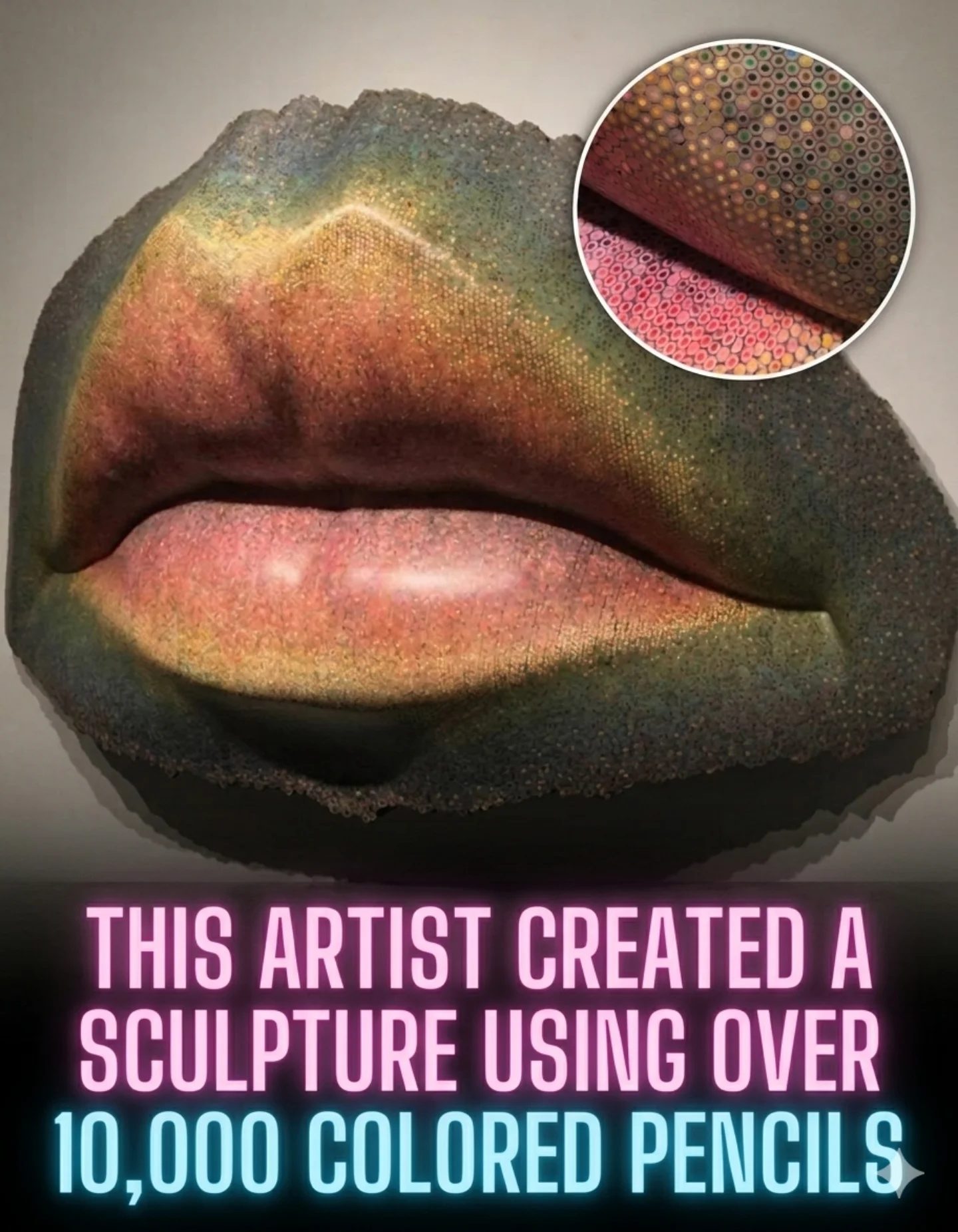
In this case, the sculpture showcases a large-scale representation of human lips, crafted meticulously from over 10,000 colored pencils. The circular inset shows a close-up view of the sculpture, emphasizing the incredible detail and dense packing of the pencils. The text overlay reveals that the sculpture was created using over 10,000 colored pencils, highlighting the scale and unique medium of the masterpiece.
There's something captivating in the contrast between a delicate medium like colored pencils and a robust, three-dimensional form. This contrast allows artists to create intricate textures and details that might be impossible with other materials. Pencil sculptures offer a unique way to merge precision and creativity, making them a fascinating subject for art enthusiasts.
Main discussion
The Artistic Process
Creating a pencil sculpture involves several steps, from conceptualization to the final piece. Artists begin with a vision or inspiration, often drawing sketches to plan the final sculpture. Materials like colored pencils and a base or armature to support the sculpture are then selected. Artists meticulously arrange the pencils, layering and interlocking them to form the desired shape. This process demands patience, precision, and a keen eye for detail.
Materials and Tools
The primary material used in pencil sculptures is colored pencils. Artists choose pencils in a variety of shades to create different hues and shadows in their work. The base or armature, which supports the sculpture, can be made from materials like wire, foam, or wood, depending on the artist's preference and the complexity of the design.
For intricate details, artists might use tools like tweezers to place individual pencils precisely. Some artists also use adhesives or other fasteners to secure the pencils in place, ensuring the sculpture's stability. The process of arranging and securing the pencils can be time-consuming, but it allows for a high level of detail and texture in the final piece.
The Texture and Detail
The texture of a pencil sculpture is one of its most distinctive features. The individual circular ends of the pencils create a mosaic-like effect, blending various hues to form the shape and shadows of the sculpture. The dense packing of the pencils adds depth and dimension, making the sculpture visually compelling. This unique texture is a hallmark of pencil sculptures, setting them apart from traditional clay or metal sculptures.
The Design
The design of a pencil sculpture can vary greatly depending on the artist's vision. Some artists create abstract designs, while others focus on more realistic forms. In this case, the artist chose to create a large-scale sculpture of human lips. This design choice allows the artist to showcase the versatility of colored pencils as a sculptural medium, as well as their ability to convey texture and form.
Creating a large-scale sculpture of human lips presents several challenges. The artist must carefully plan the arrangement of the pencils to ensure that the lips' shape and form are accurately represented. The use of a circular inset to provide a close-up view of the detail highlights the intricate nature of the work and the sheer number of pencils used in its creation.
Practical Tips
Choosing the Right Pencils
Selecting the right pencils is essential for creating a successful pencil sculpture. Artists typically choose pencils in a variety of shades to create different hues and shadows in their work. For a more vibrant and detailed sculpture, opt for high-quality colored pencils. The tips of the pencils should be sharp, making it easier to create intricate details and textures.
Planning and Sketching
Before beginning the sculpting process, it's crucial to have a clear vision of the final piece. Sketching out the design can help artists plan the arrangement of the pencils and ensure that the sculpture's form and texture are accurately represented. Spend time refining the sketch, considering how the pencils will be arranged to create the desired effect.
Creating the Base
A sturdy base or armature is essential for supporting the sculpture. The base can be made from materials like wire, foam, or wood, depending on the artist's preference and the complexity of the design. Ensure that the base is stable and can support the weight of the pencils. The base should also be secure, allowing the artist to work on the sculpture without worrying about it toppling over.
Arranging the Pencils
Arranging the pencils is the most time-consuming part of creating a pencil sculpture. Artists must carefully place each pencil, layering and interlocking them to form the desired shape. For intricate details, use tools like tweezers to place individual pencils precisely. Take your time, ensuring that each pencil is securely in place before moving on to the next one.
Important Takeaways
Pencil sculptures are a unique and captivating medium that blends precision and creativity. The intricate texture and detail of a pencil sculpture make it a visually compelling form of art. By carefully selecting materials, planning the design, and arranging the pencils with precision, artists can create stunning sculptures that challenge conventional notions of art and sculpture.
The process of creating a pencil sculpture is time-consuming but rewarding. The result is a unique piece of art that showcases the artist's skill and vision. Whether abstract or realistic, pencil sculptures offer a unique way to merge precision and creativity, making them a fascinating subject for art enthusiasts.
Conclusion
Pencil sculptures are a testament to the versatility and creativity of artists who work with non-traditional mediums. The intricate texture and detail of a pencil sculpture make it a visually compelling form of art. By carefully selecting materials, planning the design, and arranging the pencils with precision, artists can create stunning sculptures that challenge conventional notions of art and sculpture. The process of creating a pencil sculpture is time-consuming but rewarding, resulting in a unique and captivating piece of art.
Watch the Reel
Questions readers ask
What is a pencil sculpture and how does it differ from traditional sculpture?
A pencil sculpture is a three-dimensional art form created using colored pencils. Unlike traditional sculpture, which often uses materials like stone, metal, or clay, pencil sculptures blend the precision of colored pencils with the tactile and creative aspects of sculpture. This unique medium allows for highly detailed and intricate designs.
How many pencils were used in the large scale sculpture of human lips?
The artist used over 10,000 pencils to create the large-scale, highly detailed sculpture of human lips. This staggering number of pencils highlights the immense scale and the remarkable detail involved in the piece.
What makes pencil sculptures so unique and challenging?
Pencil sculptures are unique due to their blending of precision and creativity. They challenge conventional notions of art and sculpture by using a non-traditional material in a highly detailed and intricate way. The process involves a meticulous level of skill and patience, making them a truly distinctive art form.
What are some common techniques used in creating 3D pencil art?
Creating 3D pencil art involves several techniques, including layering colors to build depth, using different pencil hardnesses for various textures, and employing shading and highlighting to create the illusion of three-dimensional form. The artist must also have a strong understanding of anatomy and form to accurately depict subjects like the human lips.
What are some of the challenges an artist faces when creating a large-scale pencil sculpture?
Creating a large-scale pencil sculpture presents several challenges, including the sheer number of pencils required and the meticulous attention to detail needed to maintain the form and likeness. Additionally, the artist must manage the structural integrity of the piece, ensuring that the pencils hold together and do not shift or break during the creation process.
How does the use of pencils in art elevate the medium to new artistic heights?
The use of pencils in art elevates the medium by showcasing the versatility and potential of a seemingly simple tool. By creating intricate and detailed sculptures, artists demonstrate the vast creative possibilities of colored pencils, challenging traditional art notions and inspiring new forms of artistic expression.
Related deep dives
Similar reads based on topic and creator.



Recent articles
Fresh deep dives from the latest Reels we unpacked.



Comments
Be the first to comment.