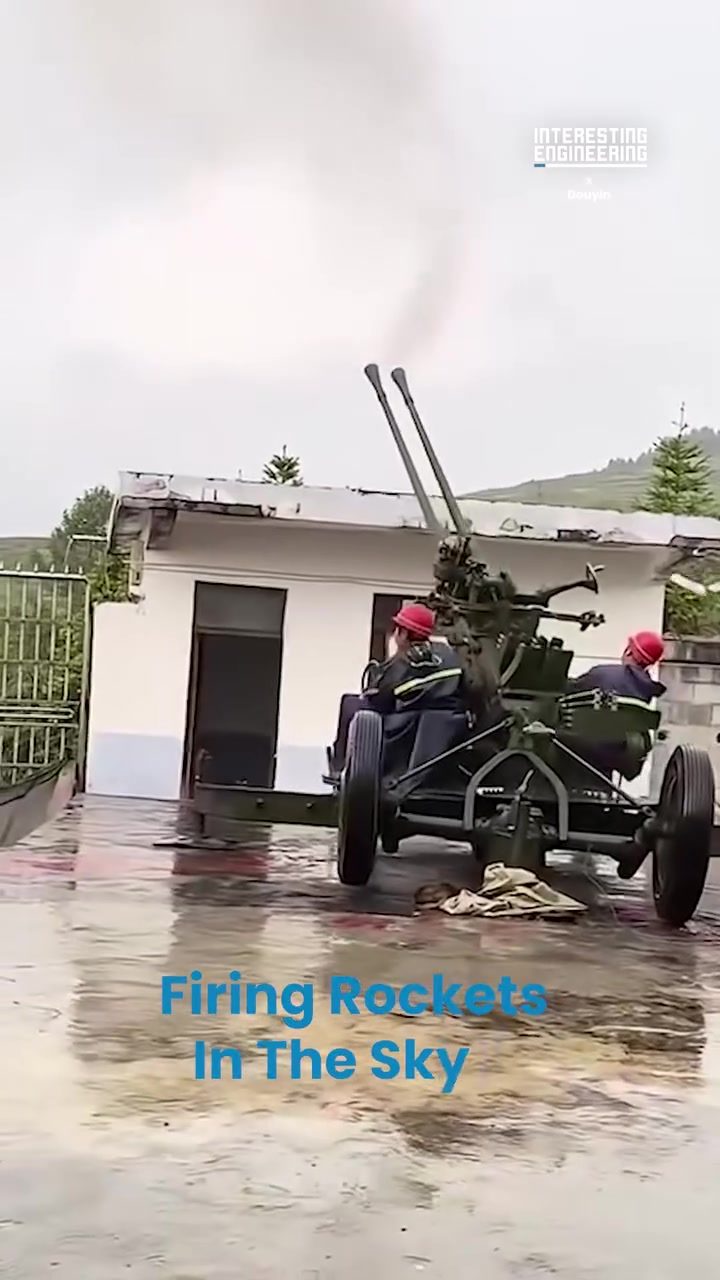
Cloud Seeding and the Power of Artillery
Artillery and cloud seeding may seem like unrelated topics, but recent advancements in technology have brought them together in a unique and fascinating way. China has developed a novel method of cloud seeding that involves launching rockets to encourage rainfall, a more effective means than traditional helicopters or aircraft.
The Basics of Cloud Seeding
Cloud seeding is a weather modification technique that aims to stimulate precipitation by introducing substances into clouds. The most common method involves using aircraft or helicopters to release silver iodide, dry ice, or other chemicals into the clouds, which act as nuclei to induce rain or snow. This technique has been employed for decades to manage water resources, particularly in arid regions, and to mitigate droughts.
Artillery in Cloud Seeding
The traditional method of cloud seeding relies heavily on aircraft and helicopters. However, China has innovated by incorporating artillery-based systems, specifically artillery cannons, into the process. This new method involves launching rockets equipped with seeding agents. The rockets are designed to reach altitudes where they can effectively disperse the seeding agents into the clouds, fostering precipitation.
How Artillery Works in Cloud Seeding
Artillery cannons are powerful and versatile weapons typically used in military operations. However, their precision and range make them ideal for cloud seeding. Here’s how the process works:
-
Launching the Rockets: The artillery cannons are mounted on vehicles and operated by trained personnel. These cannons can launch rockets over a long distance, reaching altitudes where cloud seeding is most effective.
-
Disbursing Seeding Agents: The rockets are equipped with payloads that contain seeding agents, such as silver iodide or dry ice. When launched, the rockets reach the target altitude and release these agents into the clouds.
-
Impact on Clouds: The seeding agents act as nuclei around which water vapor in the clouds can condense, forming larger water droplets or ice crystals. These droplets or crystals then fall as precipitation, effectively inducing rainfall or snowfall.
The Engineering Behind the Weapon System
The engineering aspects of artillery cannons play a crucial role in the effectiveness of this cloud seeding method. The precision and range of these cannons allow for targeted cloud seeding, ensuring that the seeding agents are released at the optimal altitude and location. The seamless operation of these systems, as seen in the demonstration, underscores the engineering prowess involved in designing and deploying artillery cannons for such specialized tasks.
Practical Tips for Understanding Artillery Cannons
Artillery cannons are sophisticated pieces of military equipment with a wide range of applications beyond combat. If you're interested in understanding the mechanics of artillery cannons, here are some practical tips:
-
Research the Mechanics: Artillery cannons operate on the principles of ballistics and projectile motion. Understanding these principles will give you a deeper appreciation for how these weapons function.
-
Examine the Components: Focusing on the various components of an artillery cannon, such as the barrel, breech, and firing mechanism, can help you understand how the cannon operates.
-
Watch Demonstrations: Visual demonstrations, like the one featuring the firing sequence and impact, provide valuable insights into the actual operation of artillery cannons. Pay attention to the precision and range capabilities.
-
Explore Related Applications: Beyond military uses, artillery cannons have been adapted for various applications, including cloud seeding. Exploring these diverse uses can broaden your understanding of the technology.
Important Takeaways
The use of artillery cannons in cloud seeding represents a significant innovation in weather modification technology. The key takeaways from this method include:
-
Precision and Range: Artillery cannons provide the precision and range needed to effectively disperse seeding agents at optimal altitudes.
-
Efficiency: The use of artillery cannons can be faster and more effective than traditional methods, making it a valuable tool in regions where timely weather modification is crucial.
-
Engineering Innovation: The seamless operation of these systems highlights the advanced engineering behind artillery weapon systems.
Conclusion
Cloud seeding using artillery cannons is a groundbreaking method that leverages the power and precision of military technology for weather modification. This innovative approach not only enhances the effectiveness of cloud seeding but also showcases the versatility of artillery cannons in non-traditional applications. By understanding the mechanics and engineering behind these systems, we can appreciate the significant advancements made in weather modification technology.
Watch the Reel
Questions readers ask
How do artillery rockets enhance cloud seeding compared to traditional methods?
Artillery rockets provide a more targeted and precise method of cloud seeding. Unlike traditional aircraft or helicopter methods, rockets can be launched from specific locations to reach exact points in the atmosphere, making the process more effective and reducing waste of seeding agents.
What substances are typically used in cloud seeding, and how do they work?
Common substances used in cloud seeding include silver iodide, dry ice and other chemicals. These agents act as nuclei, providing a surface for water vapor to condense and form ice crystals or droplets, which then grow and fall as precipitation.
Why has China turned to artillery rockets for cloud seeding?
China has adopted artillery rockets for cloud seeding due to their precision and control. This method allows for more accurate targeting of specific cloud areas, enhancing the potential to manage water resources and mitigate drought, particularly in regions where rainfall is crucial.
What are the key advantages of using artillery for cloud seeding over conventional aircraft?
Artillery rockets offer several advantages, including lower operational costs, reduced risk to personnel, and the ability to launch from fixed positions. This makes them particularly useful for targeted seeding in remote or hard-to-reach areas, ensuring more effective rainfall management.
Can artillery rockets be used for cloud seeding in all weather conditions?
Artillery rockets can be an effective cloud seeding tool but require suitable weather conditions. They are most effective when launched into clouds with the right temperature and humidity levels, which allow the seeding agents to induce precipitation efficiently.
How does China's use of artillery rockets for cloud seeding contribute to drought management?
By using artillery rockets, China can induce rainfall more precisely in drought-prone areas. This targeted approach helps replenish water resources, support agricultural activities, and alleviate the impacts of drought, contributing to overall water resource management.
What safety measures are in place when using artillery rockets for cloud seeding?
When using artillery rockets for cloud seeding, safety measures include careful selection of launch sites, strict adherence to launch protocols, and continuous weather monitoring. These measures ensure the safety of personnel and the public, as well as the effectiveness of the cloud seeding operation.
What role does technology play in the precision of China's artillery-based cloud seeding?
Advanced technology plays a crucial role in China's artillery-based cloud seeding. Precision guidance systems and real-time weather data allow for accurate targeting of clouds, ensuring that the seeding agents are released at the optimal time and location to maximize rainfall potential.
Related deep dives
Similar reads based on topic and creator.



Recent articles
Fresh deep dives from the latest Reels we unpacked.




Comments
Be the first to comment.