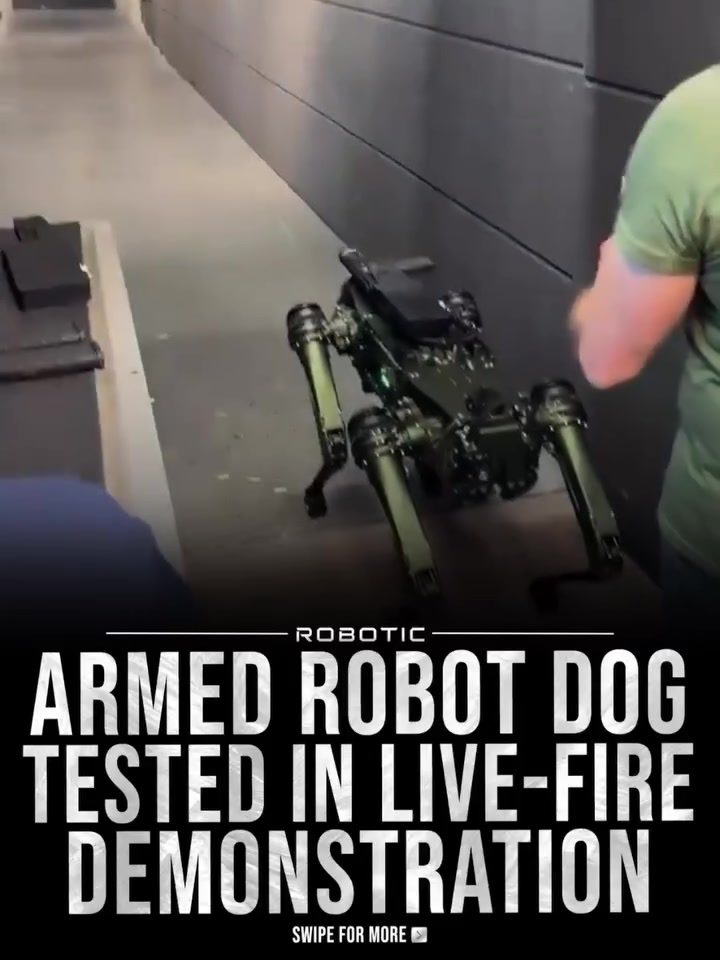
The Emergence of Armed Robotic Dogs in Military Operations
Robotic dogs, equipped with advanced weaponry and AI, are making their way onto modern battlefields. These autonomous quadrupeds, showcased in recent demonstrations, are set to revolutionize military operations by taking on high-risk missions and keeping human soldiers safer. The ROBOTIC armed robotic dog, tested in live-fire demonstrations, exemplifies the cutting-edge technology that is reshaping the battlefield.
Why This Matters
The integration of armed robotic dogs into military operations signifies a pivotal shift in how wars are fought. These machines, equipped with AI-assisted target detection and advanced sensors, can operate in environments too dangerous for human soldiers. This development is not just about advancing technology; it's about saving lives and expanding tactical capabilities.
The Capabilities of Armed Robotic Dogs
High Precision Targeting
Armed robotic dogs utilize AI-assisted target detection systems, which allow them to identify and engage targets with high precision. This technology ensures that the robotic dogs can operate effectively in dynamic and unpredictable environments, reducing the risk of collateral damage.
Advanced Sensors
Equipped with advanced Electro-Optical/Infrared (EO/IR) sensors, these robotic dogs can operate in various lighting conditions and environments. This capability enables them to perform reconnaissance and surveillance missions, providing crucial intelligence to military forces.
Remote Human-in-the-Loop Control
Despite their autonomy, armed robotic dogs are designed with remote human-in-the-loop control. This means that a human operator can intervene and take control of the robotic dog if necessary. This feature ensures that critical decisions are still made by humans, maintaining ethical standards and accountability.
Modular Weapon Systems
The modular weapon system of these robotic dogs allows them to be deployed across various platforms, including ground vehicles, maritime platforms, and other unmanned systems. This flexibility ensures that the robotic dogs can adapt to different operational requirements, making them a versatile asset in military operations.
The Evolution of Military Robotics
The development of armed robotic dogs marks a significant evolution in military robotics. From aerial drones to autonomous ground support, the military's reliance on unmanned systems continues to grow. This shift highlights the increasing importance of automation and AI in modern warfare.
From Aerial Drones to Autonomous Ground Support
Aerial drones have long been a staple in military operations, providing aerial surveillance and strike capabilities. However, the introduction of autonomous ground support, such as armed robotic dogs, expands the scope of unmanned systems. These ground-based robots can operate in environments where aerial drones cannot, providing a more comprehensive approach to military operations.
Expanding Tactical Options
Armed robotic dogs offer military forces new tactical options. Their ability to operate in hazardous environments and perform high-risk missions means that human soldiers can be deployed in safer roles. This redefinition of risk management allows military forces to be more adaptable and effective in various scenarios.
Redefining Risk Management
The use of armed robotic dogs in military operations redefines risk management. By taking on high-risk missions, these robotic dogs reduce the need for human soldiers to be in danger. This shift ensures that military forces can achieve their objectives while minimizing casualties. The capability of armed robotic dogs to work alongside troops and perform tasks that are far too dangerous for humans to undertake alone.
Practical Tips for Implementing Armed Robotic Dogs
Training and Maintenance
To effectively integrate armed robotic dogs into military operations, comprehensive training and maintenance protocols must be established. Human operators need to be trained on how to control these robots, while maintenance teams must ensure that the devices are always operational and ready for deployment.
Ethical Considerations
The use of armed robotic dogs raises ethical considerations that must be addressed. Establishing clear guidelines for their deployment and ensuring that human oversight is always present are critical steps in maintaining ethical standards.
Important Takeaways
Enhancing Military Capabilities
The introduction of armed robotic dogs enhances military capabilities by providing a versatile and adaptable asset. Their advanced sensors, high-precision targeting, and modular weapon systems make them a valuable addition to any military force.
Human Safety
One of the most significant benefits of armed robotic dogs is their ability to keep human soldiers safer. By taking on high-risk missions, these robots reduce the need for human soldiers to be in danger, ensuring that military forces can achieve their objectives with minimal casualties.
Ethical and Operational Challenges
While armed robotic dogs offer numerous advantages, their deployment also presents ethical and operational challenges. Establishing clear guidelines and protocols for their use is essential to ensure that these robots are used responsibly and effectively.
Conclusion
The emergence of armed robotic dogs, like the ROBOTIC model, represents a significant advancement in military technology. These autonomous quadrupeds, equipped with advanced weaponry and AI, are set to revolutionize military operations by taking on high-risk missions and keeping human soldiers safer. As the technology continues to evolve, it will be crucial to address the ethical and operational challenges that come with their deployment, ensuring that these robots are used responsibly and effectively. The future battlefield may see these machines working alongside troops, expanding tactical options and redefining risk management.
Watch the Reel
Questions readers ask
What are armed robotic dogs and how do they enhance military operations?
Armed robotic dogs are autonomous quadrupeds equipped with advanced AI and weaponry. They enhance military operations by taking on high-risk missions, providing crucial intelligence in dangerous environments, and reducing the number of human casualties. Their high precision targeting and versatile sensors make them invaluable in modern warfare.
How do armed robotic dogs improve soldier safety?
Armed robotic dogs improve soldier safety by handling high-risk missions that would otherwise put human lives at stake. They can operate in hazardous environments, gather intelligence, and engage targets, allowing soldiers to remain at a safer distance from immediate danger.
What kind of technology do armed robotic dogs use?
Armed robotic dogs utilize advanced AI for target detection and decision-making, as well as a variety of sensors for environmental awareness. They are also equipped with high-precision weaponry, enabling them to engage targets with accuracy. These technologies work together to make the robots effective in hazardous and unpredictable situations.
What are some examples of high-risk military missions suited for armed robotic dogs?
High-risk missions such as reconnaissance in enemy territory, bomb disposal, and urban warfare are well-suited for armed robotic dogs. These tasks often involve navigating dangerous environments, engaging hostile targets, and gathering intelligence, all of which can be safely and effectively handled by these autonomous machines.
How are armed robotic dogs trained for military operations?
Armed robotic dogs undergo rigorous training to prepare them for military operations. This includes simulations of various battlefield scenarios, live-fire exercises, and extensive testing of their AI and sensor capabilities. The goal is to ensure that these robots can operate autonomously and effectively in real-world combat situations.
What are the benefits of using armed robotic dogs over traditional military vehicles?
Armed robotic dogs offer several benefits over traditional military vehicles. They are more agile and can navigate through tight spaces, making them ideal for urban warfare. Additionally, their autonomous capabilities reduce the need for human operators in dangerous situations, and their advanced sensors provide a level of situational awareness that traditional vehicles may not achieve.
How do armed robotic dogs contribute to the future of military strategy?
Armed robotic dogs are set to revolutionize military strategy by enabling more precise and less risky operations. Their ability to operate autonomously in high-risk environments allows for more flexible and adaptive strategies. As technology advances, these robots will likely become even more integrated into military operations, reshaping the way battles are fought and won.
Related deep dives
Similar reads based on topic and creator.



Recent articles
Fresh deep dives from the latest Reels we unpacked.




Comments
Be the first to comment.