The Depth of Self-Preservation: Insights from an Arabic Proverb
The power of the human will to survive is a profound and often misunderstood force. An Arabic proverb illuminates this concept, offering insights into the complex nature of despair and the desire for self-preservation. This saying reflects deep psychological truths about the instinct to survive and the true nature of the desire to escape one's life.
Context / Why this matters
Understanding the underlying mechanisms of the will to survive can offer clarity and empowerment. It helps to shift perspectives from a state of despair to one of hope and resilience.
The Nature of Despair and the Will to Survive
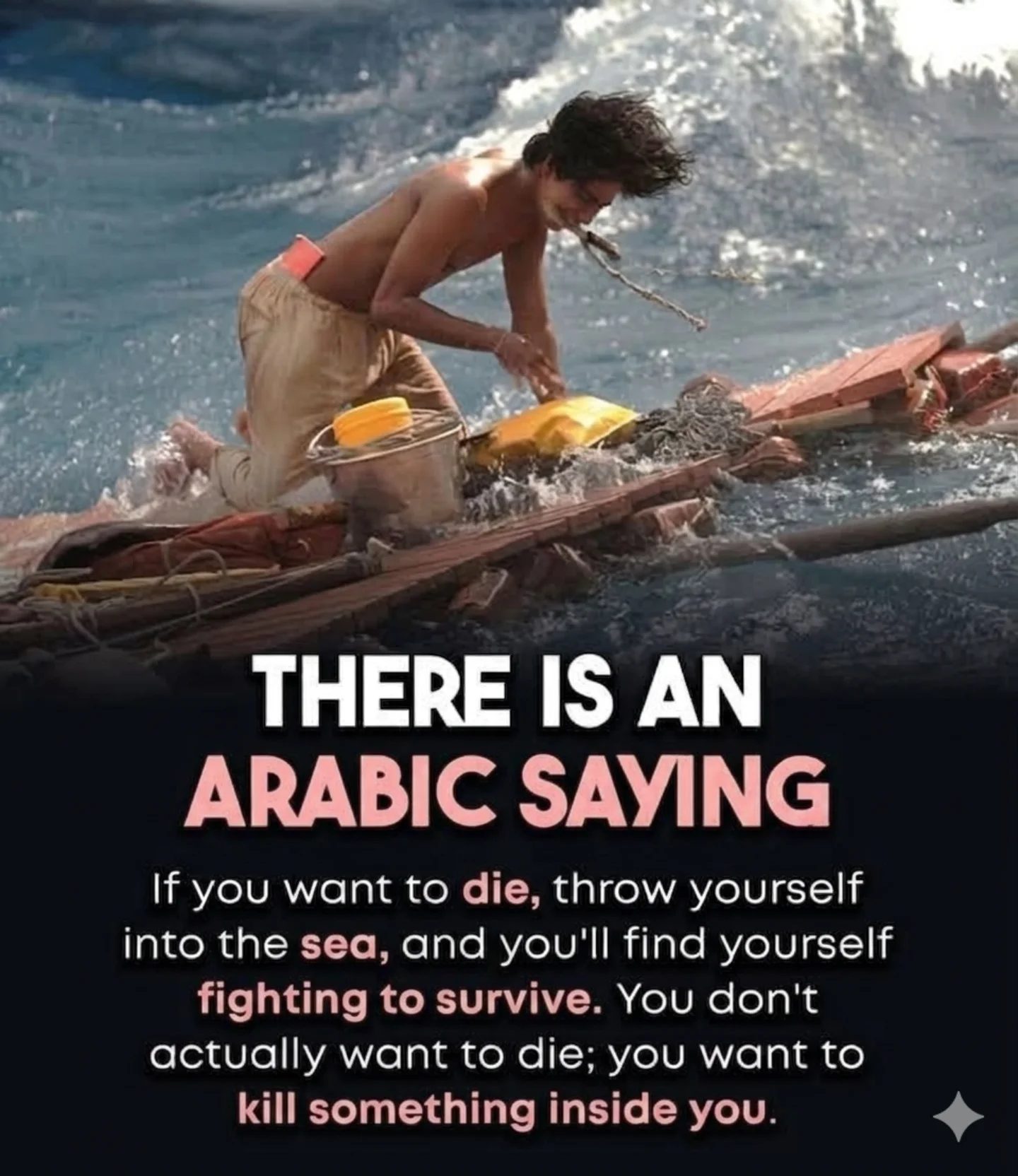
The proverb goes, "If you want to die, throw yourself into the sea, and you'll find yourself fighting to survive." This powerful statement suggests that even in the depths of despair, the human body and mind have an innate drive to survive. When faced with a true life-or-death situation, such as drowning, biological and psychological survival instincts take over. This instinct is so strong that it overrides even the deepest feelings of hopelessness.
The instinct to survive is a fundamental aspect of human nature. It is a primal drive that has ensured the continuation of our species. This instinct is not merely a physical response; it also encompasses psychological and emotional dimensions. When placed in an extreme situation, the human body and mind work in tandem to ensure survival. This response is automatic and often overrides conscious thoughts and desires, highlighting the depth of the survival instinct.
The True Target of Despair
The proverb concludes with a profound insight: "You don’t actually want to die; you want to kill something inside you." This statement suggests that the desire to end one’s life is often not a literal wish for physical death but rather an intense need to destroy a specific part of one’s current existence. This part could be a painful memory, a toxic relationship, overwhelming stress, guilt, a version of themselves they dislike, or a situation they feel trapped in.
The Psychological Dimensions of Despair
The proverb underscores the psychological dimensions of despair. The desire to escape life can often be a manifestation of deeper internal conflicts and struggles. These conflicts can be overwhelming and may lead to feelings of hopelessness and a desire to end one’s life. However, the proverb suggests that this desire is not a literal wish for death but rather a call for profound change.
The Importance of Resilience
The proverb emphasizes the importance of resilience in overcoming despair. It highlights that the human spirit is capable of enduring even the most challenging circumstances. The recognition of this resilience can be empowering and provide a pathway to healing and growth.
Resilience is not merely about enduring hardship but also about finding ways to navigate and overcome it. It involves developing coping mechanisms, seeking support, and finding meaning in life. Resilience is a dynamic process that can be cultivated and strengthened over time. It is a testament to the human spirit's capacity to endure and thrive in the face of adversity.
Practical Tips
Recognizing the psychological dimensions of despair is the first step towards addressing it. It is essential to acknowledge that the desire to escape life is often a manifestation of deeper internal conflicts and struggles. Identifying these conflicts and seeking ways to address them can be a crucial step in the process of healing and growth.
Important Takeaways
The proverb offers several important takeaways about the nature of despair and the will to survive. Firstly, it underscores the power of the human survival instinct. Even in the depths of despair, the instinct to survive remains strong. Secondly, it highlights that the desire to end one’s life is often not a literal wish for death but rather a call for profound change. Finally, it emphasizes the importance of resilience in overcoming despair.
Conclusion
The Arabic proverb provides a profound insight into the nature of despair and the will to survive. It offers a deep psychological understanding of the human spirit's capacity to endure and thrive in the face of adversity. By recognizing the power of the survival instinct and the need for profound change, we can find a pathway to healing and growth.
Watch the Reel
Questions readers ask
What is the main message of the Arabic proverb about the sea and survival?
The main message is that even in the most desperate moments, humans have an instinctive drive to survive. The proverb suggests that when faced with extreme situations, people will fight to endure, highlighting the deep truth about the survival instinct.
How does this Arabic proverb relate to the psychology of despair?
The proverb offers insights into how people resist despair. It illustrates that even when an individual feels hopeless, the instinct to survive can override these feelings, leading to a fight for survival and a resistance to despair.
Can this proverb be applied to everyday life situations?
Yes, the proverb can be applied to everyday life situations where people face challenges or hopelessness. It reminds us that there is an inherent drive to overcome adversity and continue living, even when circumstances seem dire.
What does the Arabic proverb say about human nature?
The proverb reveals that human nature includes a profound will to survive. It suggests that people are wired to fight against despair and seek survival, even in the face of extreme circumstances.
How can understanding this proverb help shift perspectives from despair to hope?
By understanding the proverb, one can recognize the innate survival drive within themselves. This awareness can empower individuals to shift their perspective from despair to hope, knowing that there is a natural inclination to fight for survival.
What are some deep truths about survival that this proverb reveals?
The proverb reveals that survival is not just a physical act, but a deeply psychological one. It shows that even in the most desperate situations, the human mind and body are programmed to resist despair and fight for survival.
Recent articles
Fresh deep dives from the latest Reels we unpacked.




Comments
Be the first to comment.