Apollo 15 Hammer-Feather Drop
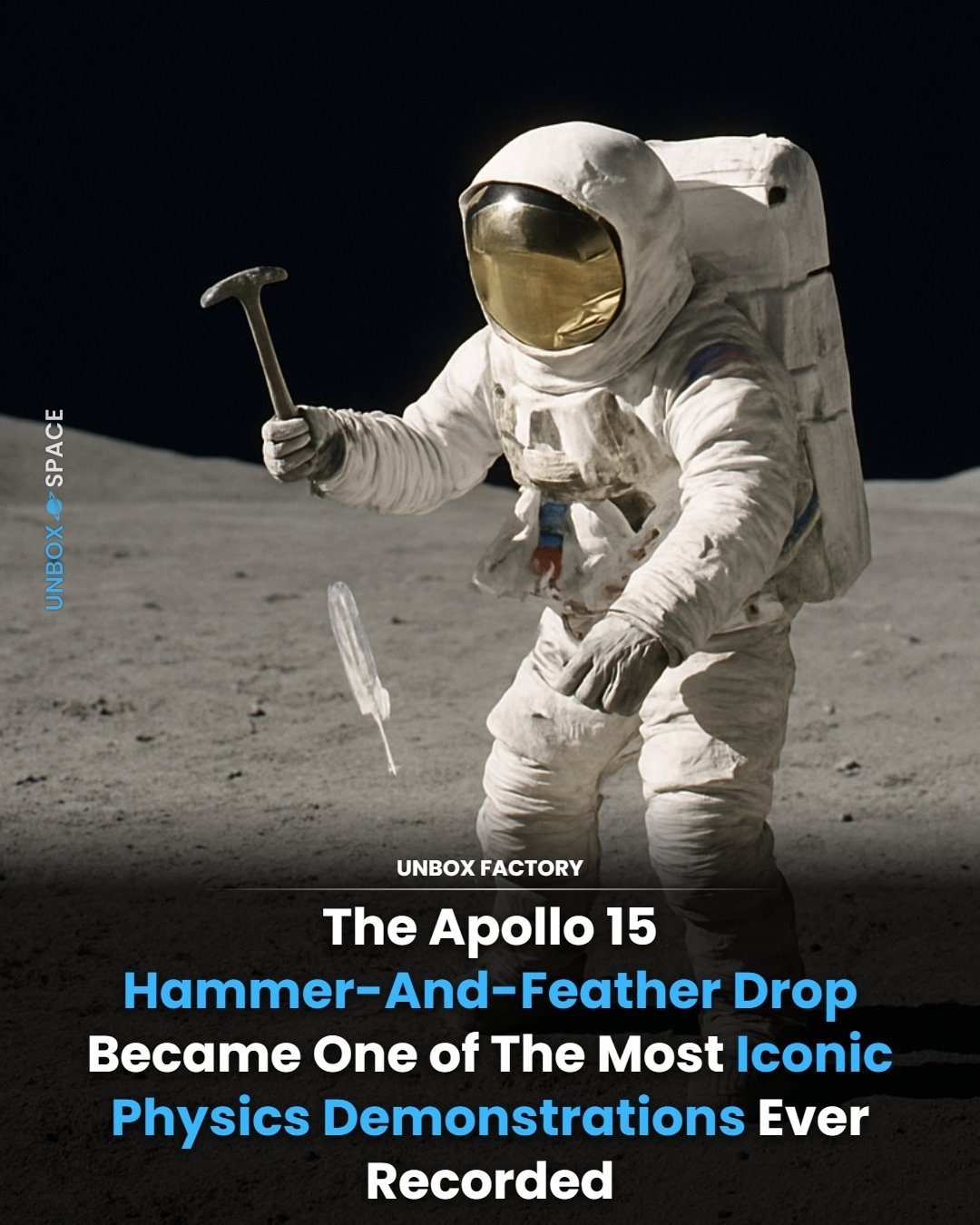
The Apollo 15 mission in 1971 featured a groundbreaking experiment: the hammer-and-feather drop. This iconic demonstration by astronaut David Scott on the lunar surface vividly illustrated a fundamental principle of physics. It showcased that in a vacuum, objects fall at the same rate, regardless of their mass, and it provided a dramatic confirmation of Galileo's principle.
Why This Matters
The Apollo 15 mission is renowned for its scientific contributions, but the hammer-and-feather drop stands out as one of its most memorable moments. This experiment is significant because it visually confirms a crucial aspect of physics—Galileo's law of falling bodies—under conditions that are impossible to replicate on Earth. The Moon's lack of atmosphere eliminates air resistance, allowing for a pure demonstration of gravity's effect on different masses.
The Physics Behind the Demonstration
Galileo's Principle
Galileo Galilei's principle of falling bodies states that, in a vacuum, all objects fall at the same rate, regardless of their mass. This principle challenges the Aristotelian view that heavier objects fall faster. Galileo's experiments and theoretical work laid the groundwork for modern physics, and the Apollo 15 demonstration brought this principle into sharp focus.
The Role of Air Resistance
On Earth, air resistance affects the fall of objects, making it difficult to observe Galileo's principle in action. Heavier objects experience more air resistance, which can cause them to fall faster or slower than lighter objects. In the vacuum of the Moon, however, there is virtually no air resistance, allowing both the hammer and the feather to fall at the same rate.
Lunar Gravity
The Moon's gravity is about one-sixth that of Earth's, but this difference in gravitational pull does not affect the principle of equal acceleration. Whether on Earth or the Moon, in a vacuum, all objects fall at the same rate. The lower gravity on the Moon simply means that objects fall more slowly overall.
The Apollo 15 Mission and the Hammer-Feather Drop
The Apollo 15 mission was the ninth manned mission in the Apollo program and the fourth to land on the Moon. Astronauts David Scott, James Irwin, and Alfred Worden conducted various scientific experiments, including the famous hammer-and-feather drop.
Preparation and Execution
David Scott prepared for the experiment by holding a geological hammer and a falcon feather. He simultaneously released both objects from the same height. The absence of air resistance on the Moon allowed the hammer and the feather to fall at exactly the same rate, striking the lunar surface at the same time. This dramatic demonstration was captured on video and has since become one of the most iconic images in the history of space exploration.
The Impact on Scientific Understanding
The hammer-and-feather drop was a powerful visual aid that helped to demystify complex physics concepts. It provided a clear, tangible example of Galileo's principle, making it accessible to a broader audience. This demonstration continues to be used in classrooms and educational settings worldwide to explain gravity, motion, and the effects of air resistance.
The Legacy of the Experiment
The Apollo 15 mission's hammer-and-feather drop has left a lasting impact on our understanding of physics. It remains one of the most famous demonstrations of physics ever recorded. This experiment serves as a reminder of the importance of scientific inquiry and the value of exploring the unknown. It also highlights the role of space exploration in advancing our knowledge of the natural world.
Practical Tips for Understanding Gravity and Motion
Conducting Your Own Experiments
While replicating the exact conditions of the Moon on Earth is impossible, you can still conduct experiments to demonstrate Galileo's principle. Here are a few tips for conducting your own gravity and motion experiments:
- Use a Vacuum Chamber: If you have access to a vacuum chamber, you can create a low-pressure environment to simulate the conditions on the Moon. This will allow you to observe the fall of different objects without the interference of air resistance.
- Drop Objects in a Vertical Tube: Fill a clear plastic tube with oil or water to slow down the fall of objects. This will help you observe the fall of different masses more clearly.
- Use a Simple Pendulum: A pendulum is a simple and effective way to demonstrate the principles of gravity and motion. By varying the mass of the pendulum bob, you can observe how gravity affects its motion.
Observing Falling Objects
When observing falling objects, it's important to consider the effects of air resistance. Here are a few tips for conducting effective observations:
- Choose Objects of Different Masses and Shapes: Use objects with different masses and shapes to observe how air resistance affects their fall.
- Release Objects from the Same Height: Make sure to release all objects from the same height to ensure a fair comparison.
- Measure the Time of Fall: Use a stopwatch or timer to measure the time it takes for each object to fall. This will give you a clear indication of how air resistance affects the fall of different objects.
Important Takeaways
The Apollo 15 hammer-and-feather drop is a seminal moment in the history of physics and space exploration. It provided a clear, visual demonstration of Galileo's principle of falling bodies and highlighted the importance of scientific inquiry. The experiment underscores the role of space exploration in advancing our understanding of the natural world and the principles that govern it. By understanding the principles of gravity and motion, we can better appreciate the complexities of the universe and our place within it.
Conclusion
The Apollo 15 mission's hammer-and-feather drop is a remarkable example of how space exploration can contribute to our understanding of fundamental scientific principles. This iconic demonstration of Galileo's law of falling bodies has left a lasting impact on our knowledge of gravity and motion. Whether you're a seasoned physicist or a curious observer, the hammer-and-feather drop offers a fascinating glimpse into the mysteries of the universe and the scientific principles that govern it. By conducting your own experiments and observations, you can deepen your understanding of these principles and appreciate the beauty of the natural world.
Watch the Reel
Questions readers ask
What was the purpose of the Apollo 15 hammer-feather drop experiment?
The Apollo 15 hammer-feather drop experiment aimed to demonstrate Galileo's principle of falling bodies. The experiment was designed to show that objects fall at the same rate in a vacuum, regardless of their mass. It was conducted on the Moon, which has no atmosphere, to ensure a perfect vacuum.
Who performed the hammer-feather drop experiment during the Apollo 15 mission?
Astronaut David Scott performed the hammer-feather drop experiment during the Apollo 15 mission. He conducted this iconic demonstration while on the lunar surface, using a hammer and a feather to illustrate the principle of falling objects in a vacuum.
What principle of physics did the hammer-feather drop experiment confirm?
The hammer and feather drop experiment confirmed Galileo's principle of falling bodies, which states that in a vacuum, objects fall at the same rate, regardless of their mass. This principle was visually demonstrated by the fact the hammer and feather hit the lunar surface at the same time.
Why was the Moon an ideal location for the hammer and feather drop experiment?
The Moon was an ideal location for the hammer and feather drop experiment because it lacks an atmosphere, providing a perfect vacuum. This environment allowed the experiment to proceed without any air resistance, ensuring that only the force of gravity affected the falling objects.
What was the significance of using a hammer and a feather for the Apollo 15 experiment?
Using a hammer and a feather for the Apollo 15 experiment was significant because these objects have vastly different masses. The dramatic difference in their masses made the demonstration more striking, as it clearly showed that mass does not affect the rate at which objects fall in a vacuum.
What would happen to the hammer and feather in an atmospheric environment?
If the hammer and feather drop experiment were conducted in an atmospheric environment, the feather would fall more slowly due to air resistance. The hammer, being much denser, would fall faster. Observing the objects fall in an atmospheric environment would not accurately demonstrate Galileo's principle of falling bodies.
Related deep dives
Similar reads based on topic and creator.


Recent articles
Fresh deep dives from the latest Reels we unpacked.




Comments
Be the first to comment.