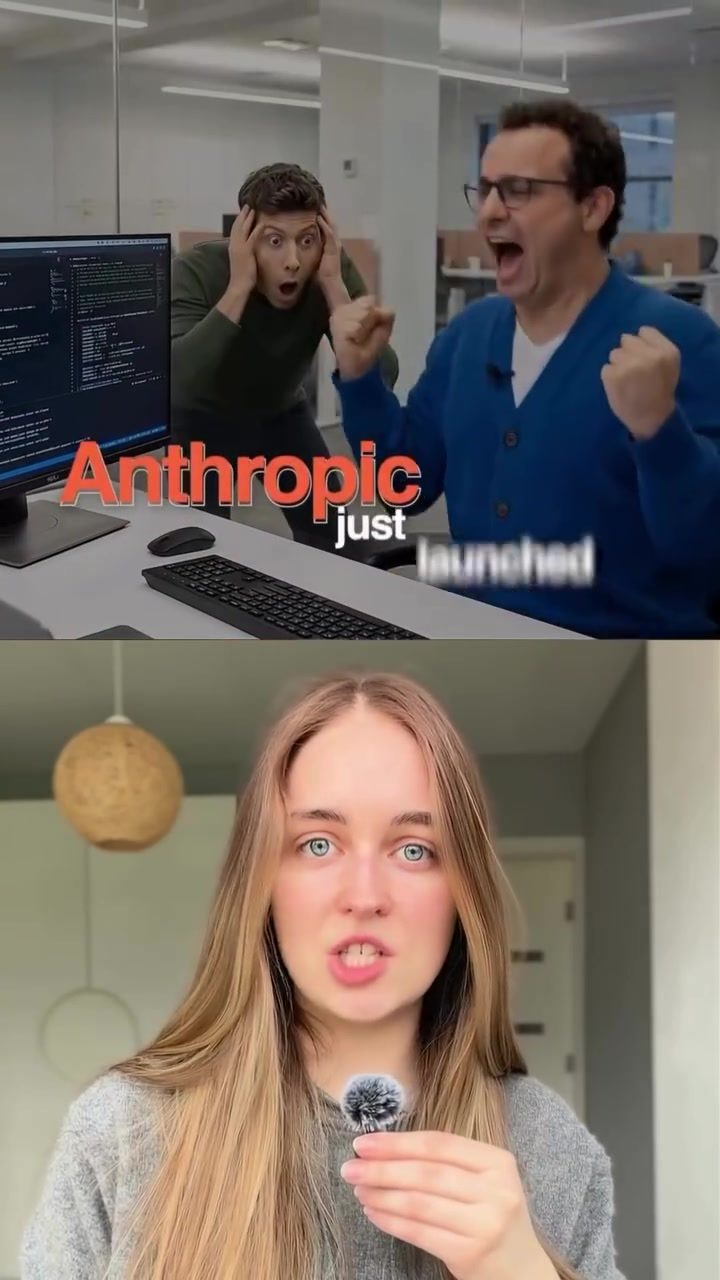
Anthropic's Claude Opus 4.8: Revolutionizing Coding Tasks
Artificial intelligence (AI) continues to advance, and Anthropic's latest innovation, Claude Opus 4.8, stands at the forefront of this progress. This new model introduces dynamic workflows in Claude Code, transforming how tasks are managed and executed. Opus 4.8 has the ability to autonomously plan, execute, and deliver tasks, making it a significant leap toward production-ready autonomous software agents.
Why This Matters
The implications of Opus 4.8 are profound. Traditional coding tasks, which often require extensive manual effort and time, can now be completed autonomously. This not only accelerates the development process but also enhances reliability, particularly in high-stakes environments. The introduction of dynamic workflows and AI sub-agents makes it easier to handle large-scale migration tasks and complex coding projects, ultimately revolutionizing the way software development is approached.
Main Discussion
Parallel AI Sub-Agents
One of the standout features of Opus 4.8 is its ability to spawn parallel AI sub-agents. Unlike previous models, which executed tasks linearly, Opus 4.8 can now manage multiple sub-agents simultaneously. This parallel processing capability allows it to break down large tasks into manageable components, each handled by a specialized sub-agent. This results in faster execution and more efficient resource utilization.
Task Execution and Workflow Management
With Opus 4.8, the process of task execution has been redefined. Instead of following a linear pathway, the model can now write its own execution plan. This means that once a goal is described, Opus 4.8 can autonomously plan the steps required to achieve it. Using dynamic workflows, it can then allocate tasks to sub-agents, ensuring that the entire workflow is optimized for speed and accuracy.
Real-World Performance
The true test of any new AI model lies in its real-world performance. Opus 4.8 has already demonstrated remarkable capabilities in this regard. For instance, it was used to migrate 750,000 lines of code from one programming language to another. This task, which would typically take a team of engineers several months, was completed by Opus 4.8 in just 11 days with a 99.8% pass rate on tests. This showcases the model's efficiency and reliability, making it a game-changer in the coding landscape.
Mistake Detection and Correction
Another significant advancement with Opus 4.8 is its ability to catch its own mistakes before they impact the final output. This self-correction mechanism is particularly crucial for anyone running the model autonomously on production code. It ensures that the code is not only delivered quickly but also with a high degree of accuracy, minimizing the need for manual intervention.
Future Prospects
The development of Opus 4.8 is just the beginning. With a valuation of nearly a trillion dollars, Anthropic is poised to continue pushing the boundaries of what autonomous AI agents can achieve. The technology is still in its early stages, and as it evolves, we can expect even more innovative applications and capabilities.
Practical Tips
Leveraging Parallel Processing
To fully harness the power of Opus 4.8, it's essential to understand how to leverage its parallel processing capabilities. This involves breaking down complex tasks into smaller, more manageable components. By doing so, you can ensure that each sub-agent is working on a specific part of the task, leading to faster and more efficient execution.
Dynamic Workflow Integration
Integrating dynamic workflows into your development process can significantly enhance productivity. It allows for greater flexibility and adaptability, ensuring that tasks are executed in the most efficient manner possible. By setting clear goals and letting Opus 4.8 plan the execution, you can achieve optimal results with minimal effort.
Ensuring Reliability
Reliability is a key concern when it comes to autonomous AI agents. With Opus 4.8, this is addressed through its self-correction mechanism. To ensure reliability, it's crucial to run regular tests and monitor the model's performance. This will help identify any potential issues early on and ensure that the final output meets the required standards.
Important Takeaways
Opus 4.8 represents a significant advancement in the field of autonomous AI agents. Here are the key takeaways:
- Parallel Processing: Opus 4.8 can spawn multiple AI sub-agents to handle tasks in parallel, leading to faster execution and improved efficiency.
- Dynamic Workflows: The model can write its own execution plans, ensuring that tasks are managed dynamically and adaptively.
- Real-World Performance: Opus 4.8 has demonstrated exceptional performance in real-world scenarios, completing complex tasks with high accuracy and speed.
- Self-Correction: The model’s ability to catch and correct mistakes autonomously enhances its reliability and reduces the need for manual intervention.
- Future Potential: Although still in its early stages, the development of Opus 4.8 marks a significant step towards more advanced and capable autonomous AI agents.
Conclusion
The launch of Claude Opus 4.8 by Anthropic signifies a major leap forward in the realm of autonomous AI agents. With its dynamic workflows, parallel processing capabilities, and self-correction mechanisms, Opus 4.8 is set to revolutionize the way coding tasks are managed and executed. As this technology continues to evolve, the possibilities for its application are vast, promising to further transform the landscape of software development.
Watch the Reel
Questions readers ask
What are the key features of Anthropic's Claire Opus 4.8?
Claire Opus 4.8 introduces dynamic workflows, autonomous task management, and the ability to handle complex coding tasks. It can spawn parallel AI sub-agents to enhance speed and resource utilization, making it highly efficient for large-scale projects.
How does Opus 4.8 improve AI task management?
Opus 4.8 improves AI task management by autonomously planning, executing, and delivering tasks. This reduces the need for manual intervention, accelerates the development process, and enhances reliability, especially in critical environments.
What are the benefits of using parallel AI sub-agents in Opus 4.8?
The use of parallel AI sub-agents in Opus 4.8 allows for simultaneous task execution, which significantly improves speed and resource utilization. This feature is particularly beneficial for handling large-scale projects and complex coding tasks.
Can Opus 4.8 handle complex coding tasks autonomously?
Yes, Opus 4.8 is designed to handle complex coding tasks autonomously. Its advanced capabilities enable it to manage intricate projects efficiently, reducing the need for extensive manual effort and time.
How does Opus 4.8 enhance project efficiency in AI task management?
Opus 4.8 enhances project efficiency by introducing dynamic workflows and autonomous task management. These features ensure that tasks are completed more quickly and with greater reliability, making it a valuable tool for high-stakes environments.
What makes Opus 4.8 a significant advancement in AI project management?
Opus 4.8 represents a significant advancement in AI project management due to its ability to autonomously manage tasks, improve resource utilization, and handle complex coding tasks. These capabilities make it a crucial step toward production-ready autonomous software agents.
Related deep dives
Similar reads based on topic and creator.

Recent articles
Fresh deep dives from the latest Reels we unpacked.


Comments
Be the first to comment.