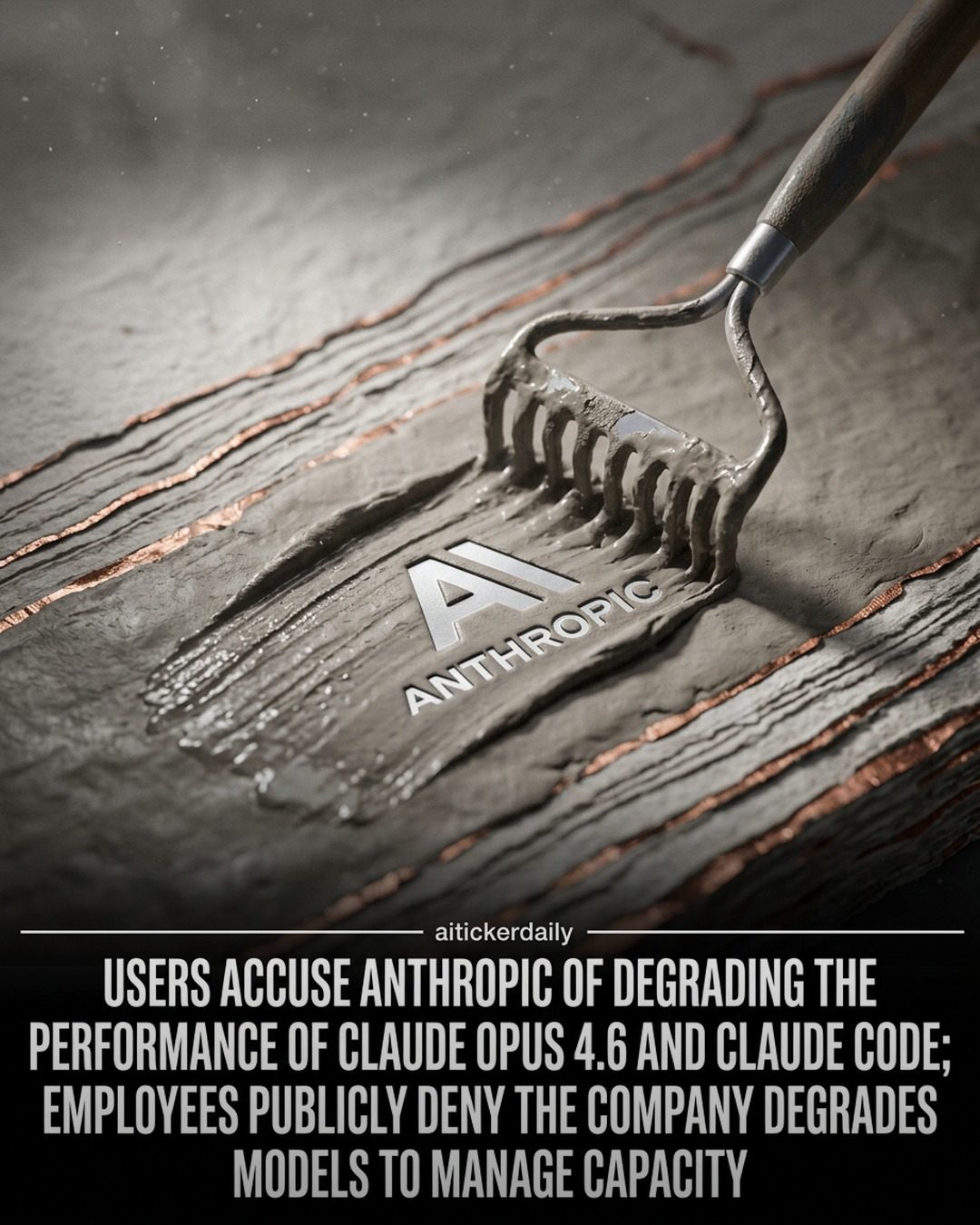
Anthropic Claude Opus Performance Concerns
Anthropic users are voicing concerns about the performance of the AI models Claude Opus 4.6 and Claude Code. The users claim the models feel slower. They are also saying that the models are more quota-heavy. This comes after Anthropic adjusted the cache time-to-live (TTL) and related pricing mechanics. Meanwhile, Anthropic has denied that they are degrading the models to manage capacity.
Why This Matters
In the world of AI, performance and cost are critical factors for developers and power users. AI models, especially those used for coding, require a balance between speed, accuracy, and cost. When these factors are not clearly communicated, it can lead to confusion and frustration. This is especially true for teams that rely on AI models like Claude Code for their workflows. Predictable costs and steady performance are crucial for planning and execution. If these aspects are not met, it can disrupt the entire development process. This is why the debate around Anthropic's changes matters.
Main Discussion
User Complaints
Developers and power users have taken to public forums to express their dissatisfaction. They report that Claude Opus 4.6 and Claude Code feel slower and more quota-heavy. These complaints come after Anthropic made adjustments to the cache time-to-live (TTL) and related pricing mechanics. The changes have led to increased billing surprises and altered user experiences. Long coding runs, in particular, burn context quickly. This means small changes in infrastructure can feel like a significant drop in quality, even if the model specifications remain the same.
Anthropic's Response
Anthropic has publicly denied that they are degrading the models to manage capacity. The company claims that the changes are aimed at improving efficiency and cost management. However, the discrepancies between user experiences and the company's statements have led to a lot of confusion. Users are left wondering if the performance issues are due to the changes in caching mechanisms or if there is another underlying cause.
The Role of Caching
Caching is a critical component in the functioning of AI coding assistants. It involves storing frequently accessed data to speed up processing. Context, which improves the accuracy of AI, also requires more processing. This means that changes in caching mechanisms can have a significant impact on the performance of AI models. Anthropic changed the Claude Code cache TTL from one hour to five minutes. This change is likely to alter how the model handles context and processing.
Practical Tips
For Developers and Power Users
- Monitor Performance and Costs: Keep a close eye on the performance of AI models and the associated costs. Use logs and billing information to track changes and identify any anomalies.
- Communicate with the Company: If you notice significant changes in performance, reach out to the company for clarification. Clear communication can help resolve issues and provide better insights.
- Test and Adapt: Regularly test the AI models to understand how changes in caching and other mechanisms affect their performance. Adapt your workflows accordingly.
For Companies Like Anthropic
- Clear Communication: Ensure that any changes in caching, pricing, or other mechanisms are clearly communicated to users. Provide detailed explanations and address concerns promptly.
- Transparent Pricing: Be transparent about how changes affect pricing and performance. Offer clear guidelines on how users can optimize their usage to avoid unexpected costs.
- User Feedback: Actively seek and incorporate user feedback. This can help improve the models and address issues before they escalate.
Important Takeaways
- Performance and Cost: Predictable cost and steady behavior are as important as benchmark headlines, especially for teams that rely on AI models for their development processes.
- User Experience: Changes in caching and pricing mechanics can significantly impact user experience. Clear communication can reduce noise and help users plan effectively.
- Caching in AI: Caching plays a vital role in the performance of AI coding assistants. Changes in caching mechanisms can affect context handling and processing.
- Anthropic's Stance: Anthropic denies degrading models to manage capacity, but the changes in cache TTL and pricing mechanics have led to user complaints.
Conclusion
The debate around Anthropic's changes to Claude Opus 4.6 and Claude Code highlights the importance of clear communication and transparent pricing in the world of AI. For developers and power users, these issues can significantly impact their workflows and costs. For companies like Anthropic, it underscores the need for better user communication and feedback incorporation. As AI continues to evolve, addressing these concerns will be crucial for maintaining user trust and satisfaction.
Watch the Reel
Questions readers ask
What are the main issues users are facing with Claude Opus 4.6 and Claude Code?
Users are primarily concerned about two main issues: a noticeable slowdown in the models' performance and an increase in quota usage. These concerns arose after recent adjustments to cache time-to-live (TTL) and pricing mechanics by Anthropic.
Why did Anthropic change the cache TTL and pricing mechanics?
Anthropic implemented these changes to enhance the efficiency of their AI models. The company has asserted that these adjustments are not intended to degrade the models. They aim to improve overall performance and capacity management.
How has the change in cache TTL affected the models' performance?
The change in cache TTL has led to complaints from users who report that the models feel slower. This is likely because the cache is being refreshed more frequently, which can impact the speed at which the models respond to queries.
What can users do to manage their quota usage more effectively?
To manage quota usage, users can optimize their prompts to be more concise and targeted. Additionally, they can consider batching requests where possible to reduce the number of individual calls to the model. It's also helpful to monitor usage regularly to understand where improvements can be made.
Are there any known issues with Claude Code specifically?
Yes, users have reported caching problems with Claude Code. These issues can contribute to the perceived slowdown, as the model may not be able to retrieve information as efficiently as before.
Has Anthropic acknowledged the user complaints?
Anthropic has responded to user feedback, emphasizing that the recent changes are aimed at improving efficiency and not degrading the models. They maintain that these adjustments are part of their efforts to manage capacity and enhance overall performance.
How does the slowdown in Claude Opus 4.6 and Claude Code affect AI development?
The slowdown can significantly impact developers and power users who rely on these models for tasks like coding and data analysis. Slower performance and increased quota usage can lead to higher costs and reduced productivity, making it crucial for users to adapt their workflows accordingly.
Recent articles
Fresh deep dives from the latest Reels we unpacked.




Comments
Be the first to comment.