The Ice Reach
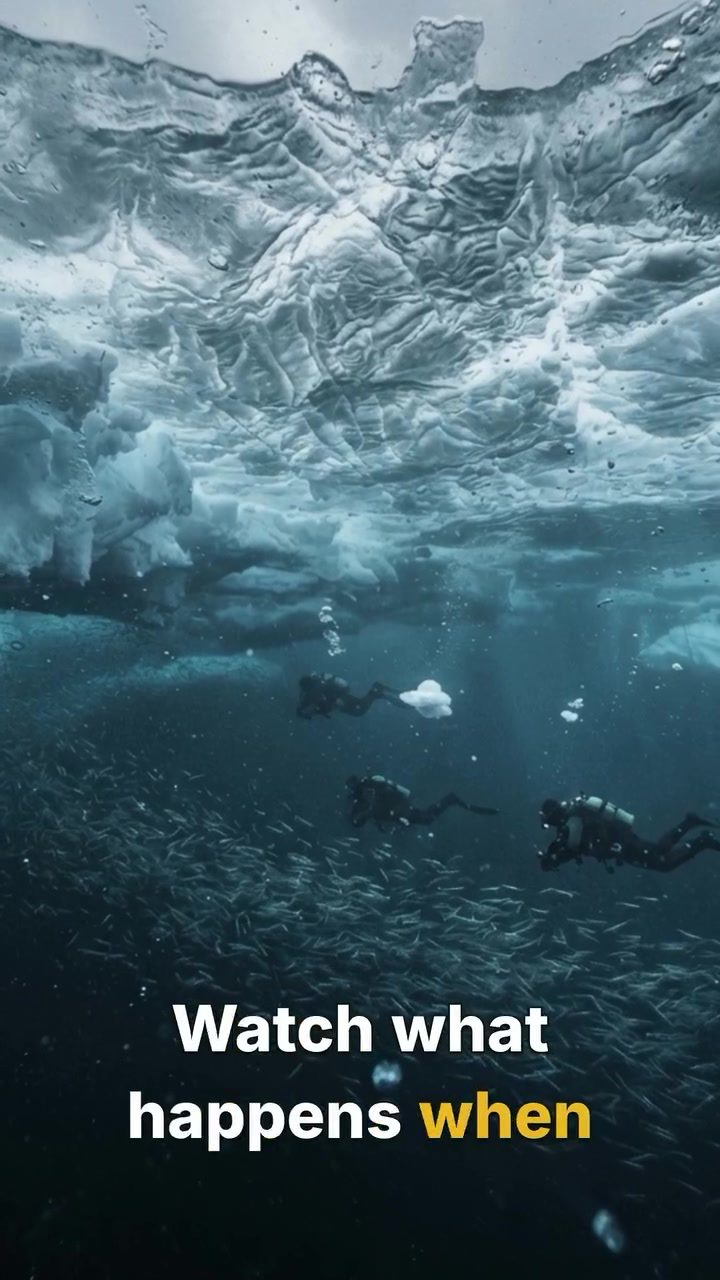
In Antarctica, an unusual phenomenon occurs—ice does not merely float on the sea. Instead, the freezing process extends downward from sea ice. The ice grows as a hollow tube. One specific form has a name: brinacole. This phenomenon had been predicted by scientists, whose work described the physics of the process in great detail. Brine, densely packed with salt, becomes super-cooled. This means it remains liquid even at temperatures below freezing. Once in the sea surface, it begins to sink. The brine is able to cool the water column and the ice sinks while gradually freezing water in a downward column. It may freeze and encapsulate marine life. Scientists had modeled the process for decades, but the observation and documentation of brinacoles in situ has been rare. This was the first filmed occurrence.
The Event of 2011
In 2011, a dramatic event was filmed in Antarctica. This event involved a brinacle reaching the seafloor. During the filming, that the ice formation encased marine life in its path. Specifically, it trapped starfish and urchins within its hollow tube as it descended from the top of the water column to the bottom. The fact that marine life while encased in the ice is still living or dead after being released from the site has not been confirmed. The fact that the camera and crew could film the event may also indicate that marine life could be disturbed by the presence of the crew.
Scientific Advances and Future Research
The fact that scientists had modeled the physics of brinacle formation for decades is a testament to their prior understanding, the physical models of the scenarios remain hypothetical. This event was filmed. It provided a rare opportunity to validate existing models. In the future, scientists may be able to better understand exactly how the ice affects marine life. The cold water that remains in the brinacle may freeze, kill, or temporarily immobilize it. This observation also highlights that it is possible for these ice formations to be a natural phenomenon, but also an opportunity for scientists to understand trans-science research. This is an area where the scientific community explored through multidisciplinary approach.
Future Events
The encounter in 2011 could be more common as the planet warms. This is true if climate change affects polar regions. As the regions of the Arctic and Antarctic are warming faster than other regions, the conditions needed to form brinacles may change. There's the possibility that it may become a common sight in them. The conditions of brinacle formation may also be used as an indicator of climate change in these regions. In the years since, the availability of video equipment and the willingness of divers to explore the depths of the ocean has increased. This means that more observations and documentation of brinacles may occur.
Watch the Reel
Related deep dives
Similar reads based on topic and creator.

Recent articles
Fresh deep dives from the latest Reels we unpacked.



Comments
Be the first to comment.