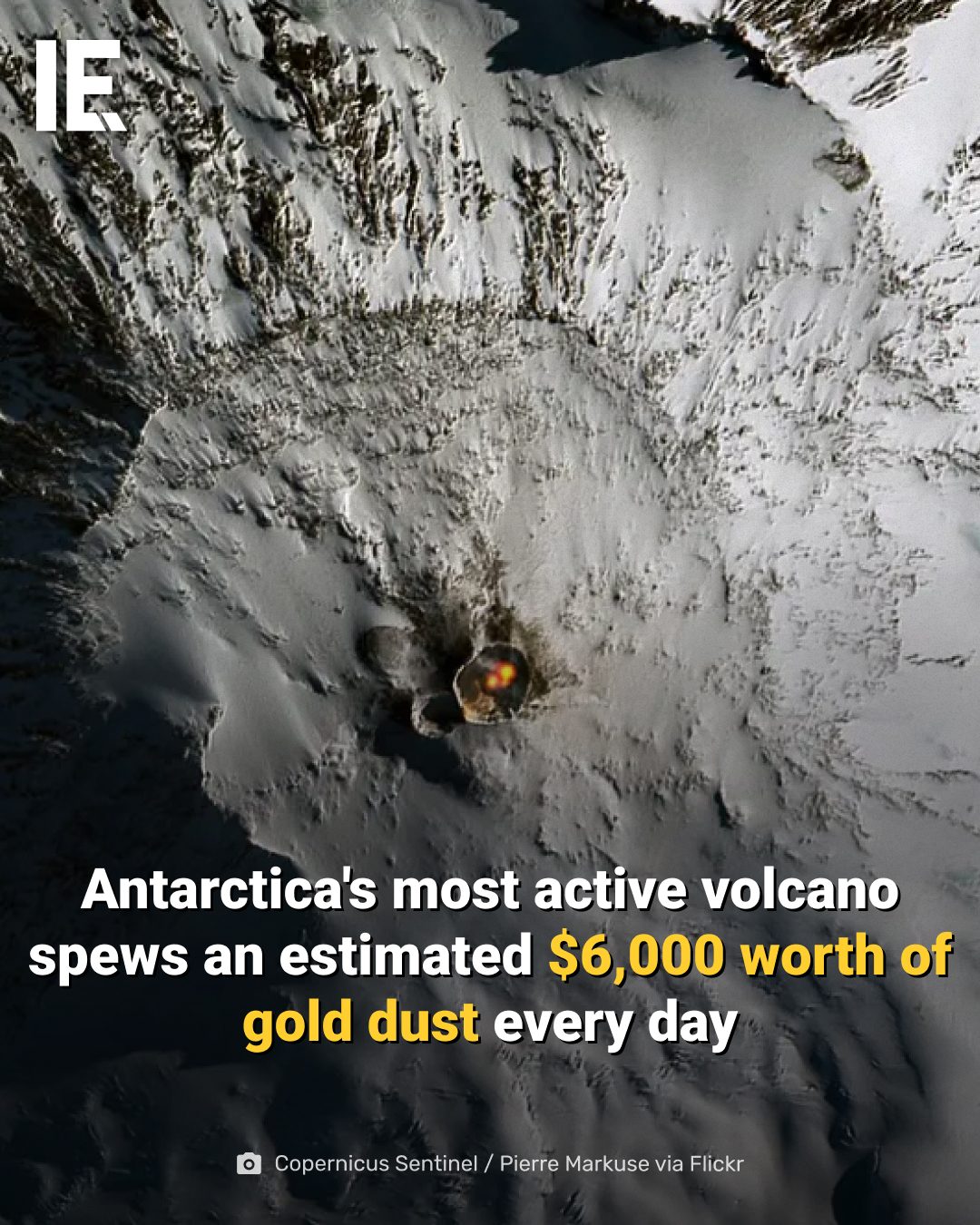
Mount Erebus: Antarctica’s Tallest and Most Active Volcano
Mount Erebus, towering at 3,794 meters, is Antarctica's tallest and most active volcano, with a history of continuous eruption dating back to at least 1841. This remarkable natural feature is not just notable for its size and activity, but also for the unique phenomena that occur within and around it.
Context: Why this matters
Mount Erebus is one of the few places on Earth where a lava lake exists year-round, even through the harsh Antarctic winters. But the volcano's most extraordinary feature is the presence of tiny gold crystals in its gas plumes. These crystals, no larger than 20 micrometers, are dispersed high into the atmosphere and have been detected as far as 1,000 kilometers from the summit. Each day, the volcano releases an estimated 80 grams of gold, worth approximately $6,000.
The Unique Characteristics of Mount Erebus
The Permanent Lava Lake
Erebus is one of only five known volcanoes on Earth that host a permanent lava lake. This lava lake remains consistently red-hot, a stark contrast to the frozen landscape that surrounds it. Such lava lakes are rare due to the specific conditions required to maintain them, making Erebus a unique geological marvel.
Gold Dust in the Gas Plumes
Mount Erebus releases tiny gold crystals in its gas plumes, which are carried far and wide by the wind. These tiny particles, estimated at around 80 grams per day, travel through the air and have been detected up to 1,000 kilometers from the summit. This phenomenon is particularly fascinating not just for its economic potential, but for the scientific insights it provides into the composition and behavior of volcanic gases.
Fumarolic Ice Caves
The escaping gases from the volcano have carved a network of fumarolic ice caves. These caves are home to 61 species of fungi that have adapted to one of the most extreme environments on Earth. The presence of these caves and the fungi they harbor provide a unique opportunity for scientists to study life in extreme conditions.
The Impact on the Environment and Science
Geological and Geophysical Studies
Mount Erebus provides a rich field of study for geologists and geophysicists. The continuous eruption of the volcano, along with the permanent lava lake, offers valuable insights into volcanic activity and the Earth's geodynamic processes. The presence of gold in the gas plumes also sheds light on the geological processes that occur deep within the Earth.
Ecological Studies
The unique ecosystem found within the fumarolic ice caves is a subject of great interest to ecologists. The 61 species of fungi that have adapted to this extreme environment present a fascinating case study in how life can thrive in seemingly inhospitable conditions. This research not only expands our understanding of microbial life but also has potential applications in fields like biotechnology and pharmaceuticals.
Economic Implications
The estimated $6,000 worth of gold released daily by Mount Erebus raises intriguing questions about the economic potential of volcanic activity. While the practicality of harvesting this gold is currently unknown, the idea of tapping into such resources opens up new avenues of thought in mining and resource management.
Practical Tips for Studying and Visiting Mount Erebus
Mount Erebus presents a unique challenge for scientists and adventurers alike. Here are some practical tips for studying or visiting the area:
Preparation for Extreme Conditions
Visiting Mount Erebus requires meticulous planning and preparation. The extreme weather conditions, including sub-zero temperatures and strong winds, demand specialized equipment and weather-proof gear. It’s crucial to be well-versed in winter survival techniques and to have reliable communication devices.
Research Caution and Ethics
When conducting research, it’s important to follow ethical guidelines, especially in such a fragile and pristine environment. Scientists must ensure that their activities do not disrupt the natural ecosystem, particularly the unique microbial life within the fumarolic ice caves.
Safety Precautions
Safety is paramount when venturing into the volcanic terrain. Staying within designated safe zones and adhering to the guidelines provided by local authorities is essential. Equipment like gas masks, protective clothing, and emergency supplies are necessary to mitigate potential hazards.
Important Takeaways
Mount Erebus stands as a testament to the dynamic and diverse nature of our planet. Its continuous eruption, permanent lava lake, and unique geological and biological features make it a treasure trove for scientific research. The presence of gold in the gas plumes not only highlights the economic potential of volcanic activity but also provides insights into the Earth's geological processes. The fungi thriving in the fumarolic ice caves offer a glimpse into the resilience and adaptability of life in extreme environments.
Conclusion
Mount Erebus is more than just a volcano; it is a natural wonder that offers a wealth of scientific knowledge and economic potential. Its unique features, from the permanent lava lake to the gold-bearing gas plumes and the extremophile fungi, make it a subject of endless fascination and study. Understanding and appreciating Mount Erebus provides a deeper insight into the Earth's geological and biological complexities, making it a valuable subject of ongoing exploration and research.
Watch the Reel
Questions readers ask
What makes Mount Erebus unique among volcanoes?
Mount Erebus is unique due to its year-round lava lake and the release of gold dust in its gas plumes. This phenomenon is not observed in many other volcanoes around the world.
How tall is Mount Erebus and why is it significant?
Mount Erebus stands at 3,794 meters, making it Antarctica's tallest volcano. Its significance lies in its continuous activity, with eruptions dating back to at least 1841, and its unique geological features.
What are the gold particles found in Mount Erebus' emissions?
The gold particles dispersed by Mount Erebus are tiny crystals, no larger than 20 micrometers. These minute crystals are carried high into the atmosphere and have been detected far from the volcano's summit.
How does Mount Erebus' lava lake survive the harsh Antarctic climate?
Despite the extreme cold, Mount Erebus' lava lake persists year-round. The continuous heat from the volcano's activity prevents the lava from solidifying, allowing it to maintain its liquid state.
What is the significance of the gold dust released by Mount Erebus?
The gold dust released by Mount Erebus provides insight into the volcano's internal processes and the unique chemistry of its magma. It also offers scientists a rare opportunity to study volcanic emissions and their effects on the atmosphere.
How does Mount Erebus contribute to our understanding of extreme ecosystems?
Mount Erebus' unique ecosystem, including its lava lake and gold dust emissions, serves as a natural laboratory for studying how life adapts to extreme conditions. The volcano's continuous activity and harsh environment provide valuable data for researchers.
What can we learn from the study of Mount Erebus?
Studying Mount Erebus offers insights into volcanic processes, atmospheric chemistry, and the dynamics of extreme environments. The volcano's unique features make it a valuable subject for scientists, providing data that enhances our knowledge of the natural world.
Related deep dives
Similar reads based on topic and creator.




Recent articles
Fresh deep dives from the latest Reels we unpacked.




Comments
Be the first to comment.