The Frozen Frontier of Science
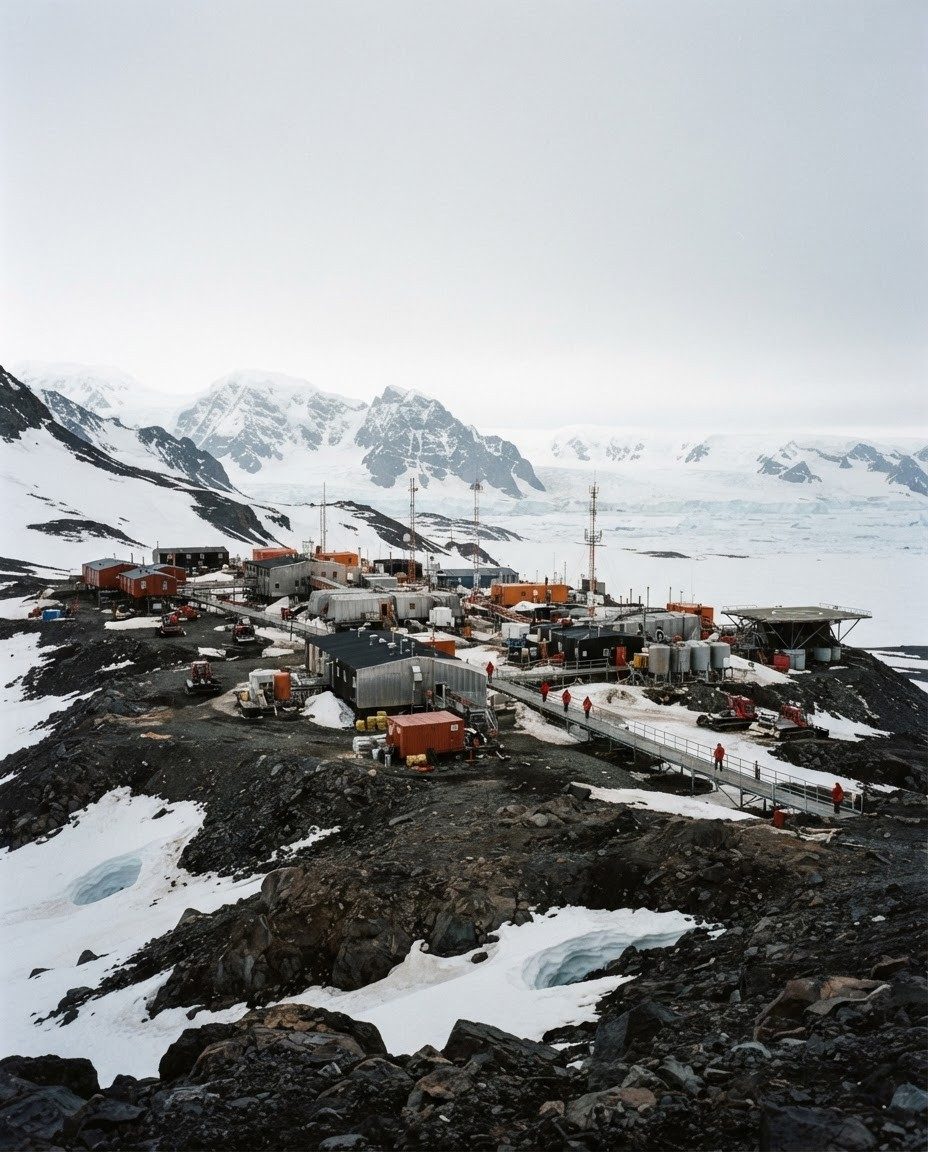
Antarctica, the world's southernmost continent, is often heralded as the final frontier of scientific discovery. Lacking native human inhabitants, lacking trees, and only hosting less than 100 scientists at any given time, Antarctica has been a hub for researchers from across the globe, eager to unlock the secrets of the icy terrain which covers 99% of its land area. One of the most striking images of this scientific endeavor is the sprawling research station, a stark contrast to the surrounding snow-covered mountains and glaciers. In its isolation, the station appears to be a bustling hub of scientific operations. In this harsh, inhospitable environment, research stations function as self-contained ecosystems, housing scientists and support staff alongside the essential infrastructure to conduct their work. The apparent variety of buildings, vehicles, and equipment suggest the station is equipped to handle many different kinds of research, including geology, meteorology, and marine biology. Several men and women can be identified via photo analysis, likely part of the scientific staff or support personnel. The framing appears to be from a drone - likely an important tool for surveying the station and its surroundings.
Life in the Ice
everyday life at the station is a blend of routine and isolation. This also means that the equipment, vehicles, and structures visible are likely highly specialized, some built to withstand the harsh Antarctic conditions. While Antarctica can see temperatures below -100°F, the only warmth for research here would come from equipment, not the sun. One building seems particularly prominent, possibly it's the main dormitory and communal area. Other structures likely house laboratories, storage facilities, and power generation units which would be crucial for sustaining the operations. The research here involves more than just the scientists — logisticians, engineers, and doctors play essential roles in keeping the station functional. To live and work in such an extreme environment, scientists undergo rigorous training, which requires them to build resilience and adaptability. In addition, the research station itself must be prepared for emergencies, with medical facilities and evacuation plans in place. One cannot imagine that this is all enjoyable; the threat of frostbite to exposed skin means that snow blindness must be a constant fear, and scarring from skin conditions would be a very real worry. Any medical problem must be treated immediately, or the researcher would face a very different risk profile. The contrast between the man-made structures and the natural environment is jarring, even angry. The moody Antarctic weather means that any technology deployed in the region must be tested to the limits, while the station operates a balance between its scientific mission and respect for the critical Antarctic ecosystem.
Engineering for the Extreme
Many of the structures visible in this scene are likely equipped with advanced technological systems designed to withstand the extreme conditions. The buildings are probably insulated to retain heat, while the vehicles are specialized for traversing ice and snow. The station is likely powered by a combination of renewable energy sources, diesel generators, and battery storage systems, which are critical for maintaining operations during the long Antarctic nights. The station's equipment and vehicles would be necessary for conducting field research, transporting supplies over long distances, and ensuring the safety of personnel. Researchers often rely on heavy-duty vehicles, snowmobiles, and drones to traverse the icy terrain.
Scientific Research in a Remote Location
The research being conducted at this station likely encompasses a wide range of scientific disciplines. Geologists might study the unique rock formations and the continent's geological history. Meteorologists would monitor weather patterns and climate change effects. Marine biologists would analyze the ecosystems and the impacts of environmental changes on Antarctic wildlife. Contributing to global understanding of climate change. Antarctica has the only known example of a massive volcanic island within a landmass. The ice cores extracted from this isolated location have discovered ancient air trapped in the ice, holding some of the oldest air in the world. A subject of great curiosity are the fossilized remains of extinct plants, which are preserved in the permafrost of the region. The coldest temperature ever recorded on this planet has been in Antarctica, at -128.6°F. The research conducted in Antarctica offers invaluable insights into the planet's past, present, and future. The icy terrain contains records of Earth's climate history, providing scientists with crucial data on global warming and climate change. The unique biodiversity of the region, adapted to extreme conditions, offers insights into the resilience of life.
Watch the Reel
Related deep dives
Similar reads based on topic and creator.


Recent articles
Fresh deep dives from the latest Reels we unpacked.

Comments
Be the first to comment.