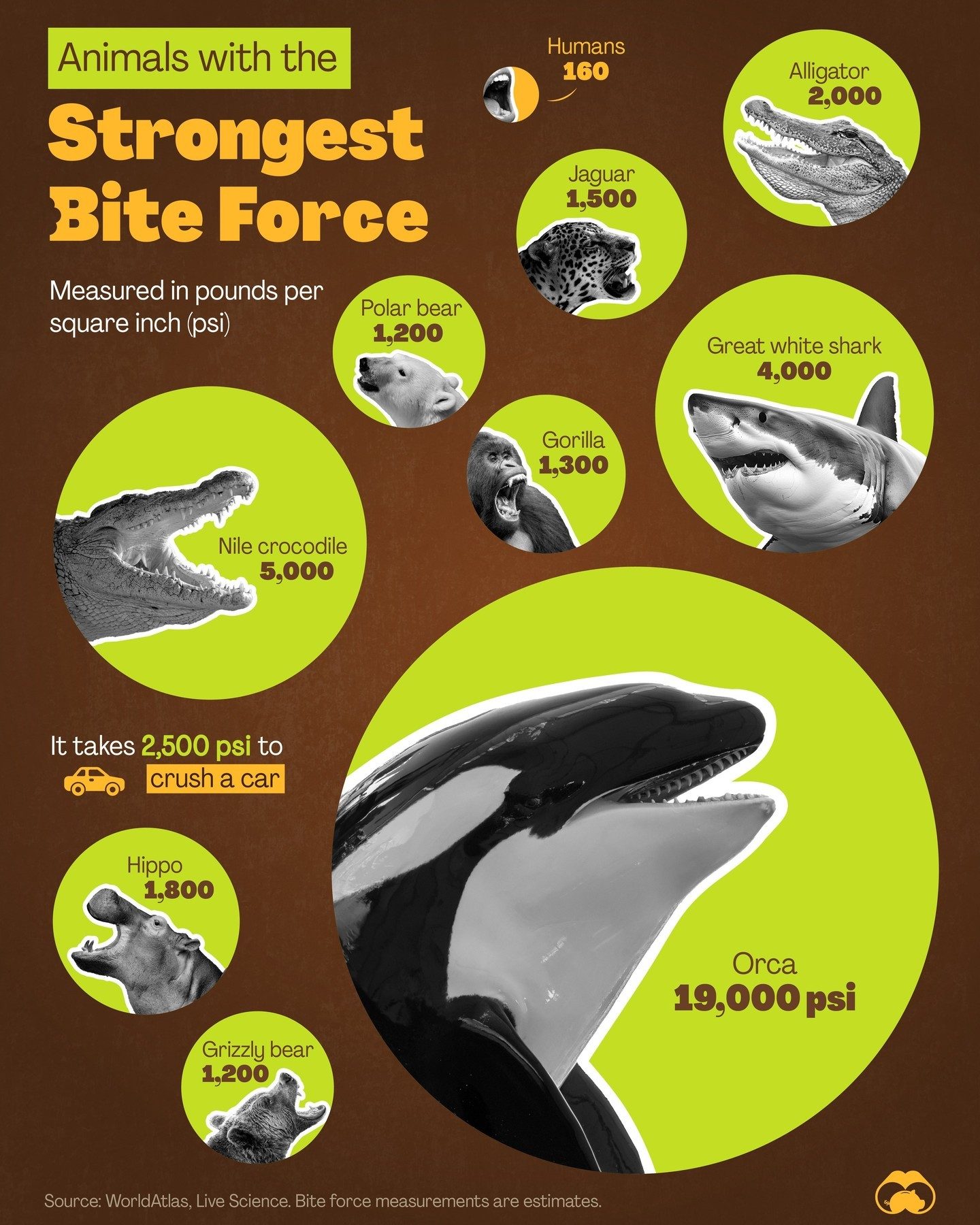
Animal Bite Force Comparison
Understanding the power behind an animal's bite can provide fascinating insights. Bite force is measured in pounds per square inch (psi) and varies greatly among species. For instance, an adult human's bite force averages around 160 psi, while it takes about 2,500 psi to crush a car. This comparison helps put the incredible strength of some animals into perspective.
Context / Why this matters
Bite force is a crucial aspect of an animal's hunting and defensive capabilities. It is determined by the size and shape of an animal's jaw, the strength of its neck and shoulder muscles, and the structure of its skull. Understanding these powerful bites can offer insights into the evolutionary adaptations of different species. This is particularly important for predators, where a strong bite can mean the difference between a successful hunt and going hungry.
Main discussion
Top Bite Forces in the Animal Kingdom
When it comes to the strongest bite forces in the animal kingdom, several species stand out. The orca, also known as the killer whale, tops the list with an astonishing bite force of around 19,000 psi. This makes the orca's bite the strongest in the animal kingdom, capable of crushing even the toughest prey. Other notable mentions include the great white shark, the Nile crocodile, and the hippo.
Orca
The orca, with its powerful jaws and conical teeth, is a formidable predator. Its bite force of 19,000 psi is not just the strongest among marine animals but also the strongest among all animals. Orcas use their powerful bite to hunt and kill a variety of prey, including fish, seals, and even large whales. Their hunting techniques often involve using their teeth to tear through the flesh and blubber of their prey.
Great White Shark
The great white shark is another marine predator with an impressive bite force of 4,000 psi. This powerful bite, combined with the shark's speed and agility, makes it a fearsome hunter. Great whites use their bite to deliver a devastating blow to their prey, often biting through flesh and bone. Their hunting strategies typically involve ambushing their prey from below, using their powerful tails to propel themselves upward and strike.
Nile Crocodile
The Nile crocodile, with a bite force of 5,000 psi, is one of the most powerful land predators. These massive reptiles use their powerful jaws to crush the bones of their prey, making it easier to swallow large chunks of meat. Nile crocodiles are ambush predators, often waiting motionless in the water for their prey to approach before launching a surprise attack.
Hippo
The hippo, with a bite force of 1,800 psi, is another powerful mammalian predator. Hippos are known for their aggressive behavior and have been known to attack humans and other animals that enter their territory. Their powerful jaws and large, sharp tusks make them a formidable opponent.
Other Notable Bite Forces
While the orca, great white shark, Nile crocodile, and hippo have some of the strongest bites, several other animals also possess impressive bite forces. The polar bear, for example, has a bite force of 1,200 psi. This powerful bite, combined with the bear's strength and agility, makes it a formidable predator in its Arctic habitat. Polar bears use their bite to hunt seals and other marine animals, often waiting patiently at breathing holes in the ice before striking.
The jaguar, with a bite force of 1,500 psi, is another powerful predator. Jaguars are known for their ability to swim and climb, making them versatile hunters. Their powerful bite, combined with their strength and agility, makes them a formidable predator in the rainforests of South America.
The grizzly bear, with a bite force of 1,200 psi, is another powerful mammalian predator. Grizzly bears are known for their strength and aggression, making them a formidable opponent in their North American habitats. They use their powerful jaws to hunt a variety of prey, including fish, small mammals, and even large animals like moose and elk.
Practical tips
Understanding bite force can be particularly useful for those who work with or study wild animals. Here are some practical tips for anyone interested in the subject:
Safety Precautions
When dealing with animals that possess powerful bites, safety is paramount. Always follow proper safety protocols and guidelines when working with or observing these animals. This includes wearing appropriate protective gear, maintaining a safe distance, and being aware of the animal's behavior and habits.
Conservation Efforts
Many animals with powerful bites are also threatened or endangered species. Conservation efforts are crucial for protecting these animals and their habitats. Supporting conservation organizations and initiatives can help ensure the survival of these magnificent creatures for future generations.
Research and Study
For those interested in studying the bite forces of different animals, there are several resources available. WorldAtlas and Live Science are excellent sources for data and information on bite forces. Additionally, many universities and research institutions conduct studies on animal behavior and biology, providing valuable insights into the world of these powerful predators.
Important takeaways
The Power of Bite Force
Bite force is a critical aspect of a predator's hunting and defensive capabilities. Understanding the bite forces of different animals can provide valuable insights into their hunting strategies, habitats, and evolutionary adaptations. For example, the orca's powerful bite enables it to hunt and kill a variety of prey, while the great white shark's powerful jaws and sharp teeth make it a fearsome hunter in the ocean.
The Importance of Conservation
Many animals with powerful bites are also threatened or endangered species. Conservation efforts are crucial for protecting these animals and their habitats. By supporting conservation organizations and initiatives, we can help ensure the survival of these magnificent creatures for future generations.
The Role of Research
Research and study play a vital role in understanding the bite forces of different animals. By conducting studies and collecting data, researchers can provide valuable insights into the world of these powerful predators. This information can be used to develop conservation strategies, improve animal husbandry practices, and enhance our understanding of the natural world.
Conclusion
The bite forces of different animals vary greatly, from the powerful orca to the formidable great white shark, Nile crocodile, and hippo. Understanding these bite forces can provide valuable insights into the hunting strategies, habitats, and evolutionary adaptations of these magnificent creatures. Whether you are a wildlife enthusiast, a researcher, or a conservationist, learning about the bite forces of different animals can enhance your appreciation for the natural world and the incredible diversity of life on Earth.
Watch the Reel
Questions readers ask
How does the orca's bite force compare to that of other large predators?
The orca's bite force of 19,000 psi is significantly higher than that of other large predators. For instance, a polar bear has a bite force of around 1,235 psi, and a grizzly bear has about 1,280 psi.
What factors contribute to the incredible bite force of certain animals?
Several factors contribute to an animal’s bite force, including the size and shape of the jaw, the strength of the neck and shoulder muscles, and the structure of the skull. These elements work together to create powerful, efficient bites.
How does a human's bite force compare to the bite force of an orca?
A human's average bite force is around 160 psi, which is significantly lower than an orca's bite force of 19,000 psi. This highlights the enormous difference in hunting and defensive capabilities between the two species.
Is it true that some animals have a bite force strong enough to crush a car?
Yes, certain animals, like the orca, have a bite force that is strong enough to crush a car. An orca's bite force of 19,000 psi is more than seven times the force needed to crush a car, which is about 2,500 psi.
Which animals have the strongest bites?
Some of the animals with the strongest bites include the orca, with a bite force of 19,000 psi, and the hippo, with a bite force of 1,821 psi. These animals are known for their powerful jaws and biting strength.
How is bite force measured?
Bite force is typically measured in pounds per square inch (psi). This unit measures the pressure exerted by an animal’s bite, providing a standardized way to compare the biting strength of different species.
Related deep dives
Similar reads based on topic and creator.




Recent articles
Fresh deep dives from the latest Reels we unpacked.




Comments
Be the first to comment.