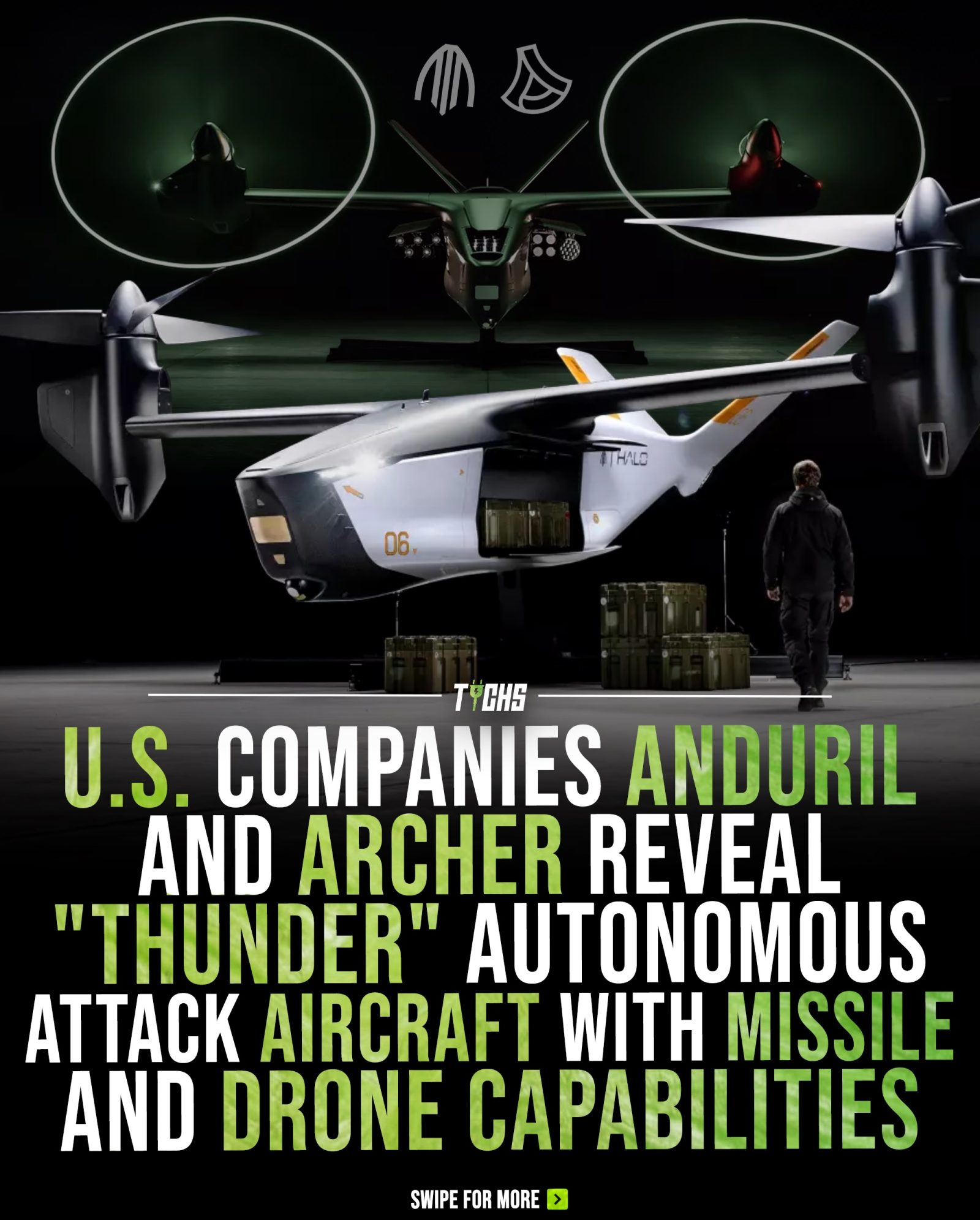
Autonomous Attack Aircraft: The Thunder
The Thunder, a new autonomous attack aircraft, represents a significant advancement in military technology. Developed by U.S. companies Archer and Anduril Industries, the Thunder is designed to support crewed aircraft during complex military missions. This Group 5 autonomous VTOL (Vertical Takeoff and Landing) aircraft can take off and land without a runway, fly faster and farther than many conventional drones, and carry modular payloads, including missiles and drones. Its flexible design allows it to perform multiple mission types, with its first flight planned for 2027.
Context / Why This Matters
Autonomous aviation is rapidly evolving, and platforms like the Thunder could play a crucial role in future military operations. By combining artificial intelligence, speed, and mission flexibility, the Thunder offers a new paradigm in military aviation. This aircraft is designed to augment crewed aircraft, providing support in complex missions where human pilots might face significant risks. The Thunder's ability to operate autonomously and carry various payloads makes it a versatile asset in modern warfare.
The Rationale Behind Autonomous Aircraft
The development of autonomous aircraft like the Thunder is driven by several key factors:
- Enhanced Safety: Autonomous aircraft can operate in hazardous environments without risking human lives.
- Mission Flexibility: The modular design allows the Thunder to adapt to different mission requirements, making it a versatile tool for various military operations.
- Efficiency: Autonomous aircraft can fly longer distances and at higher speeds, making them more efficient than traditional crewed aircraft.
- Cost-Effective: Autonomous platforms can reduce the need for human crews, lowering operational costs and increasing mission effectiveness.
Main Discussion
Modular Payloads and Mission Flexibility
One of the standout features of the Thunder is its modular design, which allows it to carry a variety of payloads. These payloads can include missiles and drones, making the Thunder a versatile platform capable of performing multiple mission types. This flexibility is crucial in modern warfare, where missions can vary widely in scope and complexity.
Vertical Takeoff and Landing (VTOL)
The Thunder's VTOL capability is a game-changer in military aviation. This feature allows the aircraft to take off and land without a runway, making it highly mobile and adaptable to various terrains. Whether in a dense urban environment or a remote desert, the Thunder can operate efficiently, providing support to ground troops and other military assets.
Autonomous Operations and Artificial Intelligence
Autonomous operations are at the heart of the Thunder's design. The aircraft is equipped with advanced AI systems that enable it to make real-time decisions and adapt to changing conditions. This level of autonomy not only enhances mission effectiveness but also reduces the strain on human operators, allowing them to focus on higher-level strategic tasks.
Integration with Crewed Aircraft
The Thunder is designed to support crewed aircraft, providing a critical advantage in complex missions. By working in tandem with human-piloted aircraft, the Thunder can handle more dangerous or mundane tasks, freeing up crewed aircraft for more strategic missions. This synergy between autonomous and crewed platforms is a key aspect of modern military operations.
Mission Capabilities
The Thunder's mission capabilities are vast and varied. It can perform reconnaissance, deliver payloads, and engage in combat operations. Its ability to carry missiles and drones makes it a formidable asset in both offensive and defensive roles. The modular design ensures that the Thunder can be quickly reconfigured for different mission types, making it a versatile tool for military strategists.
Practical Tips
Understanding the Potential of Autonomous Aircraft
When considering the potential of autonomous aircraft like the Thunder, it's essential to understand their capabilities and limitations. These aircraft are designed to support crewed aircraft, providing a critical advantage in complex missions. However, they are not a replacement for human intelligence and decision-making. Instead, they augment human capabilities, making missions more effective and safer.
Preparing for the Future of Military Operations
As autonomous aviation continues to advance, it's crucial to stay informed about the latest developments. Platforms like the Thunder are just the beginning of what's possible in the world of autonomous military technology. Staying updated on the latest advancements can help military strategists prepare for future operations and leverage these technologies to their fullest potential.
Ensuring Ethical and Responsible Use
While the Thunder and other autonomous aircraft offer significant advantages, it's important to ensure their ethical and responsible use. This includes adhering to international laws and regulations, as well as ensuring that these technologies are used in a manner that respects human rights and dignity. By doing so, we can harness the power of autonomous aviation while maintaining our commitment to ethical standards.
Important Takeaways
The Thunder represents a significant advancement in autonomous military aviation. Its modular design, VTOL capability, and autonomous operations make it a versatile and effective tool for modern warfare. As platforms like the Thunder continue to evolve, they will play an increasingly important role in military operations, augmenting crewed aircraft and providing critical support in complex missions.
The future of military aviation is autonomous, and platforms like the Thunder are leading the way. By understanding their capabilities and limitations, and ensuring their ethical and responsible use, we can harness the power of autonomous aviation to create a safer and more effective military force.
Conclusion
Autonomous attack aircraft like the Thunder are set to revolutionize military operations. With their modular design, VTOL capability, and advanced AI systems, these platforms offer a new level of flexibility, efficiency, and safety in military aviation. As we look to the future, it's crucial to stay informed about the latest developments in autonomous technology and ensure that these powerful tools are used responsibly and ethically. By doing so, we can leverage the full potential of autonomous aviation to enhance our military capabilities and protect our interests in an ever-changing world.
Watch the Reel
Questions readers ask
What is the Thunder autonomous attack aircraft?
The Thunder is an advanced autonomous attack aircraft developed by Anduril Industries and Archer. It is designed for military use, featuring a Group 5 VTOL (Vertical Takeoff and Landing) design, AI capabilities, and modular payloads, which enable it to perform various missions without a runway.
What are the key features of the Thunder autonomous attack aircraft?
The Thunder boasts several key features, including its VTOL capabilities, long-range flight, and the ability to carry modular payloads such as missiles and drones. Its AI-driven design allows for autonomous navigation and mission execution, making it versatile for complex, high-risk military operations.
How does the Thunder support crewed aircraft in military missions?
The Thunder is designed to augment crewed aircraft by handling high-risk missions autonomously. This allows crewed aircraft to focus on other critical tasks, thereby enhancing overall mission effectiveness and reducing risk to human pilots.
What is the significance of the partnership between Anduril Industries and Archer?
The partnership between Anduril Industries and Archer combines the strengths of both companies in autonomous technology and aerospace engineering. This collaboration is pivotal in developing advanced military aviation technology, such as the Thunder, which could reshape future military operations.
What makes the Thunder different from conventional military drones?
Unlike conventional drones, the Thunder features a VTOL design, allowing it to take off and land without a runway. Additionally, its long-range capabilities and modular payloads make it more versatile and adaptable to various mission scenarios. The integration of AI further enhances its operational capabilities.
What are the expected benefits of the Thunder in military operations?
The Thunder is expected to significantly enhance military operations by providing autonomous support for crewed aircraft, reducing the risk to human pilots, and performing a variety of missions with its modular payloads. Its advanced technology will contribute to more efficient and effective military strategies.
When is the first flight of the Thunder autonomous attack aircraft planned?
The first flight of the Thunder is scheduled for 2027. This milestone will be a significant step in demonstrating the aircraft's capabilities and paving the way for its potential deployment in military operations.
Recent articles
Fresh deep dives from the latest Reels we unpacked.




Comments
Be the first to comment.