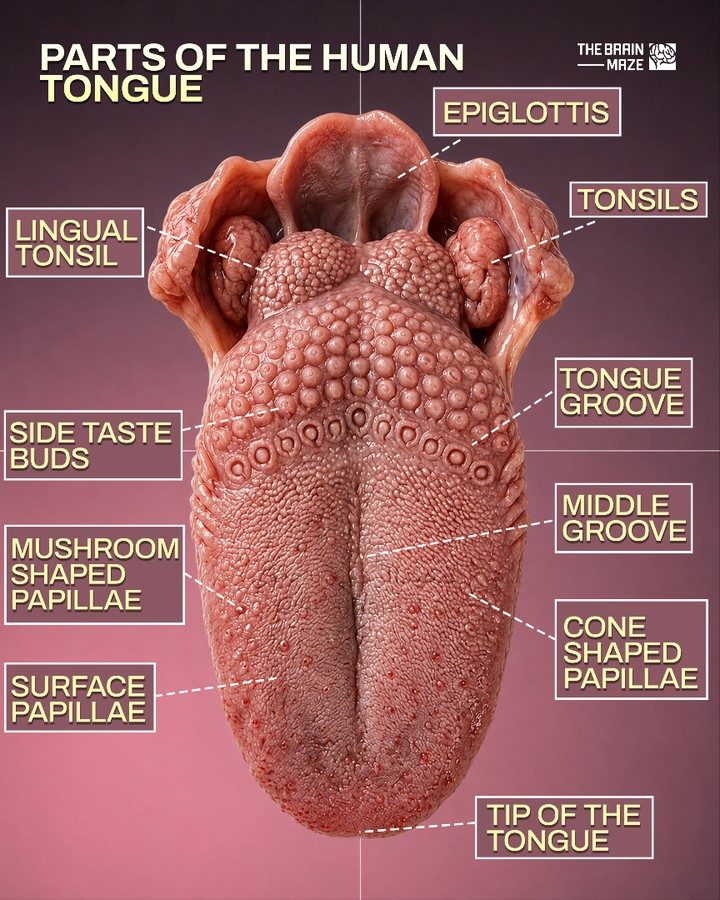
The Human Tongue: A Powerhouse of Function and Structure
The human tongue is a multifunctional organ, essential for a range of activities from tasting and speaking to chewing and swallowing. Its surface is covered with tiny papillae that play a crucial role in detecting flavors and providing texture. The tongue's various regions work in tandem to move food, form words, and support the digestive process. Additionally, structures like the tonsils and epiglottis play a vital role in protecting the throat and airway during swallowing. Understanding the anatomy of the tongue can provide valuable insights into its multifaceted functions.
Context / Why This Matters
The tongue is often overlooked in discussions about human anatomy, yet it is a critical component of the digestive and respiratory systems. Its complex structure and functionality make it a fascinating subject for study. Knowing the different parts and their roles can enhance appreciation for the tongue's importance in daily activities. It can also offer clues about what might be going on when something feels off in the mouth or throat.
Main Discussion
The Tongue's Anatomical Structures
The tongue is composed of several key structures, each with a specific function. The epiglottis, a flap of cartilage, helps to direct food and liquids toward the esophagus and away from the trachea during swallowing. The lingual tonsil, located at the base of the tongue, contributes to the body's immune defenses by trapping pathogens. The tonsils, commonly known for their role in fighting infections, are also part of the body's lymphatic system.
Papillae and Taste Buds
The surface of the tongue is covered with papillae, which are small, nipple-like projections. These papillae house the taste buds, which are responsible for detecting different flavors. There are several types of papillae, each serving a unique purpose:
- Mushroom-shaped papillae: These are the most common and are found throughout the tongue's surface.
- Cone-shaped papillae: Located primarily at the back of the tongue, these papillae provide a rough texture that helps in gripping and manipulating food.
- Surface papillae: These are smaller and more numerous, contributing to the overall texture and sensitivity of the tongue.
Grooves and Texture
The tongue also features various grooves that aid in its functions. These include the tongue groove, which runs along the midline of the tongue, and the middle groove, which divides the tongue into symmetrical halves. These grooves, along with the different types of papillae, contribute to the tongue's unique texture and flexibility, allowing it to perform a wide range of tasks.
The Tip of the Tongue
The tip of the tongue is particularly sensitive and is densely packed with taste buds. This region is crucial for detecting sweet, salty, and sour tastes. The tip's mobility and sensitivity make it an essential tool for exploring and manipulating food, as well as for forming the precise movements required for clear speech.
Practical Tips
While the tongue is a resilient organ, it can also be vulnerable to injury or infection. Here are some practical tips to keep your tongue healthy:
Maintain Oral Hygiene
Regular brushing and flossing help remove bacteria and food particles that can accumulate on the tongue. Using a tongue scraper can also help keep the tongue's surface clean and reduce the buildup of bacteria.
Stay Hydrated
Drinking plenty of water helps maintain the tongue's moisture and elasticity. Proper hydration is essential for the tongue's sensory functions and overall oral health.
Protect Your Tongue
Avoid biting or burning the tongue, as these injuries can be painful and may lead to infections. Use caution when eating hot foods or using sharp objects in the mouth.
Important Takeaways
The human tongue is a remarkable organ with a complex structure and multifaceted functions. Understanding its anatomy can provide deeper insights into its role in digestion, speech, and sensory perception. By taking care of the tongue, individuals can support overall oral health and enhance the quality of their daily activities.
Conclusion
The human tongue is a powerhouse of function and structure, essential for a wide range of activities from tasting and speaking to chewing and swallowing. Its intricate design, including various types of papillae, grooves, and taste buds, enables it to perform complex tasks with precision and efficiency. By appreciating the tongue's anatomy and functionality, individuals can gain a deeper understanding of its importance in daily life and take steps to maintain its health.
Watch the Reel
Questions readers ask
What are the primary functions of the human tongue?
The human tongue serves several important functions, including tasting, speaking, chewing, and swallowing. It helps in breaking down food, forming words, and aids in the digestive process by pushing food towards the throat.
What are papillae and what role do they play on the tongue?
Papillae are tiny, nub-like structures covering the tongue's surface. They contain taste buds and help detect different flavors. Some papillae also have texture-sensing capabilities, aiding in the overall sensation of food.
How does the tongue protect the throat and airway?
The tongue works in conjunction with structures like the epiglottis and tonsils to safeguard the throat and airway. During swallowing, the tongue helps guide food away from the airway, while the epiglottis closes off the windpipe, and the tonsils act as a barrier against pathogens.
Can different regions of the tongue detect specific tastes?
The concept of taste regions on the tongue, often illustrated as a 'tongue map,' is outdated and inaccurate. Today, research shows that all areas of the tongue contain taste receptors for sweet, salty, sour, bitter, and umami flavors.
What is the role of the tongue in speech?
The tongue is crucial for speech, as it helps form words by altering the shape of the mouth and directing airflow. By positioning itself in various ways, the tongue influences the sounds produced and facilitates clear communication.
Related deep dives
Similar reads based on topic and creator.




Recent articles
Fresh deep dives from the latest Reels we unpacked.




Comments
Be the first to comment.