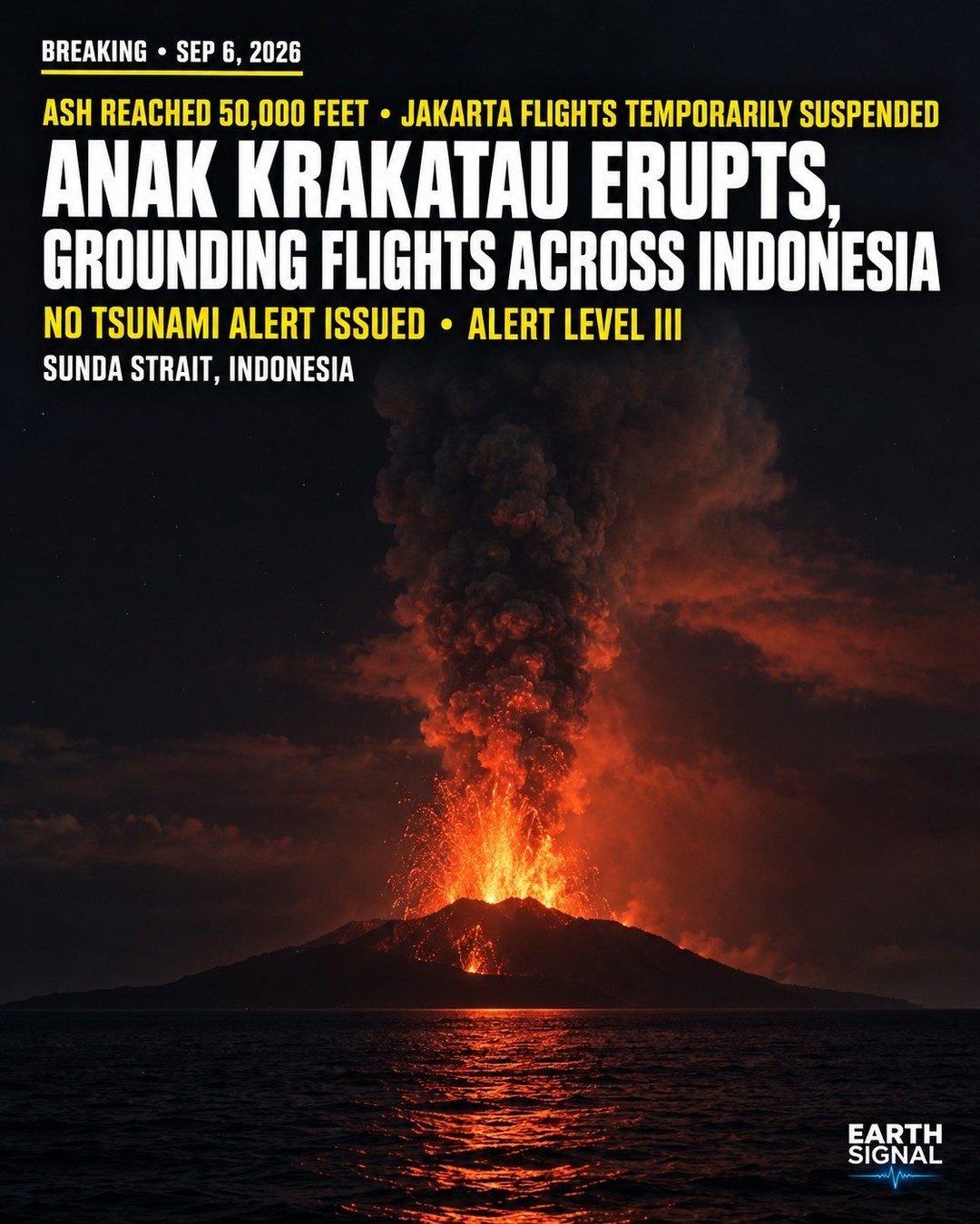
Sunda Strait's Anak Krakatau Eruption: A Disruptive Force
Disrupting air traffic, an unexpected volcanic eruption at Anak Krakatau highlights the volatility of Indonesia’s geology. Located in Indonesia, it may feel remote, but turbulence in the Sunda Strait has repercussions for the entire region—unlike others, this eruption flows on more concrete rules of nature than fleet management. Normally, ash would only reach up to 10,000 feet. However, disruption of that magnitude can be devastating. Unlike some volcanic eruptions, this one resulted in a drastic situation. Indonesia’s emergency management spokesperson explained that evacuations are in full swing. The ash cloud reached 50,000 feet, grounding flights across Indonesia. Awaiting further updates, the fact remains that evacuations are more than just a precaution in the event of a tsunami. There is no tsunami alert.
Flights Grounded: Anak Krakatau's Reach
Jakarta’s international flights and domestic connections were suspended abruptly and totally. Flights to the cities of Jakarta, Surabaya, and Bandung were canceled; at the same time, there is a traffic shutdown on the island of Java. Over the past five years, Anak Krakatau has erupted three times. This eruption is the fourth, making it the most disruptive to flights. While Indonesia’s volcanic activity is fairly well documented, it is easy to forget the potential for disruption with such natural disasters. The eruption resulted in a standoff between national aviation and disaster management, causing the temporary closure of Jakarta’s airport. This isn’t the first time a volcanic eruption has affected Jakarta. In 2018, Anak Krakatau erupted around the same time of year, yet the ash only reached 10,000 feet. How will the current eruption play out? No one knows, but the current suspension of all scheduled flights is expected to continue until the ash cloud subsides. The alert level for Anak Krakatau is III. At that level, the community is urged to beware of the potential for pyroclastic flows and lahars, which are fluid mud or volcanic rock flows. Lacking the proper time to prepare for each disaster scenario, volcanic hazards remain an ongoing threat. The alert level of III indicates the need for residents to stay informed. Eventual reopening of the airport and resumption of flights will be based on the advice of the Indonesian Meteorological, Climatological, and Geophysical Agency as they monitor air quality and the potential for pyroclastic flows.
Separating Volcanic Ash from Tsunami Dangers
Unlike the 2018 eruption, Anak Krakatau’s recent activity didn’t produce a tsunami. While the incident of 2018 saw a subduction zone slip resulting in a tsunami, this time Indonesians can breathe a sigh of relief. The ash cloud is not only a killer, it’s catastrophic. Unlike a tsunami, where residents can evacuate to higher ground, the ash cloud affects the entire island. It is imperative that regional authorities take steps to mitigate the ongoing danger. Indonesia’s Sunda Strait is home to 54 volcanos. Anak Krakatau is just one of the many. Yet, it’s the recent activity of Anak Krakatau that has sparked international attention. While the ash cloud has caused massive flight disruption, the good news is that the current eruption is not expected to create a tsunami. The threat of a tsunami is not yet at the forefront of authorities’ minds.
Watch the Reel
Related deep dives
Similar reads based on topic and creator.


Recent articles
Fresh deep dives from the latest Reels we unpacked.

Comments
Be the first to comment.