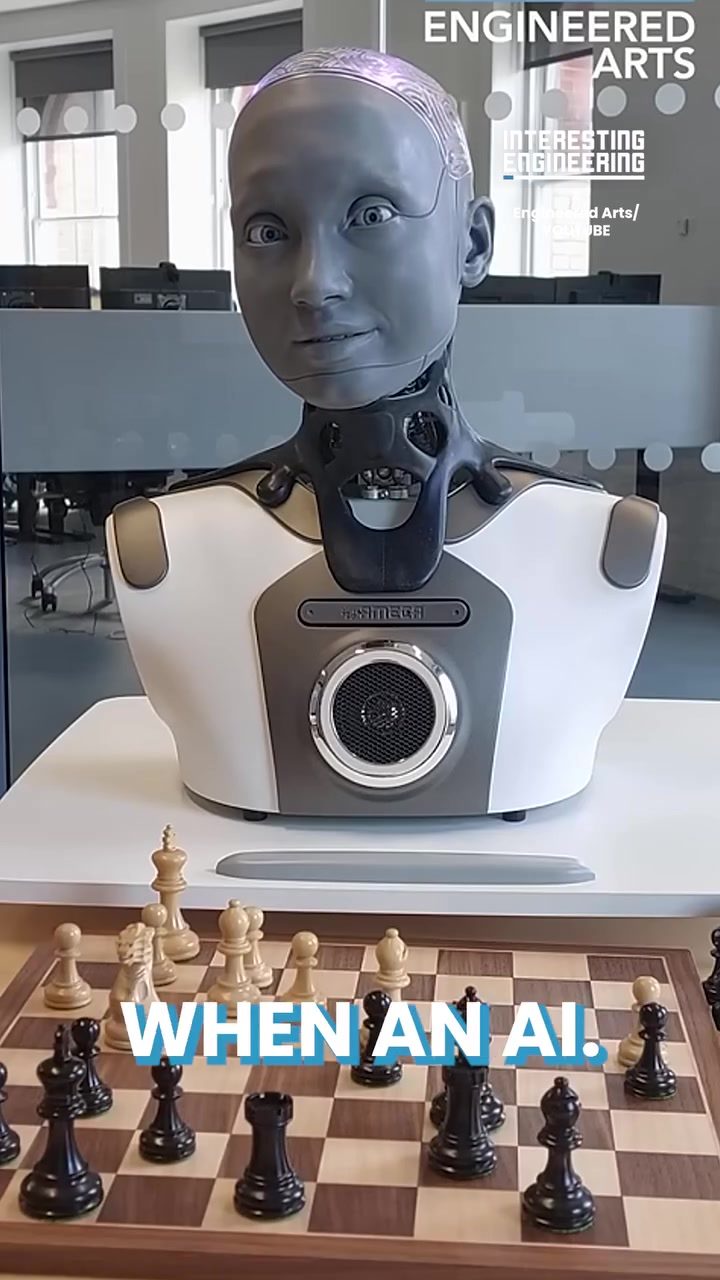
Robotics and Chess: The Unlikely Match
Robots and chess might seem like an unlikely pairing, but the combination of advanced robotics and the strategic game has produced some intriguing results. A recent demonstration featuring a humanoid robot named Ameca, built by Engineered Arts, illustrates the capabilities and limitations of AI in chess play. The robot's performance highlights the advancements in robotics, artificial intelligence, and natural language processing.
Context / Why This Matters
Chess has long been a benchmark for evaluating AI capabilities. The game's complexity and strategic depth make it an ideal testbed for machine intelligence. Robots, on the other hand, have traditionally been mechanical devices designed for specific tasks. The integration of AI and robotics has opened new avenues for research and development, pushing the boundaries of what machines can achieve.
Main Discussion
The Advancements in Humanoid Robotics
Humanoid robots, such as Ameca, represent a significant leap in robotics technology. These robots are designed to mimic human movements and expressions, making them more relatable and interactive. Ameca, in particular, demonstrates advanced facial expressiveness, which is a crucial step in creating more natural and intuitive human-robot interactions.
AI in Chess: A Test of Strategy and Intelligence
Chess is a game that requires both tactical and strategic thinking. The ability to anticipate and counter an opponent's moves is essential for success. AI has made significant progress in mastering the game, with programs like AlphaZero achieving superhuman levels of play. However, integrating AI into a physical robot adds an extra layer of complexity. The robot must not only calculate the best moves but also execute them accurately.
Natural Language Processing and Telepresence
In addition to chess, the demonstration highlights the robot's ability to communicate naturally via ChatGPT and telepresence. This capability allows the robot to engage in conversations, express emotions, and interact with humans in a more lifelike manner. Telepresence technology enables the robot to be controlled remotely, providing a sense of presence and interaction that was previously impossible.
Practical Tips
Improving AI Performance in Chess
For those interested in improving AI performance in chess, several practical tips can be implemented:
-
Enhance Strategic Thinking: Continuous training and refinement of algorithms can improve an AI's strategic thinking. Exposing the AI to a variety of chess games and scenarios can help it develop a broader understanding of the game.
-
Precision in Execution: Ensure that the robot's physical movements are precise and accurate. This requires fine-tuning the robot's mechanical components and ensuring that the AI's calculations are reliably translated into physical moves.
-
Adaptive Learning: Implement adaptive learning techniques that allow the AI to improve over time. By analyzing past games and learning from mistakes, the AI can continuously enhance its performance.
Important Takeaways
The Future of AI and Robotics
The demonstration of Ameca playing chess underscores the potential of AI and robotics. The ability to combine strategic thinking, natural language processing, and telepresence makes these robots versatile and capable of performing complex tasks. As technology continues to advance, we can expect to see more sophisticated robots that can engage in a wider range of activities, from entertainment to professional applications.
The Role of Human Interaction
Human interaction plays a crucial role in the development of advanced robotics. By mimicking human expressions and engaging in natural conversations, robots like Ameca become more relatable and user-friendly. This integration of human-like qualities in robots can enhance their utility in various fields, from healthcare to customer service.
Conclusion
The intersection of robotics and chess provides a unique perspective on the advancements in AI and machine intelligence. While robots like Ameca can play chess and engage in natural conversations, there is still room for improvement. By focusing on precision in execution, strategic thinking, and adaptive learning, the future of AI and robotics looks promising. As technology continues to evolve, we can expect to see even more remarkable achievements in the field of robotics, further blurring the lines between human and machine capabilities.
Watch the Reel
Questions readers ask
Why was the chess match with Ameca significant?
The chess match with Ameca, a humanoid robot by Engineered Arts, was significant because it showcased the integration of advanced robotics, artificial intelligence, and natural language processing. It highlighted the progress made in combining these technologies and offered insights into the capabilities and limitations of AI in real-time strategy games.
What makes chess a good test for AI and robots?
Chess is a great test for AI and robots due to its complexity and strategic depth. The game requires advanced planning, anticipation of opponent moves, and a thorough understanding of various strategies, which makes it an ideal benchmark for evaluating machine intelligence and real-time decision-making.
How does Ameca's chess performance reflect advancements in robotics?
Ameca's ability to play chess demonstrates the progress in developing humanoid robots that can interact with their environment in meaningful ways. The robot's performance in a complex game like chess indicates that advanced robotics can handle more sophisticated tasks than previously thought.
What challenges did Ameca face during the chess match?
Ameca faced challenges that included real-time decision-making, anticipating opponent moves, and executing precise actions based on its AI algorithms. These challenges highlight the current limitations of AI in handling unpredictable and complex scenarios as efficiently as humans.
What role does natural language processing play in Ameca's performance?
Natural language processing is crucial for Ameca's ability to understand and respond to commands during the chess match. This technology allows the robot to interpret verbal instructions and integrate them into its decision-making process, enhancing its interaction and performance during the game.
What can we learn from the Ameca robot losing at chess?
Ameca's loss at chess provides valuable insights into the current state of AI and robotics. It shows that while significant progress has been made, there are still limitations in real-time strategic thinking, complex decision-making, and adapting to unpredictable situations, which are areas that require further development.
How does Ameca's design by Engineered Arts contribute to its chess-playing capabilities?
Engineered Arts designed Ameca with advanced robotics and AI capabilities, allowing it to perform complex tasks such as playing chess. The design incorporates features that enable precise movements and real-time processing, which are essential for executing strategies and making decisions during the game.
Related deep dives
Similar reads based on topic and creator.


Recent articles
Fresh deep dives from the latest Reels we unpacked.




Comments
Be the first to comment.