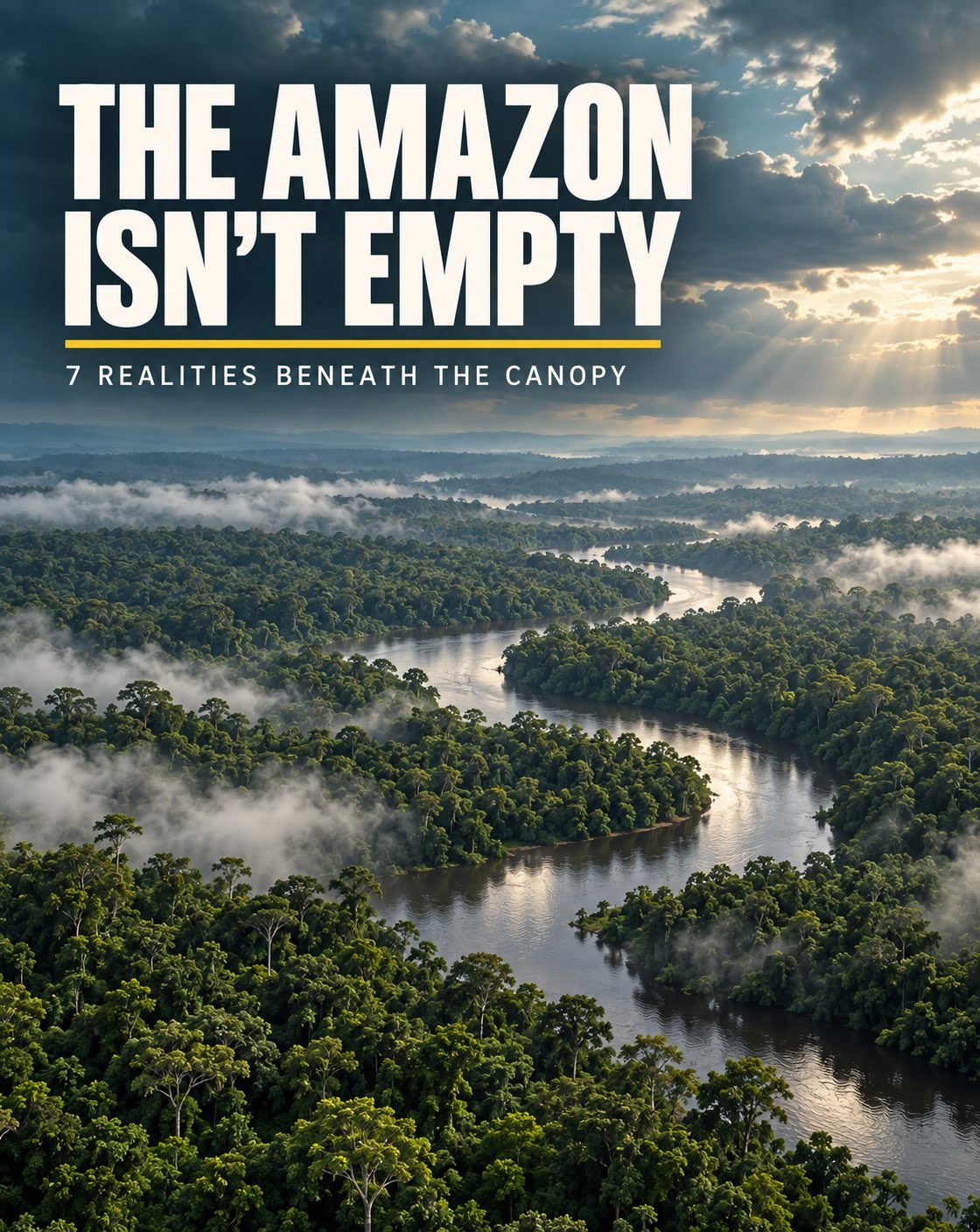
The Amazon: Layer of Life
The Amazon rainforest is a living, dynamic system, perhaps the most complex on Earth. It's far from empty. Fewer than 2 million people inhabit over 2 million square miles. 7 million square kilometers. Spanish colonists in the 16th century referred to the forests of the Amazon as Tierra Incognita, or uncharted land. This vast wilderness is home to a stunning array of flora and fauna, as well as some indigenous peoples who live in voluntary isolation. Since the last millennium, some 381 new organisms were discovered. The Amazon hosts unfathomably diverse ecosystems and species that depend on each other, from the tiny insects to the largest predators. This delicate balance is under threat, with some species disappearing before scientists even discover them. The canopy is a dense layer of leaves and branches used by many animals for shelter and food. The sun rarely pierces through; there is very little sunlight on the floor. Bullet ants, electric eels, toxic plants, and nocturnal animals hide in the deep hiding in its understory, revealing just how extreme this ecosystem can be.
Hiding beneath the canopy
In the densest sections of the Amazon, very little sunlight reaches the ground. The canopy filters out nearly all of the direct sunlight, creating a unique environment on the forest floor. These shady conditions allow for the growth of distinctive plant species that have adapted to low-light conditions. The canopy itself supports a plethora of life, from insects and birds to mammals, creating a complex web of interdependence.
Animals in the dark
Nighttime in the Amazon rainforest brings a transformation. As the sun sets and darkness falls, the rainforest becomes a different world. In the dense understory, electric eels produce the strongest electrical discharge of any animal. Volta’s electric eel, delivering up to 860 volts this enables it to hunt and defend itself effectively in the murky waters of the Amazon River. Electric eels are not the only nocturnal inhabitants of the rainforest. Howler monkeys, frogs, insects, birds, and mammals come to life, filling the air with a cacophony of sounds. This vibrant soundscape is a testament to the Amazon's incredible biodiversity and the intricate relationships between its many species. "Howler monkeys, frogs, insects, birds, and mammals transform the rainforest into a living soundscape."
Unseen treasures
The Amazon rainforest is a treasure trove of undiscovered species. Scientists continue to describe new plants and animals, many of which have unique adaptions to their environments. From the smallest insects to the largest predators, the Amazon's biodiversity is a testament to the incredible complexity and richness of this ecosystem. Despite ongoing research, it remains a mystery, harboring secrets that scientists are eager to unravel. Recent discoveries, such as the bullet ant and the electric eel, highlight the Amazon's role as a crucible for evolutionary adaptation. However, the Amazon's biodiversity is under threat from deforestation, climate change, and other human activities, putting many of its species at risk.
Watch the Reel
Related deep dives
Similar reads based on topic and creator.



Recent articles
Fresh deep dives from the latest Reels we unpacked.



Comments
Be the first to comment.