The rainforest with a border-patching existence
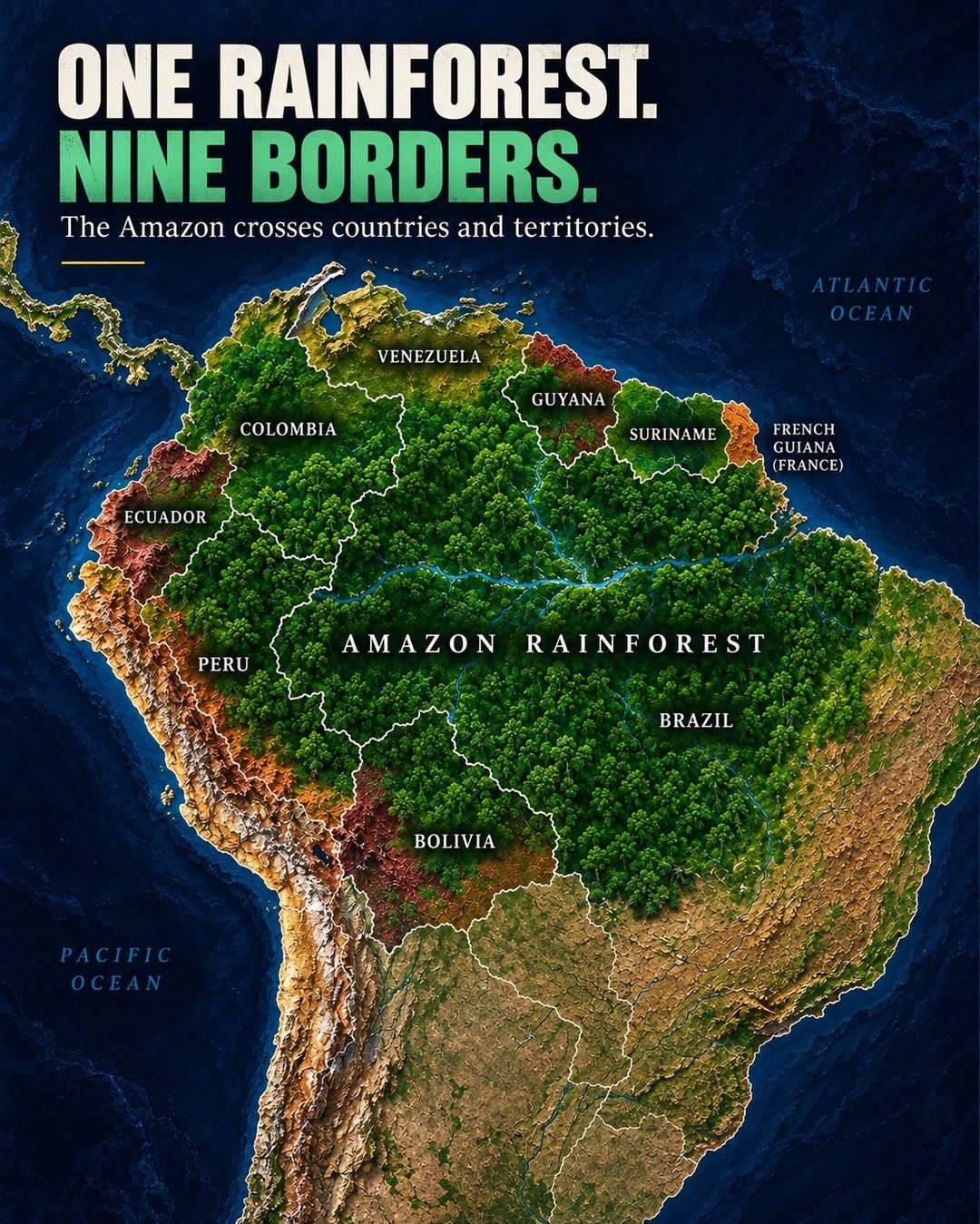
The Amazon Rainforest is no solitary patch of green. It stands as an ecological colossus spanning nine distinct countries. This geographical complexity sets the stage for a unique environmental and political tapestry. Bolivia, Peru, and Brazil collectively hold the lion's share of the rainforest. Brazil alone possesses 60% of its expanse. Conversely, the smallest portions are hived off between French Guiana and Suriname, amounting to just 8% of the rainforest’s total area. Ecuador, Colombia, Venezuela, and Guyana make up the remainder, showing how this vast ecosystem transcends individual nations. The Amazon Rainforest's vastness is tethered to the geographic perspectives of the Amazon River. The river meanders through the heart of South America and acts like a riverine vein. This sprawling watershed shapes the landscape far beyond its banks. The river sustains diverse ecosystems and supports a multitude of flora and fauna, many of which are remain undocumented and undiscovered. The river’s water is a lifeline, nurturing the rainforest’s immense biodiversity. It is important to note that the river's geographical features are also vast and go beyond its immediate surroundings.
Extension of the Amazon River
The Amazon River is more than a watery artery; it is a formidable geographical force. It ranks as the world's largest river by discharge volume, and its water provides a massive influence on global ocean currents. When it comes to length, it inches closely behind the Nile River, making it the world's second-longest river. But the Amazon's vast width and immense volume of water create a unique terrestrial ecosystem that because of its depth and expanse, the river significantly impacts the local climate. It creates a microclimate that supports the rainforest's lush vegetation, producing roughly 20% of the world’s oxygen and housing over 40,000 plant species and 1,300 bird species. The Amazon's extensive drainage basin influences the Earth’s climate. The basin’s evapotranspiration releases vast amounts of water vapor into the atmosphere, which subsequently condenses into rain clouds, and results in expansive formations of precipitation. This vast cycle of water vapor helps to regulate global weather patterns, influencing regions far beyond the rainforest's borders. This water vapor cycle directly affects precipitation patterns in North Africa, Asia, and North America, making the Amazon Rainforest a crucial player in the Earth's weather systems. The rainforest's incomparable size and geographical influence also have extensive environmental implications.
Climate regulation and the nations' boundaries
The Amazon Rainforest, with its profound geographical extent and unique climate regulation, contributes significantly to global climate stability. It acts as a carbon sink, absorbing vast quantities of carbon dioxide and releasing substantial amounts of oxygen. The Amazon's immense biomass sequesters approximately 2.2 billion metric tons of carbon annually. This carbon sequestration is crucial for mitigating climate change, as it helps to offset the carbon emissions from industrial activities. The rainforest's ecological importance extends beyond the boundaries of the countries it spans, making it a global environmental asset. The Amazon's ecological influence extends beyond climate regulation and biodiversity. Diverse nations are submerged by these ecological purposes too. Nations like Bolivia, Peru, and French Guiana. The Amazon's cross-border nature means that conservation efforts require international cooperation. The forest's ecological stability is intertwined with the socio-economic stability of the regions it spans. Many indigenous communities rely on the rainforest for sustenance, cultural identity, and economic livelihoods. These communities' traditional knowledge and practices are integral to the rainforest's conservation and sustainable management.
Watch the Reel
Related deep dives
Similar reads based on topic and creator.


Recent articles
Fresh deep dives from the latest Reels we unpacked.

Comments
Be the first to comment.