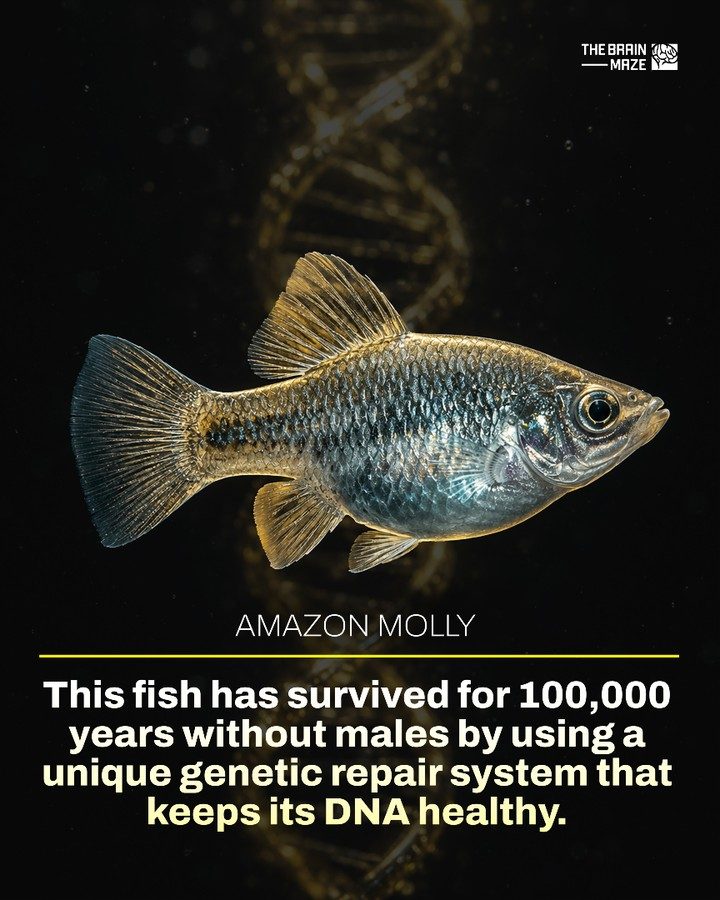
Amazon Molly: The All-Female Fish Defying Evolutionary Norms
The Amazon molly is an extraordinary fish known for its unique reproductive strategy. This all-female species has thrived for approximately 100,000 years without relying on male DNA to reproduce. This phenomenon challenges traditional views on the necessity of sexual reproduction for long-term survival.
Why This Matters
The Amazon molly’s ability to reproduce asexually and maintain a healthy genome for such an extended period has significant implications for evolutionary biology. It defies the conventional wisdom that asexual species should succumb to harmful mutations and go extinct over time. Understanding how the Amazon molly achieves this feat could provide insights into genetic repair mechanisms and the evolution of reproductive strategies.
The Amazon Molly
Unique Reproductive Mechanism
The Amazon molly reproduces through a process called gynogenesis. In this reproductive strategy, the female fish produces offspring that are essentially clones of herself, derived from unfertilized eggs. This clonal reproduction is made possible through a genetic repair process called gene conversion.
Genetic Repair and DNA Health
The key to the Amazon molly’s survival lies in its ability to maintain a healthy genome despite the lack of genetic variation typically provided by sexual reproduction. Gene conversion ensures that harmful mutations do not accumulate to a detrimental level. This process involves the repair of DNA through the replacement of damaged or mutated genetic material with healthy DNA from other parts of the genome. This mechanism allows the fish to maintain genetic stability and avoid the buildup of deleterious mutations that could otherwise lead to extinction.
Evolutionary Implications
The Amazon molly’s genetic repair system challenges the long-held belief that sexual reproduction is essential for the long-term survival of a species. Traditional evolutionary theories suggest that sexual reproduction helps to eliminate harmful mutations and introduces genetic diversity, which is crucial for adaptation and survival. The Amazon molly’s success in defying these theoretical constraints raises questions about the fundamental principles of evolutionary biology. Further study of this species can reveal new insights into how genetic repair systems operate and how they might be harnessed to counteract the effects of harmful mutations in other organisms.
Practical Tips for Understanding Genetic Repair
Observational Studies
For researchers and enthusiasts interested in studying genetic repair processes, observing the Amazon molly in its natural habitat can provide valuable insights. The close-up study of these fish can reveal more about their unique genetic mechanisms and how they manage to maintain a healthy genome.
Comparative Analysis
Comparing the genetic makeup of the Amazon molly with other species that rely on sexual reproduction can offer a deeper understanding of the benefits and limitations of different reproductive strategies. Such analyses can highlight the critical role of genetic repair mechanisms in the survival and evolution of asexual species.
Important Takeaways
The Amazon molly’s asexual reproduction and genetic repair system offer a fascinating glimpse into the complex world of evolutionary biology. This all-female species has managed to thrive for over 100,000 years by employing a unique genetic repair process called gene conversion. This process keeps its genome healthy and stable, ensuring its survival despite the absence of male DNA. The Amazon molly’s success challenges long-standing evolutionary theories and underscores the importance of genetic repair mechanisms in the long-term survival and adaptation of species.
Conclusion
The Amazon molly’s ability to reproduce asexually and maintain a healthy genome is a testament to the resilience and adaptability of life. Through its unique genetic repair system, this all-female fish has defied the conventional wisdom of evolutionary biology. Further study of this remarkable species can provide valuable insights into the mechanisms of genetic repair and our understanding of the fundamental principles of reproduction and survival. The Amazon molly’s story offers a profound example of how nature can find innovative solutions to the challenges posed by genetic mutations and the need for genetic diversity.
Watch the Reel
Questions readers ask
How does the Amazon molly reproduce without males?
The Amazon molly employs a rare form of asexual reproduction called gynogenesis. In this process, the fish produce clones of themselves using the genetic material from other females. The presence of sperm is required to trigger the development of the embryo, but the sperm's DNA is not incorporated into the offspring's genetic makeup.
Why is the Amazon molly's survival significant in evolutionary biology?
The Amazon molly's survival for over 100,000 years using asexual reproduction challenges the widely-held belief that asexual species should decline and go extinct due to the accumulation of harmful mutations. This makes the Amazon molly a fascinating subject for studying long-term survival strategies in asexual organisms.
What are genetic repair mechanisms and how do they help the Amazon molly?
Genetic repair mechanisms are processes that correct errors or damage in an organism's DNA. In the Amazon molly, these mechanisms help maintain a healthy genome by repairing mutations that might otherwise accumulate and become harmful over generations. This allows the fish to thrive in the absence of genetic diversity typically provided by sexual reproduction.
Are there other all-female fish species besides the Amazon molly?
While the Amazon molly is one of the most well-known, there are a few other species of all-female fish, such as the whiptail lizard and certain species of salamanders. These species also reproduce asexually and can serve as additional models for studying the long-term survival of asexual organisms.
Can the Amazon molly's reproductive strategy be applied to other species?
The Amazon molly's reproductive strategy is highly specialized and unique to its species. While the genetic repair mechanisms that allow the Amazon molly to maintain a healthy genome are intriguing, applying these mechanisms to other species would be highly complex and is currently beyond our technological capabilities.
How does the Amazon molly maintain genetic diversity without sexual reproduction?
The Amazon molly maintains a degree of genetic diversity through rare events of hybridization with other species, which can introduce new genetic material into the population. Additionally, the genetic repair mechanisms help prevent the accumulation of harmful mutations, ensuring the long-term survival of the species.
What triggers the development of an embryo in the Amazon molly?
The development of an embryo in the Amazon molly is triggered by the presence of sperm. However, unlike sexual reproduction, the sperm's DNA is not used in the offspring. Instead, the sperm acts as a catalyst to initiate the development of the embryo, which is otherwise a clone of the mother.
Related deep dives
Similar reads based on topic and creator.




Recent articles
Fresh deep dives from the latest Reels we unpacked.




Comments
Be the first to comment.