Satellite Ownership
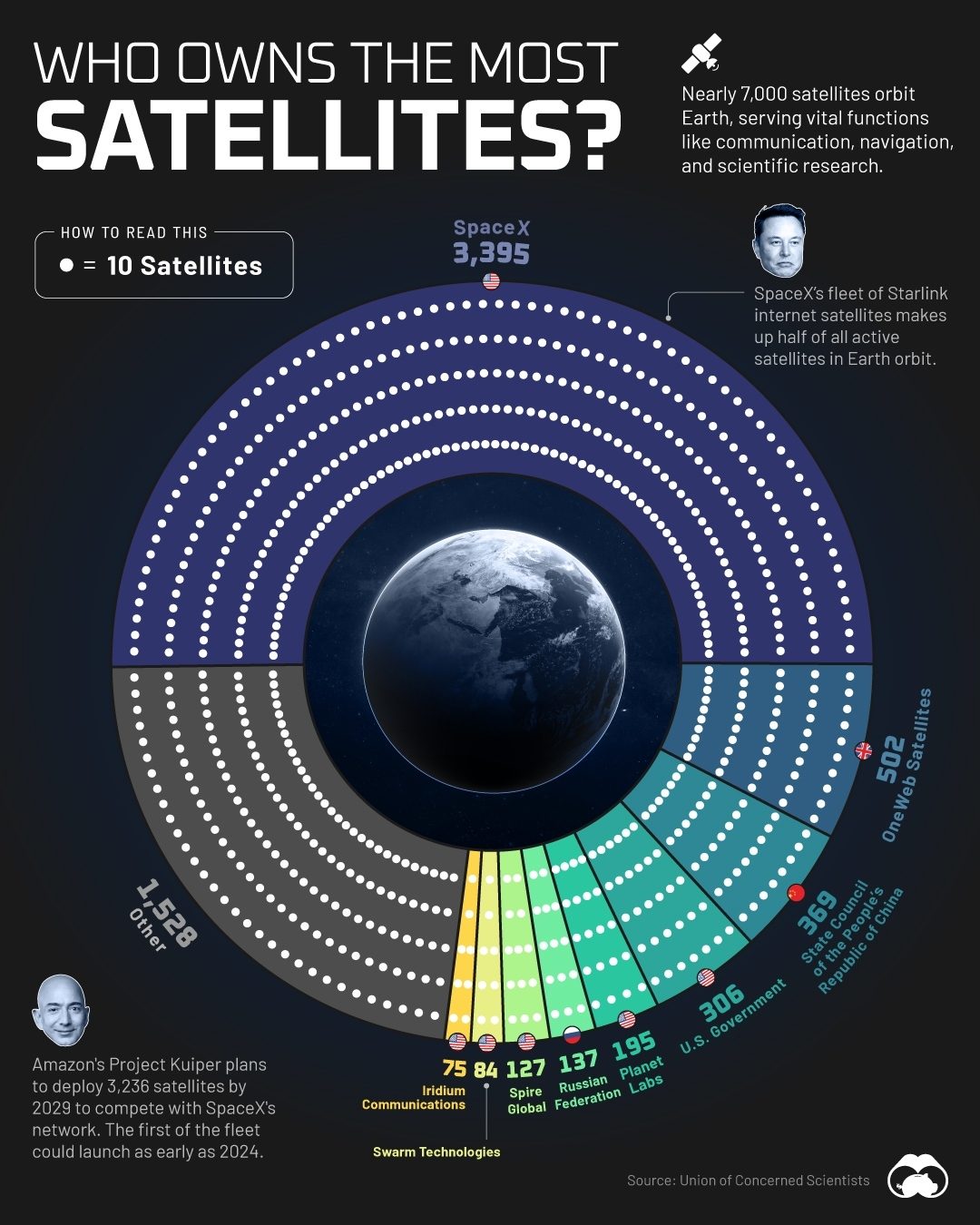
Nearly 7,000 satellites orbit the Earth, playing critical roles in communication, navigation, and scientific research. These satellites are launched by various entities, from private companies to governments, each with strategic objectives. The landscape of satellite ownership is dynamic, with new launches occurring frequently. In 2022, over 150 launches sent new satellites into orbit, and this trend is expected to continue, with many more launches planned over the next decade. But who actually owns these orbiting objects and what are the contributing factors driving this space race? Let's explore the leaders in satellite technology and the entities shaping the future of space.
Why This Matters
Understanding who owns the satellites in orbit is essential for grasping the geopolitical and technological landscape of space. The control and operation of satellites influence global communication networks, scientific advancements, and even national security. With the increasing number of satellites, knowing the key players helps in comprehending the dynamics of space governance and the potential for future innovations.
Satellite Ownership Landscape
Leading Private Companies
Private companies have significantly contributed to the growth of satellite networks. Among the key players:
-
SpaceX: SpaceX leads the pack with an impressive 3,395 satellites. This extensive network is pivotal for SpaceX's Starlink internet service, which aims to provide global broadband coverage. SpaceX's ambition to connect the world through high-speed internet has propelled it to the forefront of the satellite industry.
-
Iridium Communications: With 75 satellites, Iridium Communications is known for its global voice and data communications services. Iridium's constellation supports various applications, including maritime and aviation communications.
-
Spire Global: Operating 127 satellites, Spire Global focuses on data analytics derived from space. Their satellites collect data for weather forecasting, maritime tracking, and environmental monitoring, making them a key player in the space data industry.
-
Planet Labs: Planet Labs owns 195 satellites, specializing in Earth observation. Their satellites capture high-resolution images of the Earth's surface daily, enabling applications in agriculture, forestry, and urban planning.
Governmental Entities
Governments worldwide also play a crucial role in satellite ownership, primarily for defense, scientific research, and public services:
-
U.S. Government: The U.S. government operates 306 satellites, supporting various defense and scientific missions. These satellites are essential for national security, weather forecasting, and environmental monitoring.
-
Russian Federation: With 137 satellites, the Russian Federation is a significant player in space. Russia's satellites are used for communications, navigation, and military applications, reinforcing its presence in the global space arena.
-
Republic of China: The Republic of China (Taiwan) owns 369 satellites, primarily for scientific research and public services. These satellites support various applications, including Earth observation, communications, and navigation.
-
State Council (China): The State Council, a governmental body in China, owns 1,528 satellites. These satellites are crucial for China's Beidou navigation system, telecommunications, and Earth observation.
Emerging Players
Several entities are emerging on the global stage of satellite ownership, contributing to the growing number of satellites in orbit:
-
OneWeb: OneWeb, operating 502 satellites, aims to provide global internet connectivity. Their constellation is part of a broader effort to bridge the digital divide by offering affordable internet access to remote areas.
-
Amazon's Project Kuiper: Amazon's Project Kuiper plans to deploy 3,236 satellites by 2029. This ambitious project aims to compete with SpaceX's Starlink by providing high-speed, low-latency broadband services globally. Amazon’s entry into the satellite industry is set to intensify competition and drive innovation.
Practical Tips for Understanding Satellite Ownership
When analyzing satellite ownership, it's essential to consider the following factors:
-
Purpose and Utility: Different entities own satellites for various purposes, such as communication, navigation, and scientific research. Understanding the intended use of the satellites can provide insights into their strategic value.
-
Geopolitical Implications: Satellite ownership is closely tied to geopolitical interests. Nations and companies with extensive satellite networks often have significant influence over global communication and navigation systems.
-
Technological Advancements: The technology behind satellite operations is rapidly evolving. Staying updated on the latest advancements in satellite design, launch capabilities, and data processing can help in understanding the competitive dynamics in the industry.
-
Regulatory Frameworks: Governments and international bodies regulate satellite operations to ensure safety, security, and fair use of space. Familiarizing oneself with these regulatory frameworks can provide a deeper understanding of the satellite ownership landscape.
Important Takeaways
-
Leading Players: SpaceX is the dominant private player, while the U.S. government and the Russian Federation are significant governmental entities in satellite ownership. OneWeb and Amazon’s Project Kuiper are emerging as strong competitors in the broadband internet sector.
-
Diverse Applications: Satellites serve a wide range of applications, from communication and navigation to scientific research and environmental monitoring. Each application has unique implications for global development.
-
Future Trends: The number of satellites in orbit is expected to grow significantly in the coming years, driven by increasing demand for global connectivity and advancements in satellite technology. This growth will shape the future of space governance and innovation.
Conclusion
The ownership of satellites is a multifaceted topic that encompasses technological advancements, geopolitical interests, and strategic objectives. From private companies like SpaceX and Iridium Communications to governmental entities and emerging players like Amazon's Project Kuiper, the satellite industry is dynamic and ever-evolving. As the number of satellites in orbit continues to grow, understanding the key players and their motivations will be crucial for navigating the complexities of the space landscape.
Watch the Reel
Questions readers ask
What is the main goal of Amazon's Project Kuiper and SpaceX's satellite initiatives?
Both Amazon's Project Kuiper and SpaceX's Starlink aim to provide global internet access using constellations of low Earth orbit (LEO) satellites. This involves launching thousands of satellites to ensure widespread coverage, even in remote and underserved areas.
How do satellite ownership dynamics influence global communication?
Satellite ownership significantly impacts global communication by determining which entities control the infrastructure for data transmission, broadcasting, and internet services. As more satellites are launched, the competition intensifies, driving advancements in technology and potentially lowering costs for consumers.
What are the strategic implications of the space race between Amazon and SpaceX?
The space race between Amazon and SpaceX has far-reaching implications. It accelerates technological progress in satellite communication, navigation systems, and future space innovations. Additionally, it influences national security strategies, as control over satellite networks can provide a strategic advantage in both military and commercial contexts.
What role does satellite navigation play in the space race?
Satellite navigation is a critical component of the space race, as accurate positioning and timing services are essential for various applications, including transportation, agriculture, and defense. Both Amazon and SpaceX are investing in technologies that enhance the precision and reliability of satellite navigation systems.
How do technological advancements contribute to the satellite market competition?
Technological advancements, such as improvements in satellite design, launch costs, and data transmission capabilities, are crucial drivers of the satellite market competition. Innovations in these areas enable companies to launch more satellites, reduce operational costs, and offer better services to customers, thereby gaining a competitive edge.
What are the potential benefits of increased satellite launches for consumers?
Increased satellite launches can lead to more robust and affordable global internet access, improved communication services, and enhanced navigation systems. As more satellites are deployed, consumers may experience faster internet speeds, better connectivity in rural areas, and more reliable positioning services.
What factors are driving the race to dominate the satellite market?
The race to dominate the satellite market is driven by several factors, including the demand for global internet access in remote areas, advancements in satellite technology, and the strategic importance of controlling communication infrastructure. Additionally, the potential for future innovations and the commercial opportunities in the space sector are significant motivators.
Related deep dives
Similar reads based on topic and creator.


Recent articles
Fresh deep dives from the latest Reels we unpacked.




Comments
Be the first to comment.