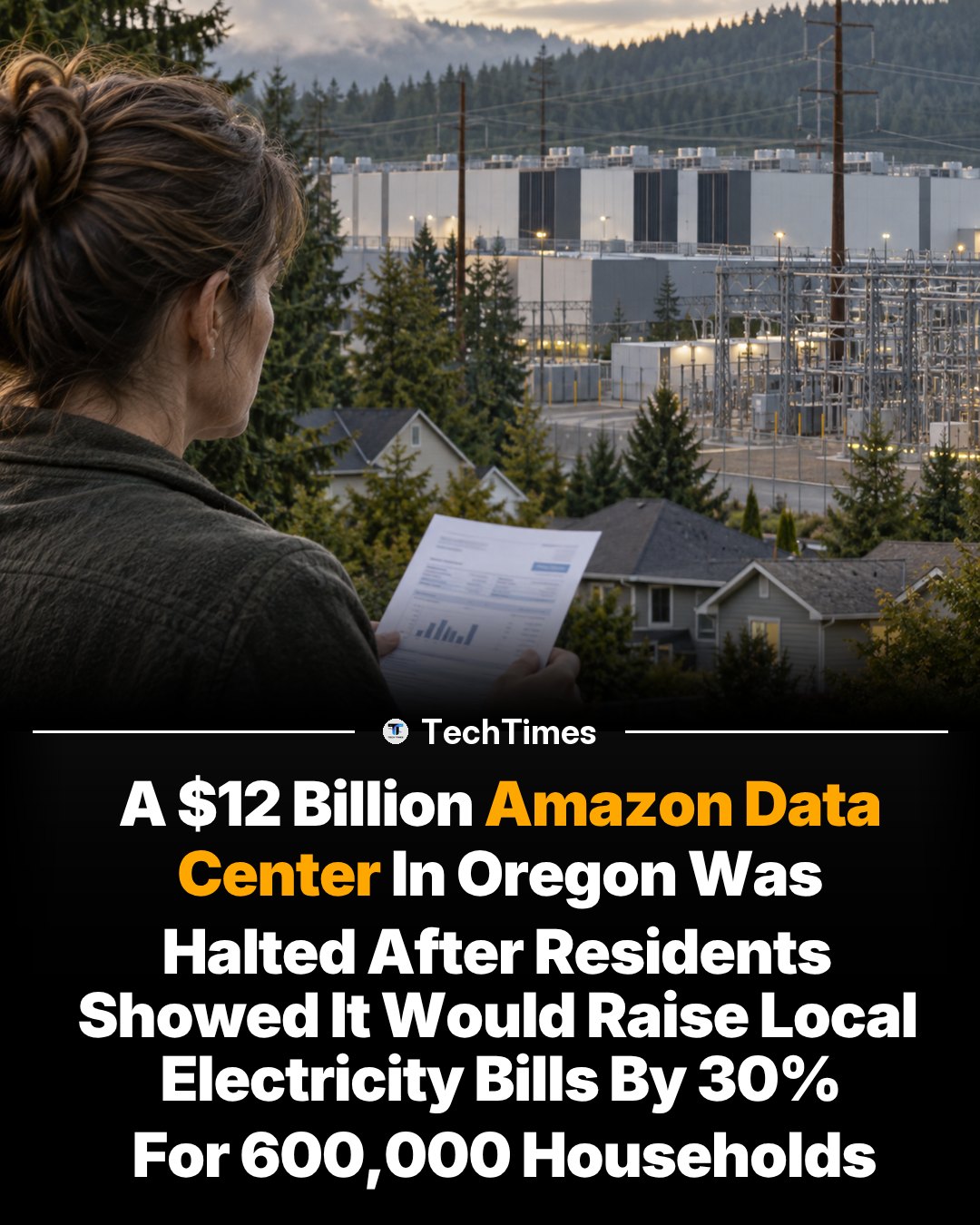
In October 2023, Amazon's plans for a $12 billion data center investment in Oregon were halted, as outlined on a TechTimes document. The project's halt revealed a stark clash between technological infrastructure growth and local communities' needs. This was no minor skirmish; the debate concerned a 30% electricity bill increase, affecting 600,000 local households, which helps reframe power generation and consumption in America.
A $12 Billion standoff
Energy infrastructure projects are a dance between private enterprise and public need. Data centers, with their vast energy demands, are often at the center of this debate. Their proprietary energy needs make them both catalysts for and obstacles to local energy management — unique in their dependence on stable, low-cost electricity. Their appetite for power can alter economic landscapes and cause surging electricity prices. Factoring in community input is increasingly vital for these projects. The Oregon case is of signal importance; it signals that corporate motives must navigate resident concerns. Amazon's project faced opposition from a significant portion of affected households. This data center was to empower regional digital infrastructure, but it would have also altered the balance of local energy consumption. The tech giant faced backlash from a different kind of giant; the collective voice of local households. The scope of Amazon’s data center is immense, since they were planning to invest $12 billion. This investment would have propelled Oregon's technological prowess. However, the costs were high, both literally and figuratively. When assessing the plan, the increase in electricity bills was evident, which would have made a dent in the pockets of 600,000 households.
Shadows over Silicon. The infrastructure cost of digital progress
This case stands as a microcosm of a larger trend: energy challenges within the digital age. The expansion of big tech infrastructure has brought a spotlight to the hidden costs of digital convenience. Data centers, the powerhouses of digital progress are straining power grids. They consume massive amounts of energy, which is fastened to capacity limits in local utilities. Even as digital infrastructure grows, the energy landscape remains an aging construct, and there is a growing disconnect. Antiquated infrastructure is a stumbling block in the way of progress, and the energy shortage is a liability that doesn’t come with a warning. Since the power company wasn't equipped to supply additional electricity to the data center, the standoff over high electricity costs frustrated residents and Amazon. Power generation isn’t just an energy need anymore, it’s a deciding factor for companies. This is the wake-up call for governments worldwide to pivot towards renewable energy sources. They also need to introduce reforms that drive this shift through targeted incentives. The ongoing standoff in Oregon is a barometer for future infrastructure projects to be more resilient in the face of sudden energy shortages.
What is a Data Center?
Data centers are the workhorses of the digital age, processing and storing vast amounts of information. They are massive server farms, where physical hardware meets the cloud. They enable everything from streaming services to cloud storage. The connectivity they provide is unprecedented — but this infrastructure requires a lot of energy. Most data centers consume electricity 24/7; cooling down the servers alone requires immense energy.
Amazon's Digital Footprint
Amazon's data network is a vast system of interconnected nodes, tokens and trackers, where the data from millions of devices around the world converges. This vast network forms the basis of Amazon's technology infrastructure. It's the connective tissue of the tech ecosystem, aiding in seamlessly integrating services like Prime Video, Spotify, and Alexa. The $12 billion data center was supposed to solidify Amazon's global footprint, fortifying its position in the hyper-competitive tech sector.
Energy Needs.
The data center's energy requirements are formidable. The cooling mechanism for these servers means that the energy needs are not just about computation, they’re also about thermal management. However, the energy needs are not in sync with the Oregon utility grid’s capacity limit. The increase in electricity bills was frustrating for residents, as it was a drain on their purses. It was also a call to update the systems to support newly rising infrastructure.
Property Taxes and Community Resources
What's more controversial are the property taxes associated with these projects. Local governments often offer tax incentives to attract such investments. This could potentially strain local resources. Local governments often offset this risk with tax incentives. This creates a double-edged sword; while attracting investments, it shifts the cost to local residents.
Unplug the Future?
This controversy is a lesson in planning. There is an intriguing path ahead for data centers. Energy management will be an integral part of the design from now on. Even as engineers plan for the future, they need to plan with sustainability in mind. Amazon’s data center projects will now look to improve energy efficiency and sustainability. They will need to dive into alternative energy strategies, investing in renewable energy projects and integrating energy-efficient technologies. This will save on electricity costs and make these infrastructure projects more viable. Amazon will continue to expand its technological prowess. Their data infrastructure will be more resilient than ever. This will herald a new era in sustainable energy management and feasibility. Their data centers will define a new normal. The utility companies and the government will need to adapt to these needs. The future of digital infrastructure is here. The $12 billion investment will not be spent in vain. It will have laid the foundation for future projects, making them more sustainable and efficient.
Watch the Reel
Related deep dives
Similar reads based on topic and creator.




Recent articles
Fresh deep dives from the latest Reels we unpacked.




Comments
Be the first to comment.