The promise of Cu(ATSM) in Alzheimer's research
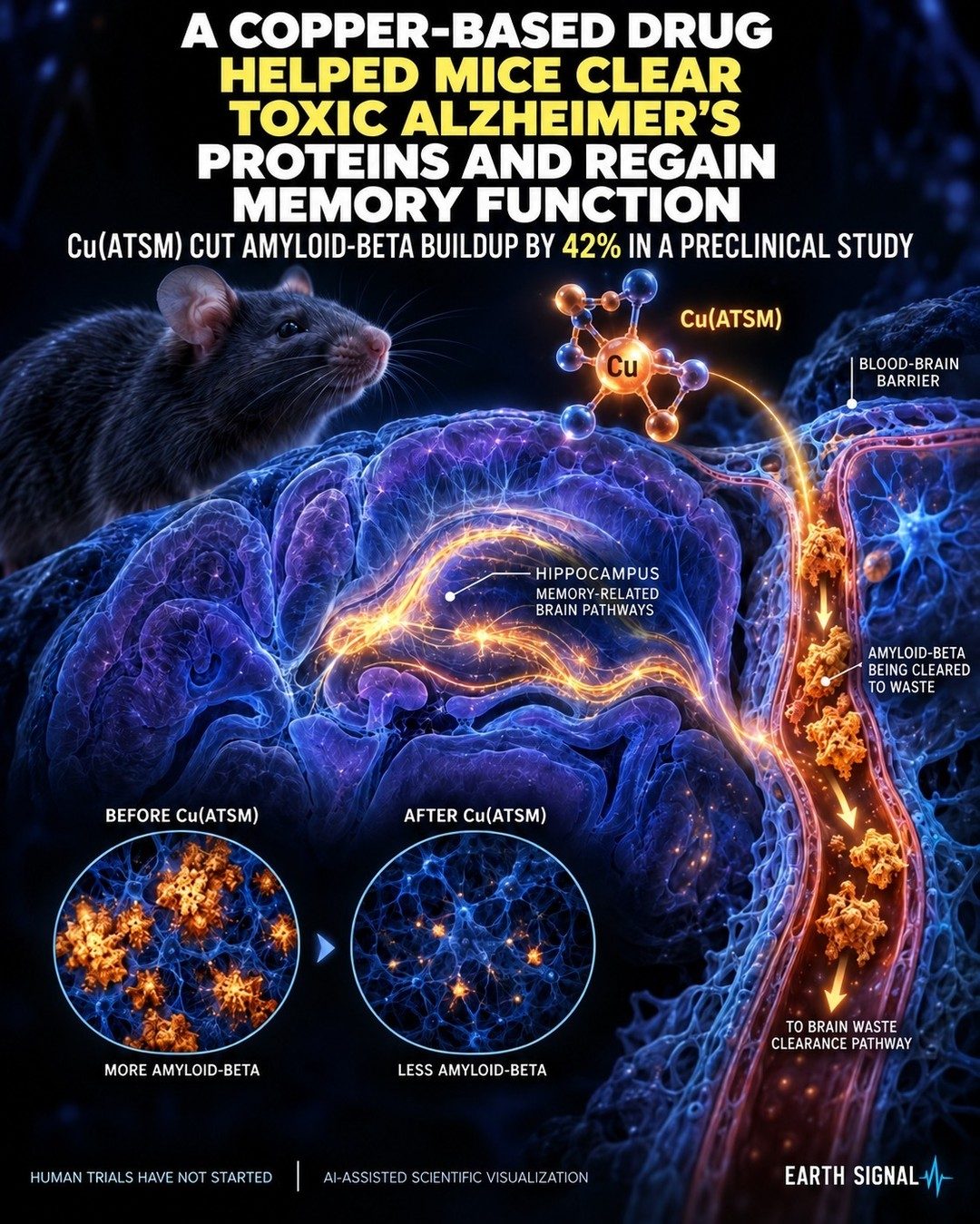
Cu(ATSM), a copper-based drug, has recently shown promise in the ongoing battle against Alzheimer's disease. Preclinical studies have revealed that this compound can significantly reduce amyloid-beta buildup in the brain. The drug's effect is visualized through AI-assisted scientific visualization, which highlights the pathways affected and amyloid-beta-related waste clearance. Imagine the brain’s circuitry as a complex map. This map becomes increasingly crowded and tangled during Alzheimer's, as proteins like amyloid-beta accumulate. Cu(ATSM) acts as a sort of traffic director, helping to clear these pathways by 42% — a significant improvement in preclinical models. The drug’s efficacy extends beyond just clearing amyloid-beta. The hippocampus, a memory-related brain pathway, is a crucial area of interest in Alzheimer's research. It is often damaged by the accumulation of these proteins. This drug could protect the hippocampus and other memory-related pathways from this damage, potentially regaining memory function.
The blood-brain barrier challenge
One of the critical aspects of Alzheimer’s research is overcoming the blood-brain barrier. This barrier protects the brain from harmful substances but can also hinder the delivery of potential treatments. Cu(ATSM) shows the potential to traverse this barrier, making it a strong candidate for further research. The study likely studied its impact on the blood-brain barrier to ensure it can deliver treatments to the correct areas of the brain. The on-screen text was clear that preclinical steps were successful, narrowing down the dosage, effectiveness and side effects. That means human trials may not be far off.
Cu(ATSM) in preclinical studies
Insights for the Cu(ATSM) drug were visualized using pre-clinical data — when drugs are studied in cell cultures or animal models. This stage is vital for understanding a drug's safety, dosage, and potential side effects. In this case, the visualization showcased the drug in action, and it was clear that this stage was successful. Visualization can help researchers refine the drug's mechanisms and plan for human clinical trials. For instance, highlighting memory pathways that the drug targets can help researchers develop strategies to enhance the drug's effectiveness. This step shows how much the drug helped clear proteins and regain memory function.
Looking ahead to human trials
As promising as the results may be, the clinical picture is far from complete. Human trials have not yet been conducted, and the next steps for the drug are unclear. Human trials are a critical stage in clinical research, where drugs are tested on human participants to ensure safety and efficacy. This step involves rigorous testing and monitoring to identify any potential side effects or interactions. The transition from preclinical to clinical trials is a significant milestone in drug development. The on-screen text confirmed that no trials have started, making it hard to judge the timeline.
Watch the Reel
Related deep dives
Similar reads based on topic and creator.




Recent articles
Fresh deep dives from the latest Reels we unpacked.




Comments
Be the first to comment.