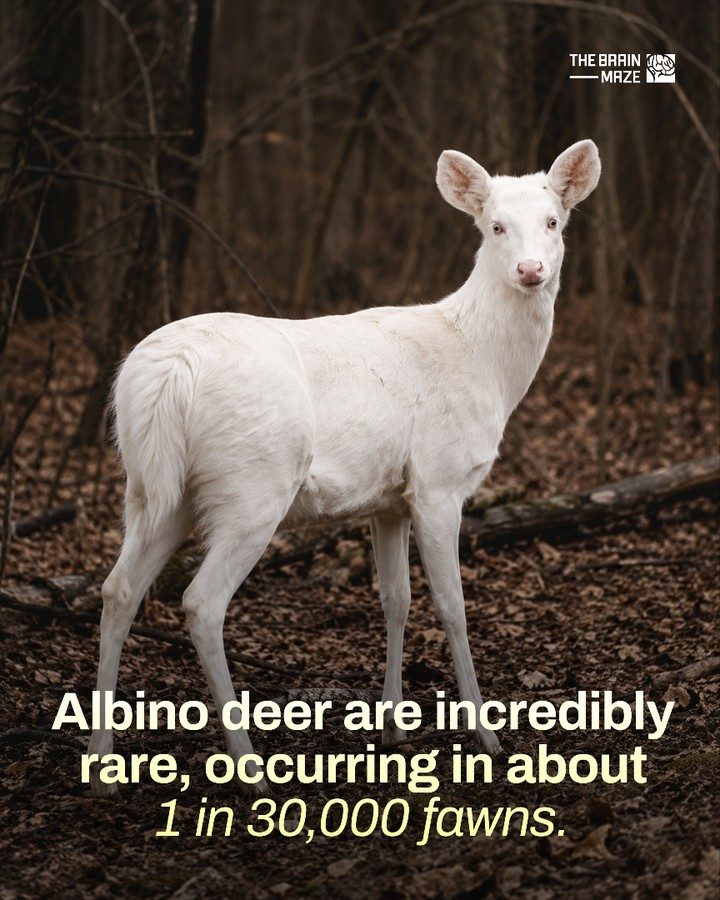
Albino Deer
Albino deer are among the rarest and most striking creatures in nature. These animals are born with a genetic condition called albinism, which prevents the production of melanin. This results in their distinctive white fur, pink noses, and pale eyes. Experts estimate that only about 1 in 30,000 fawns are born with this condition.
Why Albino Deer Matter
Albino deer fascinate wildlife enthusiasts and scientists alike for several reasons. Their striking appearance and rarity make them an object of curiosity, but their presence in the wild also offers insights into genetic mutations and the challenges of survival in nature. Albino deer face significant hurdles in the wild due to their lack of camouflage, making them more vulnerable to predators.
Understanding Albinism in Deer
Genetic Basis
Albinism in deer, as in other animals, is caused by a genetic mutation. This mutation affects the production of melanin, the pigment responsible for the color of an animal's fur, skin, and eyes. In albino deer, this lack of melanin results in their characteristic white coat and pink eyes, which are particularly noticeable against the typically brown or gray backgrounds of their natural habitats.
Types of Albinism
There are different types of albinism, and each can affect an animal's appearance and overall health in various ways. The most common forms are:
- Complete Albinism: This is the most severe form, where the animal has no melanin at all, resulting in a completely white coat and pink eyes.
- Partial Albinism: In this case, the animal may have some pigmentation, leading to a patchy or mottled coat.
How Albinism Affects Survival
The lack of camouflage is the most significant challenge for albino deer. In the wild, predators rely heavily on their ability to spot prey against the landscape. A white deer stands out starkly against the forest floor, making it an easy target. Additionally, albino deer may be more susceptible to sunburn and skin cancer due to their lack of protective pigmentation, further complicating their survival.
Practical Tips for Spotting Albino Deer
Spotting an albino deer is a rare and thrilling experience. If you're an avid wildlife watcher or photographer, here are some tips to increase your chances of seeing one:
Know Your Locations
Albino deer are found in various habitats, including forests, meadows, and even urban parks. Research areas known for their albino deer sightings and plan your visits accordingly. Canada has a relatively high number of sightings, especially in locations with large deer populations.
Be Patient and Quiet
Wildlife sightings often require patience. Spend time in the field, and be as quiet as possible. Avoid making loud noises or sudden movements that could startle the animals.
Use Optics
Binoculars or a spotting scope can greatly enhance your chances of spotting an albino deer from a distance. These tools allow you to scan large areas without disturbing the animals.
Respect Wildlife
Remember that these are wild animals, and their habitat should be respected. Keep a safe distance, and never attempt to approach or feed them. Doing so can disrupt their natural behaviors and put them at risk.
Important Takeaways
Albino deer are a remarkable example of nature's diversity and the challenges that rare genetic conditions can present. Their striking appearance and rarity make them a fascinating subject for wildlife enthusiasts and researchers. However, their survival in the wild is heavily impacted by their lack of camouflage, making every sighting truly special and worth remembering.
Conclusion
Albino deer are a living testament to the wonders and challenges of the natural world. Understanding their genetic condition and the obstacles they face can deepen our appreciation for these rare creatures. Whether you're an avid wildlife watcher or a curious observer, the sight of an albino deer is an unforgettable experience.
Watch the Reel
Questions readers ask
What causes the distinctive appearance of albino deer?
Albino deer have a genetic condition called albinism, which prevents the production of melanin. This results in their white fur, pink nose, and light-colored eyes, setting them apart from their typical brown or tan counterparts.
How rare is it to spot an albino deer in the wild?
Albino deer are extremely rare, with estimates suggesting that only about 1 in 30,000 fawns are born with this condition. This rarity makes sightings of albino deer a noteworthy and exciting occurrence for wildlife enthusiasts.
What challenges do albino deer face in their natural habitat?
The most significant challenge for albino deer is their lack of camouflage, which makes them more visible to predators. This increased vulnerability puts their survival at risk, as they are easily spotted against the natural backdrop of forests and fields.
Can albino deer survive in the wild, and why is it difficult?
Survival for albino deer in the wild is difficult due to their lack of protective coloring. This vulnerability means they must be constantly vigilant to avoid predators, which can significantly impact their lifespan and reproductive success.
Are there other albino animals besides deer?
Yes, albinism can occur in many animal species, not just deer. Other albino animals include birds, bears, and even large mammals like moose. Each of these albino creatures faces similar challenges due to their lack of camouflage and distinctive appearance.
Why are albino deer of interest to scientists?
Albino deer are of interest to scientists because they provide a unique opportunity to study genetic mutations and the natural selection process. Their rarity and the challenges they face in the wild offer valuable insights into the intricacies of survival in nature.
Related deep dives
Similar reads based on topic and creator.




Recent articles
Fresh deep dives from the latest Reels we unpacked.




Comments
Be the first to comment.