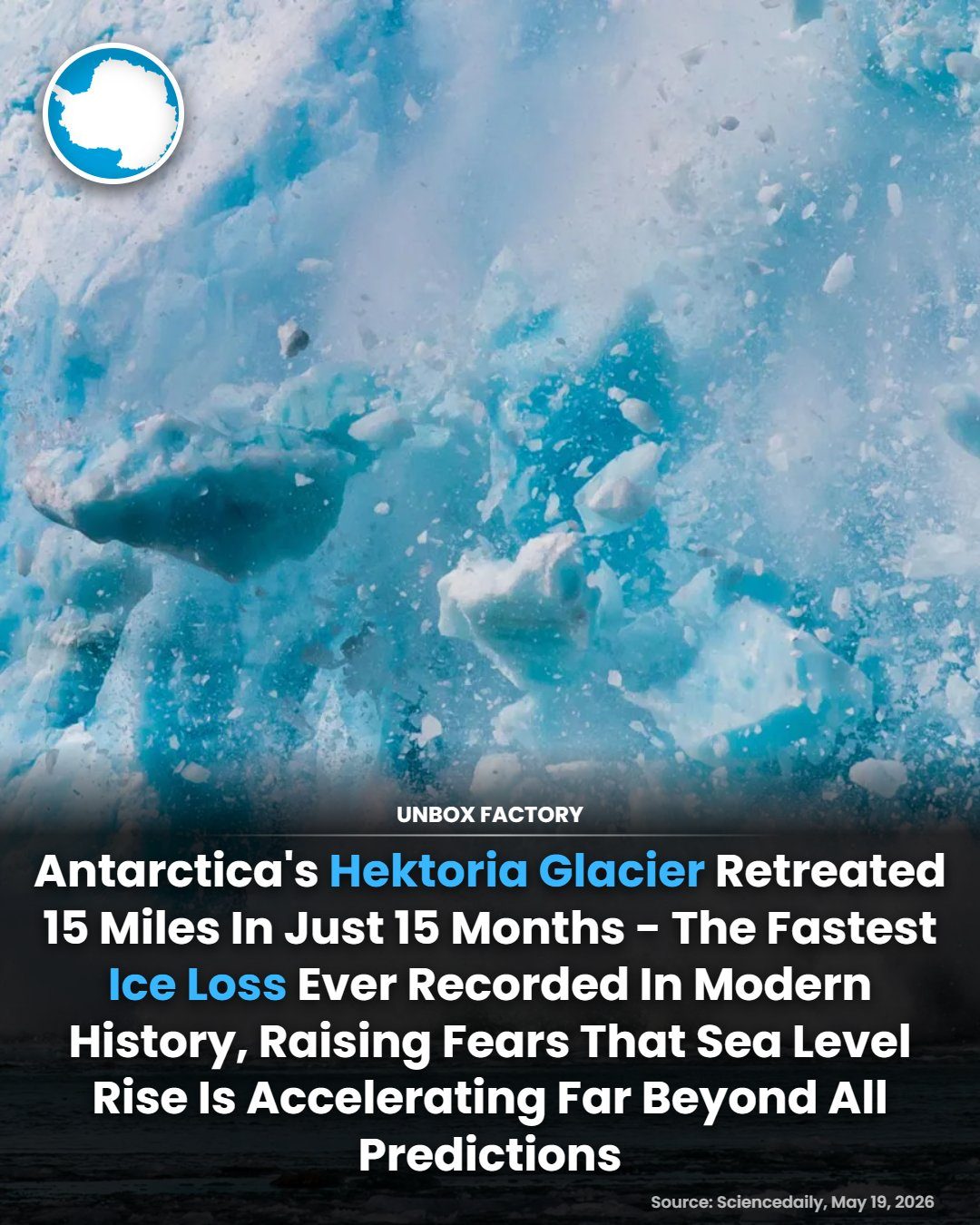
Antarctica's Rapid Glacier Retreat: The Hektoria Glacier's Alarming Transformation
The Hektoria Glacier in Antarctica has dramatically retreated by 15 miles (24 kilometers) in just 15 months, marking the fastest rate of ice loss ever recorded in modern history. This rapid retreat, which occurred after the collapse of its protective floating ice shelf, highlights the accelerating impact of climate change on glacial systems.
Why This Matters
The rapid retreat of the Hektoria Glacier is more than just a local phenomenon; it has global implications, particularly for sea level rise. Glaciers in Antarctica hold vast amounts of frozen water, enough to raise global sea levels by tens of meters if completely melted. This makes monitoring and understanding glacial changes crucial for predicting future climate scenarios and preparing for potential impacts.
The Hektoria Glacier's Retreat
The Collapse and Retreat
The Hektoria Glacier's retreat began after the collapse of its protective floating ice shelf. This protective barrier had been acting as a natural dam, slowing the flow of ice from the glacier into the ocean. Once this barrier disappeared, the glacier responded dramatically, retreating at an unprecedented rate.
The Rate of Retreat
The 15-mile retreat over 15 months translates to a rate of about 1 mile per month. This is significantly faster than previous observations of glacial retreat. The speed of this retreat is alarming because it suggests that once natural barriers are removed, glaciers can respond rapidly to environmental changes, exacerbating the effects of climate change.
Implications for Sea Level Rise
The rapid retreat of the Hektoria Glacier raises fears that sea level rise is accelerating beyond current predictions. If other glaciers in Antarctica follow a similar pattern, the global sea level could rise much faster than anticipated, leading to significant coastal flooding and displacement of populations living in low-lying areas.
Understanding Glacier Dynamics
The Role of Ice Shelves
Ice shelves play a critical role in stabilizing glaciers. They act as a physical barrier, preventing the ice from flowing directly into the ocean. When these shelves collapse, as seen with the Hektoria Glacier, the ice behind them can accelerate its flow into the sea, leading to rapid retreat and increased ice loss.
Climate Change and Glacier Retreat
Climate change is the primary driver behind the collapse of ice shelves and the subsequent retreat of glaciers. Rising temperatures lead to the melting of ice shelves from both above and below. Warmer ocean waters, a result of global warming, erode the base of these shelves, making them more susceptible to collapse.
The Broader Context of Antarctic Glaciers
Monitoring Glacier Changes
Glaciers across Antarctica are closely monitored due to their significant impact on global sea levels. Satellite imagery, ground-based measurements, and other scientific tools are used to track changes in glacier extent, flow rates, and mass balance. Understanding these changes helps researchers predict future sea level rise and develop strategies to mitigate its effects.
The Potential for Future Retreats
Researchers warn that continued warming could increase the frequency of rapid glacier retreats similar to that of the Hektoria Glacier. This underscores the urgent need for global action to reduce greenhouse gas emissions and mitigate climate change. Reducing the rate of global warming can help preserve ice shelves and slow down the rate of glacial retreat.
Practical Tips
Stay Informed
Keep up-to-date with the latest research and reports on Antarctic glaciers and sea level rise. Understanding the science behind these changes can help individuals and communities prepare for potential impacts.
Support Climate Action
Engage in efforts to reduce your carbon footprint and support policies that promote renewable energy and sustainability. Every action, no matter how small, can contribute to the global effort to mitigate climate change.
Prepare for Coastal Changes
For those living in coastal areas, it's essential to be aware of the potential for sea level rise and take steps to protect your property and community. This might include measures such as constructing sea walls, elevating buildings, and implementing early warning systems for floods.
Important Takeaways
- The Hektoria Glacier in Antarctica retreated 15 miles in 15 months, the fastest rate of ice loss ever recorded.
- This retreat highlights how quickly glaciers can respond to environmental changes once natural barriers are removed.
- The implications for sea level rise are significant, with global sea levels potentially rising by tens of meters if all Antarctic glaciers melt.
- Climate change is the primary driver behind the collapse of ice shelves and the subsequent retreat of glaciers.
- Continued warming could increase the frequency of rapid glacier retreats, making global action to reduce greenhouse gas emissions crucial.
Conclusion
The rapid retreat of the Hektoria Glacier serves as a stark reminder of the accelerating impact of climate change on glaciers and sea levels. Understanding the dynamics of glacier retreat and the role of ice shelves is essential for predicting future changes and preparing for potential impacts. By staying informed, supporting climate action, and preparing for coastal changes, individuals and communities can play a role in mitigating the effects of climate change and protecting the planet for future generations.
Watch the Reel
Questions readers ask
How fast is the Hektoria Glacier retreating compared to previous rates?
The Hektoria Glacier has retreated at an unprecedented speed, covering 15 miles in just 15 months. This rate is significantly faster than previously observed retreats, making it the fastest glacial ice loss ever recorded in modern history.
What caused the rapid retreat of the Hektoria Glacier?
The rapid retreat of the Hektoria Glacier was triggered by the collapse of its protective floating ice shelf. This collapse exposed the glacier to warmer ocean currents, accelerating the melting process.
Why is the retreat of the Hektoria Glacier significant for global sea levels?
The Hektoria Glacier, like other Antarctic glaciers, holds vast amounts of frozen water. If completely melted, these glaciers could raise global sea levels by tens of meters, posing a significant threat to coastal communities worldwide.
What are the global implications of the Hektoria Glacier's retreat?
The retreat of the Hektoria Glacier serves as a stark reminder of the broader impacts of climate change. It underscores the need for continuous monitoring and understanding of glacial changes to better predict and prepare for future sea level rise.
How does the Hektoria Glacier's retreat compare to other glaciers in Antarctica?
The Hektoria Glacier's retreat is one of the most dramatic examples of rapid glacial change in Antarctica. While other glaciers in the region are also retreating, the speed and extent of the Hektoria Glacier's retreat are notably alarming.
What can be expected in the coming years regarding Antarctica's glacier retreat?
Given the current trends, it is likely that more glaciers in Antarctica will experience accelerated retreat. This could lead to significant contributions to sea level rise in the coming years, making ongoing research and mitigation efforts crucial.
Related deep dives
Similar reads based on topic and creator.

Recent articles
Fresh deep dives from the latest Reels we unpacked.



Comments
Be the first to comment.