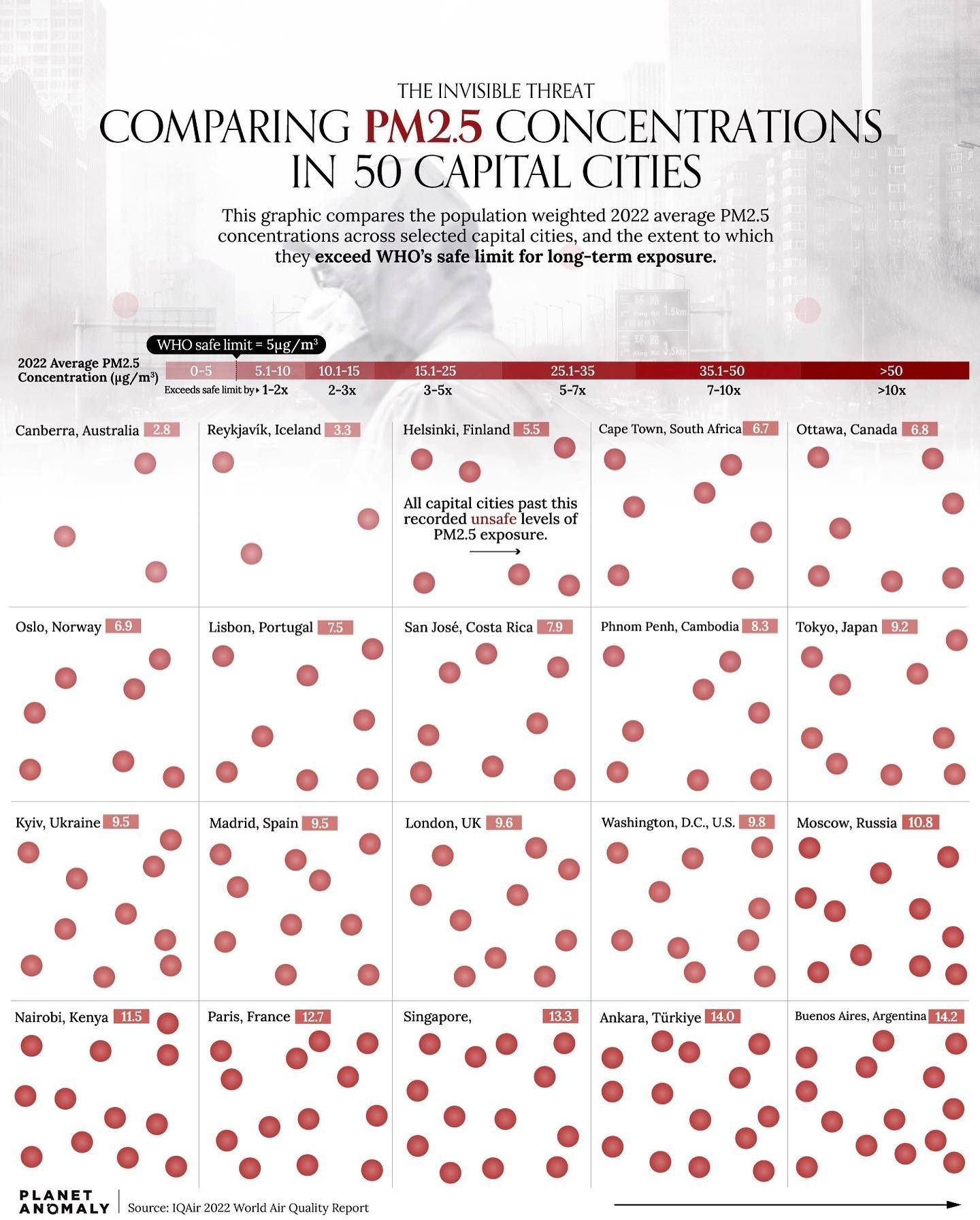
Air Quality: Comparing PM2.5 Concentrations in 50 Capital Cities
Air quality is a critical aspect of public health, especially in urban areas. Measuring and comparing air quality across different cities involves assessing the concentration of particulate matter, specifically PM2.5, which are fine particles that can penetrate deep into the lungs and even enter the bloodstream. Agencies measure these concentrations to determine the air quality index, which helps residents understand the potential health risks associated with the air they breathe.
Why This Matters
Understanding air quality is essential for public health and environmental policies. High levels of PM2.5 can lead to respiratory and cardiovascular diseases, affecting millions of people worldwide. By comparing PM2.5 concentrations in different cities, policymakers and researchers can identify trends, pinpoint problematic areas, and implement effective measures to mitigate air pollution.
Main Discussion
The Role of PM2.5 in Air Quality
PM2.5, or particulate matter with a diameter of 2.5 micrometers or less, is a significant component of air pollution. These tiny particles come from various sources, including vehicle emissions, industrial activities, and natural events like wildfires. PM2.5 can cause severe health issues, including asthma, lung cancer, and heart disease. Therefore, monitoring and comparing PM2.5 levels across different cities is crucial for public health.
The WHO Safe Limit
The World Health Organization (WHO) has set a safe limit for PM2.5 concentrations to protect public health. The WHO guideline recommends that annual mean PM2.5 concentrations should not exceed 5 µg/m³. However, many cities worldwide exceed this limit, posing significant health risks to their residents.
Comparing PM2.5 Levels Across Cities
Planet has visualized the concentration of PM2.5 in 50 select capital cities using data from IQAir’s 2022 World Air Quality Report. The infographic provides a clear comparison of PM2.5 levels in these cities and how they fare against the WHO safe limit. The cities are categorized based on how much they exceed the safe limit, ranging from slightly above to significantly higher levels.
Cities with Lower PM2.5 Levels
Some cities have relatively lower PM2.5 concentrations, closer to the WHO safe limit. These include:
- Canberra, Australia
- Reykjavik, Iceland
- Helsinki, Finland
- Cape Town, South Africa
- Ottawa, Canada
- Oslo, Norway
- Lisbon, Portugal
- San José, Costa Rica
These cities generally have better air quality, with PM2.5 levels below or slightly above the WHO safe limit. They serve as examples of effective environmental policies and urban planning practices.
Cities with Moderate PM2.5 Levels
Several cities have PM2.5 concentrations that exceed the WHO safe limit by 1-3 times. These include:
- Phnom Penh, Cambodia
- Tokyo, Japan
- Kyiv, Ukraine
- Madrid, Spain
- London, UK
- Washington, D.C., U.S.
- Moscow, Russia
- Nairobi, Kenya
While these cities have higher PM2.5 levels, they are still within a range where intervention and policy changes can make a significant difference.
Cities with High PM2.5 Levels
Some cities have PM2.5 concentrations that exceed the WHO safe limit by more than 10 times. These include:
- Dhaka, Bangladesh
- New Delhi, India
- N'Djamena, Chad
These cities face severe air pollution challenges, with PM2.5 levels posing significant health risks to their residents. Effective and immediate intervention is necessary to mitigate the health impacts of high PM2.5 concentrations in these areas.
Intermediate Level Cities
There are cities with moderate to high PM2.5 levels, ranging from exceeding the safe limit by 2-10 times. These cities include:
- Ankara, Turkey
- Buenos Aires, Argentina
- Hong Kong, China
- Manila, Philippines
- Bogotá, Colombia
- Kuala Lumpur
- Bangkok, Thailand
- Seoul, South Korea
- Guatemala City, Guatemala
- Baku, Azerbaijan
- Athens, Greece
- Colombo, Sri Lanka
- Mexico City, Mexico
- Zagreb, Croatia
- Lima, Peru
- Santiago, Chile
- Beijing
- Accra, Ghana
- Tehran, Iran
- Jakarta, Indonesia
- Hanoi, Vietnam
- Islamabad, Pakistan
- Kathmandu, Nepal
- Doha, Qatar
- Abuja, Nigeria
- Cairo, Egypt
- Abu Dhabi, UAE
- Kuwait City, Kuwait
- Baghdad, Iraq
These cities highlight the range of air quality issues and the need for varied approaches to address them.
Practical Tips for Monitoring Air Quality
Monitoring air quality in your city is essential for personal health and safety. Here are some practical tips to stay informed and protected:
Use Air Quality Apps
Download reliable air quality apps that provide real-time data and alerts. These apps can help you plan your outdoor activities and take necessary precautions during high pollution days.
Check Local Air Quality Reports
Many cities publish daily air quality reports. Check local environmental agencies' websites or follow their social media channels for the latest updates.
Invest in Air Purifiers
If you live in an area with high PM2.5 levels, consider investing in an air purifier for your home. Choose a model that effectively filters out PM2.5 particles.
Wear Masks
On days with high pollution levels, wear a mask designed to filter out PM2.5 particles. This can help reduce your exposure to harmful pollutants, especially if you need to be outdoors.
Important Takeaways
Global Air Quality Challenges
The comparison of PM2.5 concentrations in 50 capital cities highlights the global challenge of air pollution. Many cities exceed the WHO safe limit, posing significant health risks to their residents. This data underscores the need for concerted global efforts to improve air quality.
The Importance of Monitoring
Regular monitoring and comparison of air quality data are essential for identifying trends, pinpointing problematic areas, and evaluating the effectiveness of intervention measures. This helps policymakers, researchers, and residents stay informed and proactive in addressing air pollution.
Public Health Implications
High PM2.5 levels have severe public health implications, including respiratory and cardiovascular diseases. Understanding and addressing air quality issues is vital for the well-being of urban populations.
Conclusion
Air quality is a pressing concern for cities worldwide. Monitoring and comparing PM2.5 concentrations across different cities provide valuable insights into the severity of air pollution and the effectiveness of existing measures. By staying informed, investing in protective measures, and advocating for policy changes, individuals and communities can work towards cleaner, healthier air.
Watch the Reel
Questions readers ask
What are PM2.5 particles and why are they harmful?
PM2.5 particles are fine particulate matter with a diameter of 2.5 micrometers or less. They are harmful because they can penetrate deep into the lungs and even enter the bloodstream, causing respiratory and cardiovascular issues. These particles are a significant component of air pollution in cities.
How is the air quality index determined?
The air quality index is determined by measuring the concentration of pollutants, including PM2.5, in the air. Agencies use this data to rate the air quality on a scale, typically ranging from good to hazardous. This scale helps residents understand the potential health risks associated with the air they breathe.
Which capital cities have the highest PM2.5 pollution levels?
The article compares PM2.5 levels across 50 capital cities. To find the cities with the highest pollution levels, you can refer to the comparison provided in the article, which identifies the cities where PM2.5 levels are most concerning.
What are the safe limits for PM2.5 concentrations?
Safe limits for PM2.5 concentrations are typically set by health organizations. According to the World Health Organization, the safe annual average for PM2.5 concentration is 5 micrograms per cubic meter. However, many cities exceed this limit, leading to increased health risks for residents.
How can I measure PM2.5 levels in my city?
To measure PM2.5 levels in your city, you can use portable air quality monitors designed for personal use. These devices detect and display PM2.5 concentrations in real time. Additionally, many cities provide public access to air quality data through online platforms and mobile apps.
What are the immediate health implications of high PM2.5 levels?
High PM2.5 levels can cause immediate health problems, including irritation of the eyes, nose, and throat, as well as coughing, sneezing, and shortness of breath. These symptoms can be more severe for individuals with pre-existing respiratory or cardiovascular conditions, such as asthma and heart disease.
How does PM2.5 pollution comparison across cities help residents?
By comparing PM2.5 pollution levels across different cities, residents can gain insight into the air quality in their specific location. This information helps individuals take necessary precautions, such as wearing masks or avoiding outdoor activities during high pollution periods, to protect their health and well-being.
Related deep dives
Similar reads based on topic and creator.


Recent articles
Fresh deep dives from the latest Reels we unpacked.




Comments
Be the first to comment.