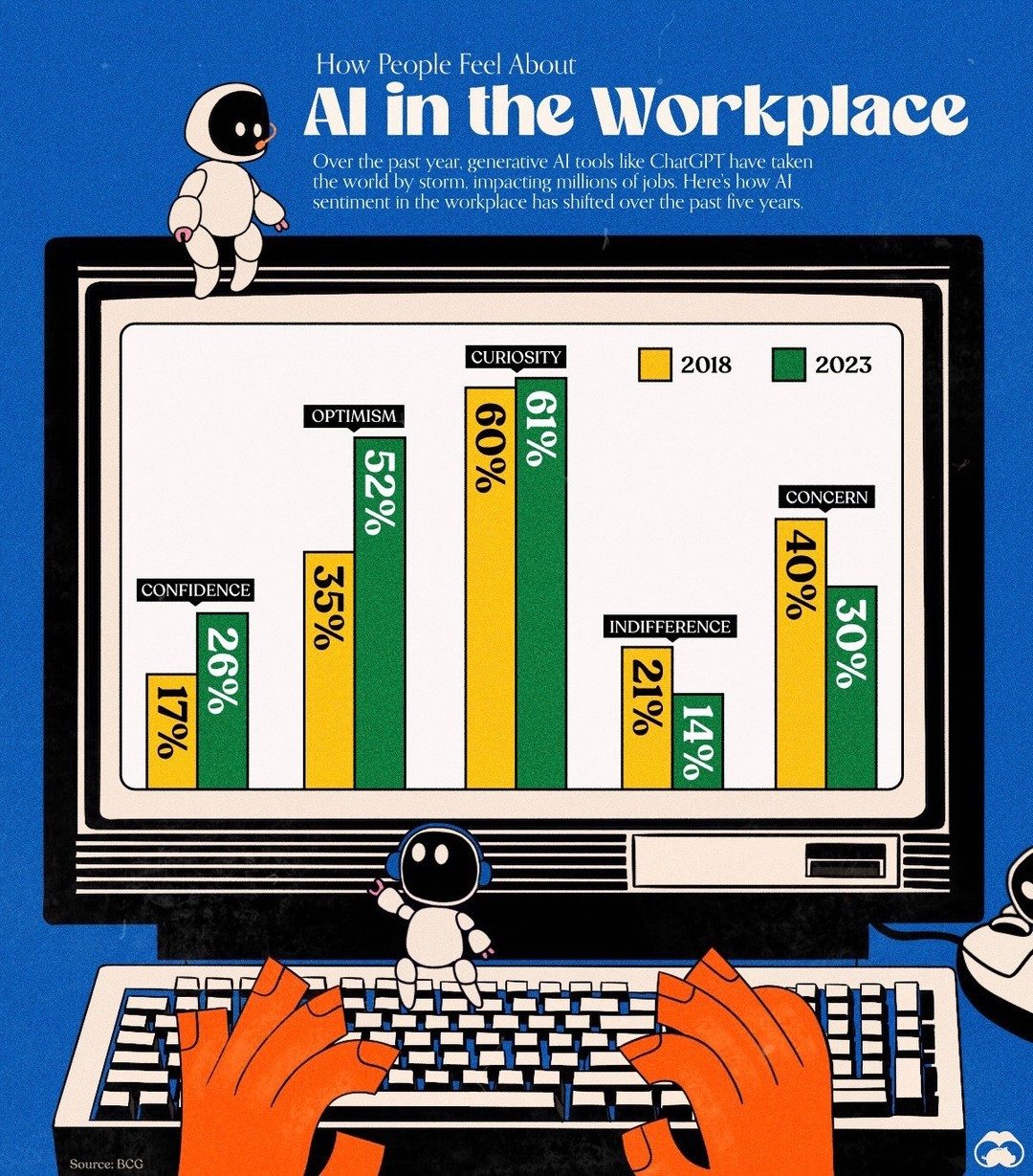
AI Sentiment in the Workplace
AI has become a ubiquitous presence in workplaces worldwide, transforming how tasks are performed and decisions are made. Recent survey data from the Boston Consulting Group (BCG) offers valuable insights into how the labor force feels about AI in the workplace today, compared to five years ago.
Context / Why This Matters
Understanding the evolving sentiments towards AI in the workplace is crucial for organizations aiming to integrate AI effectively. The BCG survey, conducted across 18 countries and involving 13,000 respondents—including C-suite leaders, managers, and frontline employees—provides a comprehensive view of the shifting attitudes towards AI.
Main Discussion
The survey highlights significant changes in sentiment over the past five years, categorizing responses into five key areas: Curiosity, Optimism, Concern, Confidence, and Indifference.
Optimism and Confidence on the Rise
One of the most notable shifts is the increase in optimism and confidence. In 2018, 52% of respondents expressed optimism about AI, and by 2023, this figure had risen to 60%. Similarly, confidence in AI's capabilities grew from 29% to 35%. This rise in optimism and confidence suggests that more people are recognizing the benefits and potential of AI in the workplace, leading to greater acceptance and integration.
Concerns and Indifference
While optimism and confidence have risen, concerns about AI have steadily decreased. In 2018, 40% of respondents expressed concern about AI, but by 2023, this figure had dropped to 30%. This decline indicates that as people become more familiar with AI, their apprehensions about its impact on their jobs and work environment are diminishing.
Indifference towards AI, however, has seen a more modest shift. Initially at 21% in 2018, indifference rose slightly to 29% in 2023. This suggests that while some individuals are becoming more engaged with AI, a significant portion of the workforce remains neutral or unaware of its implications.
The Role of Curiosity
Curiosity about AI has also evolved. In 2018, 17% of respondents were curious about AI, and this figure rose to 30% by 2023. This increase reflects growing interest and a desire to understand how AI can enhance productivity, innovation, and efficiency in the workplace. This curiosity can drive further engagement and adoption of AI technologies.
Practical Tips
To leverage the evolving sentiments towards AI effectively, organizations can implement the following strategies:
Foster a Culture of Curiosity
Encourage employees to explore and experiment with AI tools. Offer training sessions, workshops, and resources that demystify AI and highlight its practical applications. This fosters a culture of curiosity and continuous learning, making employees more receptive to AI integration.
Address Concerns Openly
Regularly engage with employees to address their concerns about AI. Provide transparent communication about how AI will be used, its benefits, and the measures in place to mitigate potential risks. Involving employees in the decision-making process can build trust and alleviate apprehensions.
Build Confidence Through Successful Implementations
Implement AI projects that deliver tangible benefits, such as improved workflows, enhanced decision-making, or increased efficiency. Success stories and case studies can build confidence in AI's capabilities and encourage broader acceptance.
Leverage Optimism for Innovation
Maximize the growing optimism towards AI by integrating innovative AI solutions that drive productivity, efficiency, and growth. Encourage employees to share ideas and solutions that leverage AI, fostering a collaborative and forward-thinking work environment.
Monitor and Adapt
Regularly monitor employee sentiment towards AI and adapt strategies accordingly. Conduct periodic surveys and gather feedback to understand evolving attitudes and concerns. Use this data to refine your AI integration approach and ensure it aligns with your workforce's needs and expectations.
Important Takeaways
The BCG survey reveals that while optimism and confidence in AI are on the rise, concerns and indifference remain significant factors. Organizations must address these sentiments proactively to ensure successful AI integration. By fostering a culture of curiosity, addressing concerns openly, building confidence through successful implementations, leveraging optimism for innovation, and continuously monitoring and adapting, companies can navigate the evolving landscape of AI in the workplace effectively.
Conclusion
AI has become an integral part of the modern workplace, and understanding the sentiments surrounding its use is crucial for successful integration. The BCG survey provides valuable insights into how attitudes towards AI have evolved and offers a roadmap for organizations to harness this powerful technology. By addressing concerns, fostering curiosity, and leveraging optimism, companies can create a workforce that is confident and ready to embrace the future of AI.
Watch the Reel
Questions readers ask
What key shifts in AI workplace sentiment have been observed over the past five years?
The BCG survey reveals that optimism and confidence in AI have increased significantly, while concerns about AI have decreased. This shift indicates a growing acceptance and trust in AI technologies within the workplace. However, a portion of the workforce remains indifferent to AI's rise, suggesting that there is still room for broader engagement and understanding.
Who was involved in the BCG survey on AI workplace sentiment?
The survey included a wide range of participants, comprising 13,000 respondents from 18 countries. This diverse group included C-suite leaders, managers, and frontline employees, ensuring a comprehensive view of AI attitudes across different levels of the workforce.
What are the recent trends in AI opinions in the workplace?
Recent trends show a notable increase in optimism and confidence in AI. Workers are more likely to view AI as a beneficial tool for their jobs, and this positive sentiment has grown over the past five years. However, there's still a portion of the workforce who remain indifferent to AI's impact.
What does the BCG survey reveal about AI concerns in the workplace?
The survey indicates that concerns about AI in the workplace have decreased compared to 2018. This suggests that workers are becoming more comfortable with AI technologies and are less worried about potential negative impacts. However, some concerns may persist, especially among those who remain indifferent to AI's rise.
How does the BCG survey help organizations understand AI integration?
By providing insights into the shifting attitudes towards AI, the survey helps organizations tailor their AI strategies to address both the growing optimism and the remaining indifference. This understanding can guide training programs, communication efforts, and policy development to ensure effective AI integration.
What is the significance of the AI workplace sentiment shift from 2018 to 2023?
The shift from 2018 to 2023 highlights a maturing relationship between workers and AI. The increase in optimism and confidence, along with the decrease in concerns, shows that AI is becoming more accepted and integrated into daily work routines. However, addressing the indifferent portion of the workforce is crucial for maximizing AI's benefits.
Related deep dives
Similar reads based on topic and creator.


Recent articles
Fresh deep dives from the latest Reels we unpacked.




Comments
Be the first to comment.