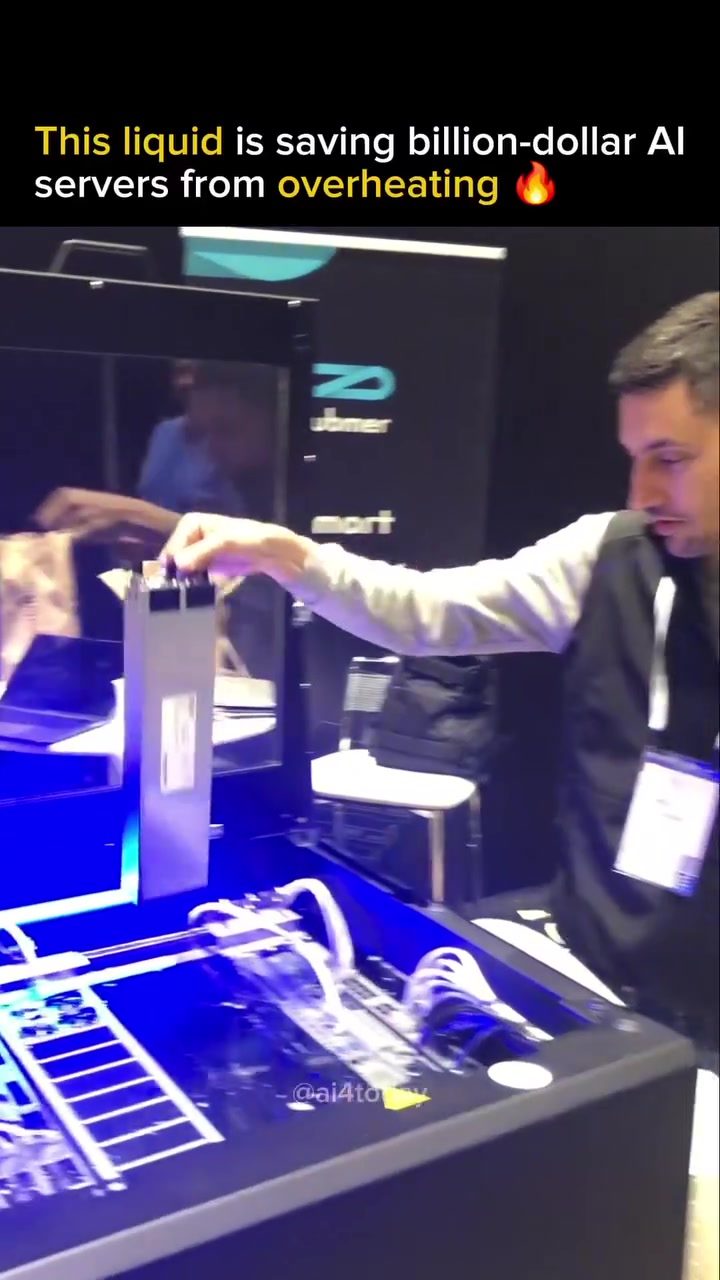
Liquid Cooling for AI Servers
AI data centers are at the forefront of technological innovation, and one of the most critical challenges they face is managing the heat generated by powerful GPUs. Traditional cooling methods, which rely heavily on fans and air circulation, are often insufficient for the intense heat output of modern AI hardware.
Instead of relying solely on these methods, some data centers are turning to a more advanced solution: immersion cooling. This technology involves submerging servers, including components like OCP power supplies, in a special non-conductive liquid. This liquid is designed to absorb heat much more efficiently than air, making it an effective method for keeping systems running reliably.
Why This Matters
As artificial intelligence hardware continues to advance, it also becomes more powerful and energy-intensive. This increased performance comes at a cost—greater heat generation. Traditional cooling methods can struggle to keep up, leading to potential overheating and system failures. Immersion cooling addresses this issue by providing a more efficient means of heat dissipation, which is crucial for several reasons:
- Improved Efficiency: By absorbing heat more effectively, immersion cooling can help data centers operate more efficiently. This means reduced energy consumption and lower operational costs.
- Higher Computing Density: Efficient cooling allows for more servers to be packed into a smaller space, supporting higher computing density. This is essential for data centers aiming to maximize their computational power.
- Reliability: Overheating is a significant cause of hardware failures. Immersion cooling helps maintain a stable temperature, ensuring that systems run reliably and reducing the risk of downtime.
Main Discussion
Immersion cooling systems, like those developed by Submer, have proven to be highly effective in managing the thermal challenges of modern AI data centers. Let's delve deeper into how this technology works and its benefits.
How Immersion Cooling Works
Immersion cooling works by submerging server components in a non-conductive liquid. This liquid is specially formulated to absorb heat efficiently and ensure that all components remain cool. The process is straightforward:
- Immersion: The server components, including GPUs, CPUs, and power supplies, are fully submerged in the liquid.
- Heat Transfer: The liquid absorbs the heat generated by the components, transferring it away from the critical parts.
- Heat Dissipation: The heated liquid is then circulated through a heat exchanger, where the heat is dissipated, and the liquid is cooled before being returned to the server enclosure.
Components of an Immersion Cooling System
An effective immersion cooling system consists of several key components:
- Specialized Liquid: The liquid used in immersion cooling is non-conductive, ensuring that it does not interfere with the electronic components. It has a high thermal conductivity, allowing it to absorb and dissipate heat efficiently.
- Immersion Tank: This is the container where the server components are submerged. It is designed to hold the liquid and the server components securely.
- Heat Exchanger: This component is responsible for removing the heat from the liquid. It works by circulating the heated liquid through a cooling system, where the heat is dissipated, and the liquid is cooled before being returned to the immersion tank.
Benefits of Immersion Cooling
Immersion cooling offers several advantages over traditional air-cooling methods:
- Efficient Heat Dissipation: The liquid in immersion cooling systems can absorb and dissipate heat more efficiently than air, leading to better temperature management.
- Reduced Noise: Because immersion cooling does not rely on fans, it operates silently, making it an ideal solution for environments where noise is a concern.
- Environmental Friendliness: Many immersion cooling liquids are non-toxic and environmentally friendly, making them a sustainable choice for data centers.
Practical Tips
If you're considering implementing immersion cooling in your data center, here are some practical tips to help you get started:
- Assess Your Needs: Analyze your data center's cooling requirements and determine whether immersion cooling is the right solution for you. Consider factors like the density of your server setup, power consumption, and heat output.
- Choose the Right Liquid: Select a non-conductive liquid that is compatible with your server components and has high thermal conductivity.
- Proper Installation: Ensure that the immersion cooling system is installed correctly, with all components securely submerged in the liquid and the heat exchanger properly integrated into the cooling system.
- Regular Maintenance: Conduct regular maintenance checks to ensure that the immersion cooling system is functioning optimally. This includes monitoring the liquid level, checking for any leaks, and inspecting the heat exchanger.
Important Takeaways
- Invest in Efficiency: Immersion cooling represents a significant leap in efficiency for data center cooling. Ensuring you are able to efficiently cool your servers through immersion cooling systems can lead to lower operational costs and higher reliability.
- Heat Management is Crucial: As AI hardware continues to evolve, managing heat effectively will become increasingly important. Immersion cooling provides a future-proof solution for keeping pace with these advancements.
- Consider the Environment: Immersion cooling offers a more sustainable alternative to traditional cooling methods, making it a responsible choice for environmentally conscious data centers.
Conclusion
As AI hardware becomes more advanced and power-intensive, the need for efficient cooling solutions becomes more critical. Immersion cooling, with its ability to absorb and dissipate heat effectively, offers a robust solution for modern data centers. By embracing this technology, data centers can improve their efficiency, support higher computing densities, and ensure reliable operation.
Watch the Reel
Questions readers ask
What is immersion cooling and how does it benefit AI data centers?
Immersion cooling is a advanced liquid cooling technology that involves submerging AI servers, including GPUs and power supplies, in a non-conductive liquid. This method significantly improves heat absorption, reducing overheating risks and enhancing the reliability of AI data centers. Additionally, it can lead to lower energy consumption compared to traditional cooling methods.
How does liquid cooling compare to traditional cooling methods for AI servers?
Traditional cooling methods, such as air cooling with fans, often struggle to keep up with the intense heat generated by modern AI hardware, particularly GPUs. Liquid cooling, on the other hand, provides more efficient heat absorption, maintaining optimal performance and reducing the risk of system failures due to overheating.
What types of liquids are used in immersion cooling for AI data centers?
In immersion cooling, AI data centers use non-conductive liquids designed to safely absorb heat without damaging electrical components. These liquids are typically dielectric fluids, which are safe for the hardware and effective at dissipating heat. Examples include hydrocarbons, fluorine-based fluids, and silicones.
Can immersion cooling reduce energy consumption in AI data centers?
Yes, immersion cooling can lead to significant energy savings. By more efficiently absorbing and dissipating heat, it reduces the need for high-powered air conditioning and large-scale fan systems. This results in lower power consumption and overall operational costs for AI data centers.
What are the key components submerged in the liquid during immersion cooling?
In an immersion cooling setup, the key components submerged in the liquid typically include the servers and GPUs, as well as supporting hardware like OCP power supplies. By fully immersing these components, the liquid can effectively absorb and dissipate the heat generated, ensuring optimal performance and longevity.
How does immersion cooling help in preventing data center overheating?
Immersion cooling helps prevent data center overheating by directly absorbing heat from the submerged components, which is then transported away from the servers. This direct contact with the liquid ensures that heat is dissipated more efficiently than with traditional air cooling, minimizing the risk of component failure due to overheating and improving overall system reliability.
What are the maintenance considerations for liquid-cooled AI data centers?
Maintaining a liquid-cooled AI data center involves ensuring the liquid remains clean and free of contaminants, as well as monitoring the system for any potential leaks. Regular checks on the liquid's dielectric properties and periodic replacement of the liquid may be necessary. Additionally, maintenance should focus on the overall health of the submerged hardware, such as servers and GPUs, to ensure optimal performance and longevity.
Related deep dives
Similar reads based on topic and creator.


Recent articles
Fresh deep dives from the latest Reels we unpacked.




Comments
Be the first to comment.