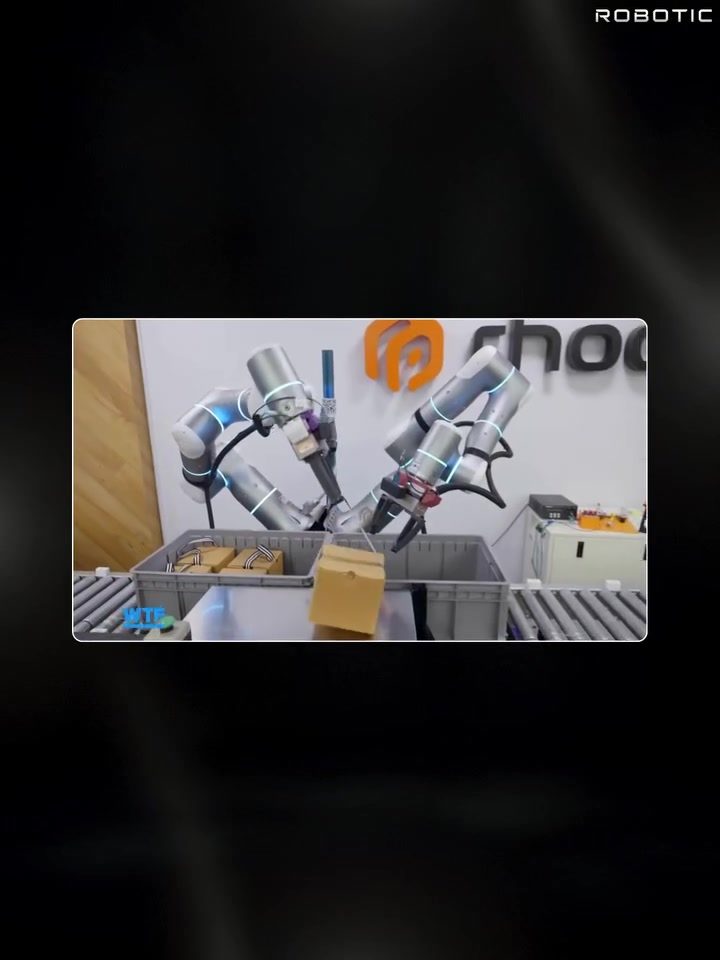
Industrial Robotics in Action
First, industrial robots powered by AI are transforming how tasks are performed in factories and warehouses. Using advanced models like Rhoda AI’s Direct Video Action, these robots are trained on vast amounts of online video data, enabling them to understand and interact with the physical world more effectively than ever before.
AI-Driven Robotics
Rhoda AI’s Direct Video Action model stands out in this field. It learns from hundreds of millions of public videos, which allows it to understand motion, physics, and object behavior. Instead of relying on fixed commands, this model predicts what will happen next and updates its actions every few hundred milliseconds. This adaptability is crucial in real-time scenarios, enabling robots to handle unexpected situations more effectively.
One of the key advantages of this approach is the ability to evaluate multiple possible outcomes before taking action. This capability makes robots more versatile and capable of handling complex real-world environments. For instance, a robot can successfully identify and sort a piece of trash it has never encountered before into the correct recycling bin, thanks to its advanced predictive capabilities.
Challenges and Solutions in Industrial Automation
Industrial automation involves a wide range of tasks, from handling small components like ball bearings to more complex operations like sorting and recycling. Each task presents unique challenges that AI-powered robots must overcome.
Handling Small Components
When dealing with small components like ball bearings, the first step often involves removing them from their packaging. This may seem straightforward, but it requires precision and dexterity, especially when the components are relatively heavy, such as 22-pound ball bearings. The robotic arm must pick up the items carefully and open the packaging, which can be tricky due to the transparent and deformable nature of plastic bags. Robots must navigate these challenges by reaching in and grabbing specific items, such as desiccant paper, which is essential for maintaining the integrity of the components.
Sorting and Recycling
Sorting and recycling materials are essential tasks in industrial settings. Robots must handle various materials, including plastic bags and desiccant paper, and dispose of them correctly. This involves not only picking up the items but also ensuring they are placed in the right recycling bins. For instance, desiccant paper must be removed from the bag before it can be recycled properly. This process requires the robot to shake out the paper and then discard the clean bag into the appropriate recycling bin. This level of precision and adaptability is crucial for maintaining efficiency and sustainability.
Automated Inspection
Inspection tasks are another critical area where AI-powered robots excel. They are equipped with cameras and sensors that allow them to scan components for defects or verify their placement. This automated quality control is essential in manufacturing processes, ensuring that only high-quality products reach the market. The inspection station typically features multiple cameras that provide a comprehensive view of the components, allowing the robot to detect even minor defects.
Practical Tips for Implementing AI-Powered Robots
Implementing AI-powered robots in industrial settings requires careful planning and consideration. Here are some practical tips to help you get started:
Training and Adaptation
Training robots on a variety of tasks is essential for their adaptability. Most tasks, such as sorting and recycling, can be learned with just 10 to 20 hours of training. This relatively short training period allows robots to perform a wide range of functions efficiently.
Integration with Existing Systems
AI-powered robots can be integrated with existing industrial systems, such as conveyor belts and packaging lines. This integration allows for seamless operation and enhances overall efficiency. For example, robotic arms can work alongside human operators, handling tasks that require precision and speed.
Continuous Improvement
Robots equipped with AI models can continuously learn and improve their performance. This adaptability means they can handle new tasks and situations as they arise, making them a valuable asset in dynamic industrial environments. Regular updates and training sessions can further enhance their capabilities, ensuring they remain effective and efficient.
Important Takeaways
AI-powered robotics is revolutionizing industrial automation. By leveraging advanced AI models and vast amounts of video data, robots can understand and interact with the physical world more effectively. This capability enables them to handle a wide range of tasks, from sorting and recycling to quality control and inspection. The adaptability and precision of these robots make them invaluable in complex real-world environments, enhancing efficiency and sustainability.
Conclusion
Industrial robotics powered by AI are set to transform the way tasks are performed in factories and warehouses. By understanding and predicting physical interactions, these robots can handle a wide range of functions with precision and adaptability. As the technology continues to evolve, we can expect to see even more innovative applications in industrial automation, making factories and warehouses more efficient and sustainable.
Watch the Reel
Questions readers ask
How do AI-powered robots differ from traditional industrial robots?
AI-powered robots, unlike traditional ones, can learn and adapt in real-time, thanks to advanced models like Rhoda AI’s Direct Video Action. This allows them to handle unexpected situations and complex tasks more effectively, making them highly versatile in industrial settings.
What kind of data do these advanced robots learn from?
These robots are trained using vast amounts of online video data. Rhoda AI, for instance, uses hundreds of millions of public videos to teach its robots about motion, physics, and object behavior. This extensive video data enables robots to understand and interact with the physical world more effectively.
How do AI-powered robots handle real-time scenarios?
AI-powered robots, such as those using Rhoda AI’s Direct Video Action model, update their actions every few hundred milliseconds. This real-time adaptation allows them to predict and respond to changes in their environment swiftly, making them highly effective in dynamic industrial settings.
What are some applications of AI-powered robots in industrial automation?
In industrial automation, these robots excel in tasks such as robotic arm automation, automated sorting, and packaging. They are used in factories and warehouses to perform complex tasks efficiently, thanks to their ability to learn, adapt, and interact with their environment.
Can AI-powered robots improve efficiency in the packaging industry?
Yes, AI-powered robots can significantly enhance efficiency in the packaging industry. By learning from video data, these robots can adapt to different packaging scenarios, handle various types of materials, and optimize packaging processes in real-time, leading to faster and more accurate results.
What makes Rhoda AI’s Direct Video Action model unique?
Rhoda AI’s Direct Video Action model is unique because it learns from a vast amount of public videos, enabling it to understand and predict physical interactions. Unlike traditional models, it doesn't rely on fixed commands; instead, it updates actions every few milliseconds, making it highly adaptable in real-time scenarios.
How do robots benefit from learning through video data?
Learning from video data allows robots to gain a deep understanding of the physical world. By observing motion, physics, and object behavior, robots can better navigate and interact with their environment, leading to more efficient and accurate task performance in industrial automation.
Related deep dives
Similar reads based on topic and creator.



Recent articles
Fresh deep dives from the latest Reels we unpacked.




Comments
Be the first to comment.