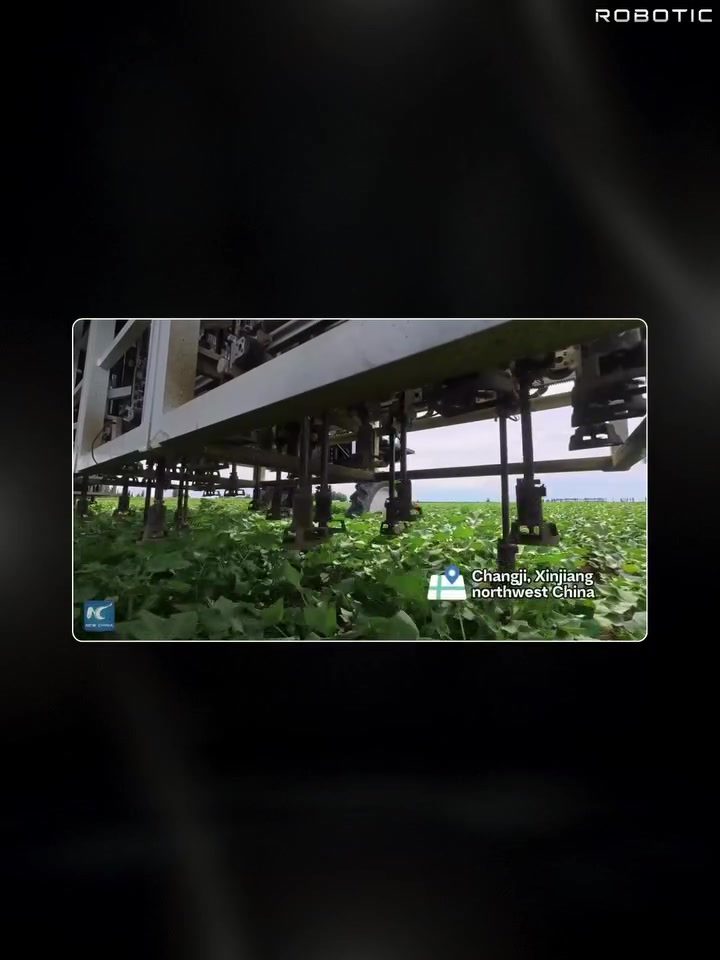
Agricultural Robotics and the Future of Cotton Farming
Cotton farming is undergoing a significant transformation thanks to advancements in agricultural robotics. These cutting-edge machines are revolutionizing the way cotton is harvested, particularly in regions like Xinjiang, China's largest cotton-producing area. Developed by innovative Chinese engineers, these agricultural robots are equipped with state-of-the-art technology that enhances efficiency and productivity.
Why This Matters
The integration of AI and robotics in agriculture is not just about increasing output; it's about sustainability and precision. Traditional manual topping methods are labor-intensive and often result in inconsistencies. Agricultural robots, on the other hand, can perform tasks with unparalleled precision and speed, making them a game-changer in modern farming.
Main Discussion
The Technology Behind Agricultural Robotics
Agricultural robots, particularly those designed for cotton topping, rely on a combination of advanced sensors and machine vision. These robots use binocular cameras and AI algorithms to identify the ideal cutting point for each plant within milliseconds. This precision ensures that the plants are topped accurately, which is crucial for optimal cotton yield. The robots are equipped with 108 robotic arms that make precise cuts, ensuring that the process is both efficient and effective.
Efficiency and Productivity
One of the standout features of these agricultural robots is their efficiency. The fourth-generation machine, developed by Viewer Tech, can perform over 300,000 precise snips per hour. This level of productivity is around 120 times more efficient than manual topping. This significant increase in efficiency is not just about speed; it's also about consistency. The robots can cover up to 2 hectares of land per hour, ensuring that large areas are topped uniformly, which is essential for maintaining quality and yield.
Environmental and Economic Benefits
The adoption of these robots in Xinjiang, China's largest cotton-producing region, has shown promising results. Field trials have reported higher cotton yields and increased net returns. This demonstrates how AI and robotics are not just reshaping the future of agriculture but also making it more profitable and sustainable. By reducing the need for manual labor, these robots also help mitigate environmental impacts associated with traditional farming methods, such as soil degradation and water usage.
The Role of AI in Agricultural Robotics
AI plays a pivotal role in the operation of these agricultural robots. The binocular cameras and AI algorithms work together to analyze the plants and determine the best cutting point. This real-time analysis allows the robots to make precise cuts, ensuring that the plants are not damaged in the process. The use of AI also enables the robots to adapt to different conditions and make adjustments as needed, making them versatile and reliable tools for modern farming.
The Future of Agricultural Robotics
The future of agricultural robotics is bright, with ongoing research and development aimed at further enhancing their capabilities. As more farmers adopt these technologies, the potential for increased efficiency, productivity, and sustainability will continue to grow. The integration of advanced sensors, machine vision, and AI algorithms will likely lead to even more sophisticated machines that can handle a wider range of tasks, from planting to harvesting.
Practical Tips
Investing in Agricultural Robotics
For farmers looking to invest in agricultural robotics, it's essential to consider the long-term benefits. While the initial cost may be high, the increased efficiency and productivity can lead to significant savings and higher yields over time. It's also important to choose robots that are designed for specific tasks, such as cotton topping, to ensure maximum effectiveness.
Maintenance and Upkeep
Regular maintenance and upkeep are crucial for ensuring that agricultural robots operate at their best. This includes checking the sensors, cameras, and robotic arms for any signs of wear or damage. Farmers should also consider scheduling regular updates to the AI algorithms to improve performance and adapt to changing conditions.
Training and Education
Farmers and their teams should receive adequate training on how to operate and maintain these robots. Understanding the technology and its capabilities can help maximize its benefits and ensure that it is used effectively. Ongoing education and training can also help farmers stay updated on the latest advancements in agricultural robotics.
Important Takeaways
Agricultural robotics represents a significant leap forward in modern farming. By integrating advanced sensors, machine vision, and AI algorithms, these robots can perform tasks with unparalleled precision and efficiency. The adoption of these technologies in regions like Xinjiang, China, has already shown promising results, with higher yields and increased net returns. As more farmers embrace these innovations, the future of agriculture looks brighter and more sustainable.
Conclusion
The transformation of cotton farming through agricultural robotics is a testament to the power of technology in modern agriculture. These innovative machines, developed by Chinese engineers, are designed to enhance efficiency, productivity, and sustainability. By leveraging advanced sensors, machine vision, and AI algorithms, these robots can perform tasks with precision and speed, making them indispensable tools for modern farming. As we look to the future, the continued integration of these technologies will likely lead to even more significant advancements, reshaping the way we approach agriculture and ensuring a more sustainable and productive future.
Watch the Reel
Questions readers ask
How do AI-powered cotton robots improve harvesting efficiency in Xinjiang?
AI-powered cotton robots enhance harvesting efficiency by using advanced sensors and algorithms to identify and pick cotton bolls with high precision. This reduces the time and labor traditionally required, allowing farmers to harvest more cotton in less time. The robots can operate continuously, unlike human workers, further boosting productivity.
What specific tasks can AI cotton robots perform in the fields of Xinjiang?
AI cotton robots are designed to perform a variety of tasks, including precise cotton harvesting, selective topping, and even monitoring crop health. These robots can navigate fields autonomously, identifying ripe cotton bolls and harvesting them efficiently while avoiding unripe ones, ensuring a higher quality yield.
How does the use of AI in agriculture benefit cotton farming in Xinjiang?
The use of AI in agriculture benefits cotton farming by providing consistent and high-quality harvesting. AI-powered robots can work around the clock, reducing the reliance on manual labor and minimizing human error. This results in a more reliable and efficient harvesting process, which is crucial for Xinjiang, China's largest cotton-producing region.
What are the environmental benefits of using cotton harvesting robots in Xinjiang?
Cotton harvesting robots contribute to environmental sustainability by reducing the need for manual topping methods, which often involve the use of chemicals. These robots can perform tasks with precision, minimizing waste and ensuring that only ripe cotton is harvested. This precision helps in conserving resources and reducing environmental impact.
How do AI farming innovations in Xinjiang compare to traditional cotton farming methods?
AI farming innovations in Xinjiang offer significant advantages over traditional methods. Traditional methods are labor-intensive and can result in inconsistencies due to human error. In contrast, AI-powered robots provide consistent, high-quality harvesting with reduced labor needs and increased efficiency, making them a more reliable option for modern cotton farming.
What are the economic impacts of adopting AI-powered cotton robots in Xinjiang?
Adopting AI-powered cotton robots in Xinjiang can lead to substantial economic benefits. By reducing labor costs and increasing productivity, these robots allow farmers to produce more cotton in less time. This increased efficiency can result in higher profits and a more competitive position in the global cotton market, fostering economic growth in the region.
What kind of technology is used in AI cotton robots to enhance cotton harvesting?
AI cotton robots utilize a combination of advanced sensors, machine learning algorithms, and computer vision to navigate fields and identify ripe cotton bolls. These technologies enable the robots to perform precise harvesting, avoid unripe cotton, and operate autonomously, ensuring a more efficient and productive cotton harvesting process.
Related deep dives
Similar reads based on topic and creator.




Recent articles
Fresh deep dives from the latest Reels we unpacked.




Comments
Be the first to comment.