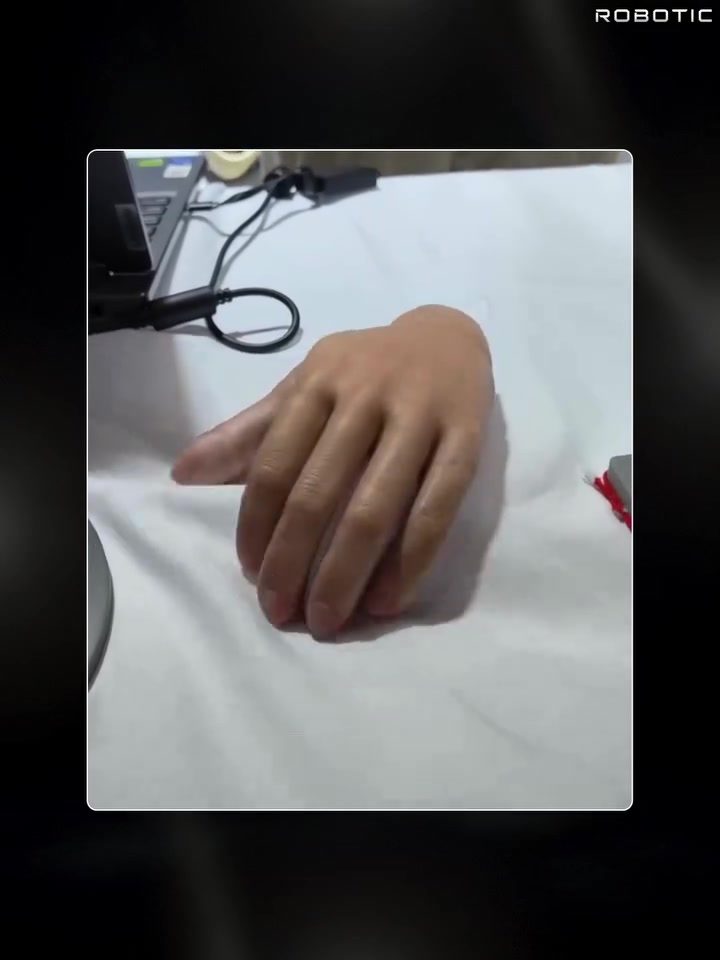
AI-Powered Bionic Hands: Revolutionizing Prosthetic Limbs
AI-powered bionic hands have the potential to transform the lives of amputees by making prosthetic limbs more intuitive and natural. By translating muscle signals into precise finger movements, these advanced devices represent a significant leap in prosthetics technology. Developed by BrainCo, the prosthetic limb showcased at the World Artificial Intelligence Conference (WAIC) 2026 incorporates cutting-edge features that set it apart from traditional prosthetics.
Context / Why this matters
The significance of AI-powered bionic hands lies in their ability to provide amputees with more natural and intuitive movement. By processing muscle signals in real time, these devices can replicate the complex motor functions of a biological hand. This is a game-changer in the field of assistive technology, offering users greater independence and functionality.
Main discussion
BrainCo's AI-Powered Bionic Hand Technology
The BrainCo bionic hand utilizes Electromyography (EMG) sensors to detect electrical signals from the user's forearm muscles. These signals are then processed by AI algorithms, allowing for precise control of individual fingers and multiple grip modes.
How it works
The AI processes these signals in real time, enabling the prosthetic hand to mimic natural movements. This involves translating muscle contractions into specific finger movements, allowing users to perform tasks that require fine motor control. The AI adapts to the user’s muscle patterns over time, providing a more personalized and intuitive experience.
Advantages of AI in Prosthetics
AI enhances the functionality of prosthetic limbs by providing:
-
Individual Finger Control: Unlike traditional prosthetics, which often control movement as a single unit, AI-powered limbs allow for precise control of each finger. This enables users to perform tasks that require dexterity, such as grasping small objects or manipulating tools.
-
Multiple Grip Modes: Users can select from various grip modes tailored to different tasks, from pinching small items to gripping larger objects. This versatility makes the prosthetic more adaptable to various daily activities.
-
Adaptive Movement: The AI learns and adapts to the user’s muscle patterns, making the movements more natural and intuitive over time. This adaptability ensures that the prosthetic becomes an extension of the user’s body rather than a mechanical attachment.
Potential Applications
The potential applications of AI-powered bionic hands extend beyond prosthetic limbs. These devices can be used in:
-
Assistive Technology: Providing amputees and individuals with mobility limitations with the ability to perform everyday tasks more naturally.
-
Advanced Robotics: As a model for robotic hands in industrial and medical applications, these devices can assist in manufacturing, surgery, and other fields requiring precise manipulation.
Assistive Technology and Independence
AI-powered bionic hands offer amputees greater independence by enabling them to perform daily activities more naturally. The ability to control each finger independently allows users to grasp and manipulate objects with precision, reducing the need for assistance and enhancing their quality of life.
Enhancing Daily Life
The ability to perform tasks such as holding a cup, writing, or operating electronic devices with a natural grip significantly improves the daily lives of amputees. This independence can lead to increased self-confidence and social integration, as users feel more comfortable and capable in their environments.
Future Prospects
While the current technology does not restore natural touch, ongoing advancements in AI and sensor technology hold promise for future iterations. The development of haptic feedback systems could potentially enable users to experience sensations similar to those of a natural hand, further enhancing the intuitive nature of these prosthetics.
Practical tips
For amputees considering AI-powered bionic hands, it is essential to:
-
Consult with Healthcare Professionals: Work closely with medical experts to determine the best fit for your needs and ensure proper training and support.
-
Explore Customization Options: Look for devices that offer customization and adaptability to personalize the prosthetic to your specific requirements.
-
Stay Updated on Advancements: Keep abreast of the latest developments in AI and prosthetics technology to take advantage of new features and improvements.
Important takeaways
-
AI Technology: The integration of AI in bionic hands allows for precise and intuitive movement, significantly enhancing their functionality.
-
Muscle Signal Processing: EMG sensors detect muscle signals, which are processed in real time by AI algorithms to control the prosthetic hand.
-
Enhanced Independence: The ability to perform daily tasks with greater ease and precision improves the quality of life for amputees, providing them with more independence and confidence.
Conclusion
AI-powered bionic hands developed by BrainCo are revolutionizing the field of prosthetics by providing amputees with more natural and intuitive movement. Through the integration of AI and EMG sensors, these devices offer precise control, adaptive movement, and multiple grip modes, enabling users to perform tasks with greater ease and independence. As technology continues to advance, the future of prosthetic limbs looks increasingly promising, with the potential for even more natural and intuitive devices.
Watch the Reel
Questions readers ask
How do AI-powered bionic hands work to mimic natural hand movements?
AI-powered bionic hands translate muscle signals into precise finger movements. Through advanced sensors and algorithms, they process these signals in real-time, enabling the hand to perform complex motor functions similar to a biological hand.
What makes AI-powered bionic hands different from traditional prosthetics?
Unlike traditional prosthetics, which often rely on manual controls, AI-powered bionic hands offer intuitive and natural control. The AI capabilities allow the device to mimic the intricate movements of a human hand, providing a higher level of functionality and independence.
What is BrainCo’s role in the development of AI-powered bionic hands?
BrainCo is at the forefront of developing advanced AI-powered bionic hands. Their prosthetics, such as the one showcased at the World Artificial Intelligence Conference (WAIC) 2026, incorporate cutting-edge features that enhance natural movement and functionality.
How do muscle signal prosthetics improve the lives of amputees?
Muscle signal prosthetics enable amputees to control their prosthetic limbs using the same muscle signals that would control a biological limb. This technology provides a more intuitive and seamless experience, enhancing the user's independence and quality of life.
What are the key benefits of AI-powered prosthetics over conventional ones?
AI-powered prosthetics offer greater precision, natural movement, and independence. They can replicate complex motor functions, allowing users to perform everyday tasks with more ease and control. Additionally, they provide real-time adjustments, reducing the need for manual tuning.
What advancements in prosthetic technology can be expected in the near future?
As AI continues to evolve, bionic hand technology is poised to become even more sophisticated. Future advancements may include improved sensor technology for even more precise control, enhanced materials for durability, and more seamless integration with the user's nervous system.
Related deep dives
Similar reads based on topic and creator.



Recent articles
Fresh deep dives from the latest Reels we unpacked.




Comments
Be the first to comment.