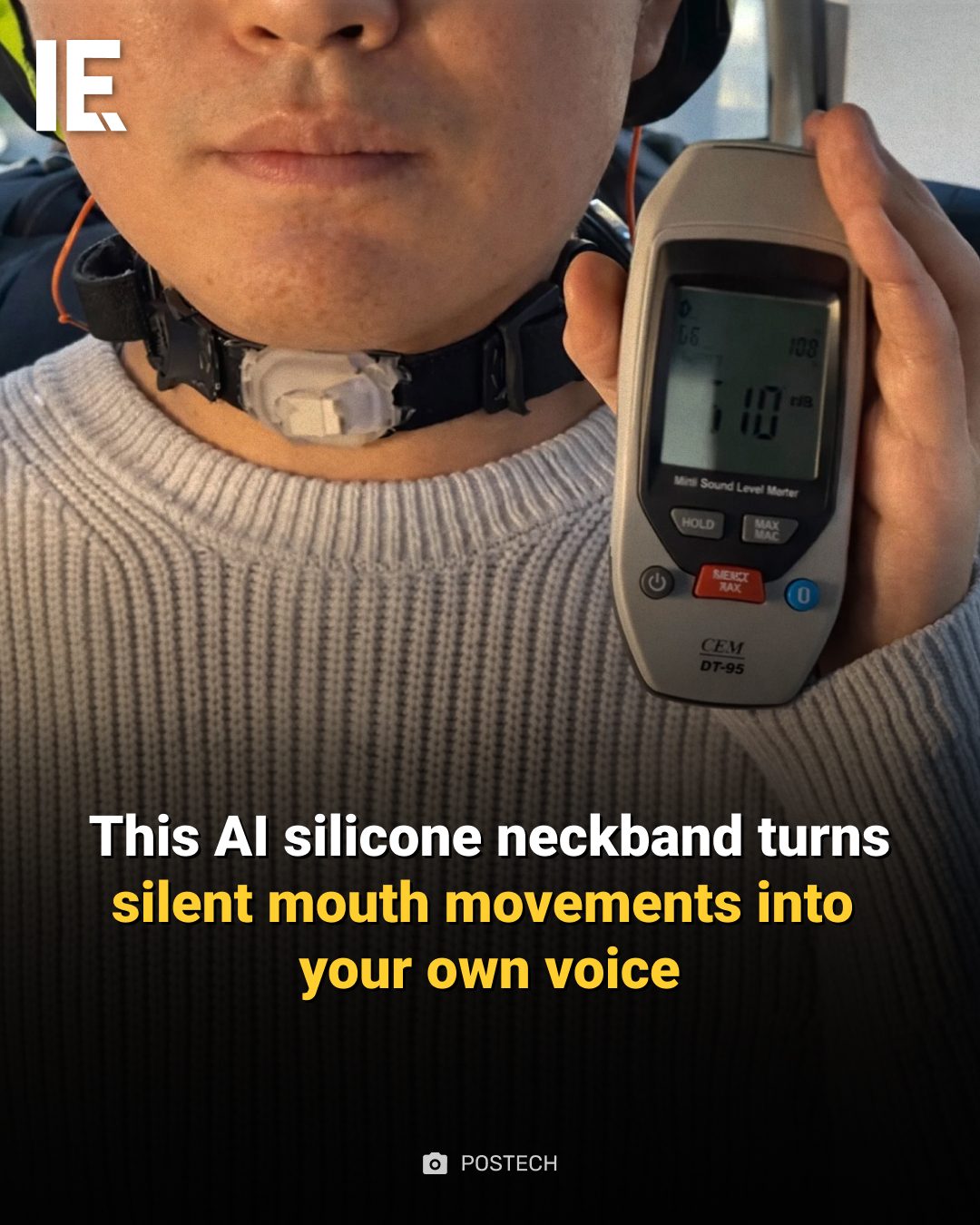
AI-Powered Neckband Translates Silent Mouth Movements into Audio
An innovative silicone neckband developed by researchers at Pohang University of Science and Technology (POSTECH) has revolutionized the way we think about communication. This ingenious device leverages artificial intelligence (AI) to detect and translate silent mouth movements into audible speech, replicating the user's own voice. This breakthrough has significant implications for various fields, from medical applications to industrial and military environments.
Why This Matters
The ability to convert silent mouth movements into spoken words opens up a world of possibilities. For individuals with speech disorders, this technology can be a game-changer, providing a means of communication that is both natural and effective. In environments where traditional microphones are impractical or impossible to use—such as in noisy industrial settings or military operations—the neckband offers a discreet and reliable solution. Additionally, the technology's ability to function in high noise environments, up to 90 dB, underscores its robustness and practicality.
Main Discussion
How It Works
The neckband operates by detecting minute skin and muscle movements in the neck that occur when we mouth words. These subtle movements are then translated into audio, creating a seamless and natural-sounding voice output. The system uses AI to analyze and interpret these motions, ensuring that the synthesized voice closely matches the user's natural vocal patterns.
The Technology
The silicone neckband is designed with precision engineering, making it comfortable to wear and unobtrusive. It utilizes advanced AI algorithms to achieve an impressive 85.8% accuracy across a 26-word vocabulary. While this is a significant milestone, there are ongoing efforts to expand the vocabulary and improve accuracy, especially during physical movement.
Current Limitations and Future Prospects
As groundbreaking as this technology is, it is not without its limitations. The current system has a fixed vocabulary, which means it can only recognize and translate a limited set of words. Additionally, its accuracy can be affected by physical movements, which can interfere with the detection of subtle neck movements.
However, researchers are actively working to address these limitations. Future versions of the technology are expected to support a broader vocabulary and improved accuracy, making it even more versatile and practical for a wider range of applications. The potential for this technology is vast, and ongoing research and development are paving the way for its broader adoption.
Applications
The applications of this technology are diverse and far-reaching. In the medical field, it can assist individuals with speech disorders, providing them with a means of communication that is both reliable and natural. In industrial and military environments, where traditional microphones are impractical, the neckband can offer a discreet and effective solution for communication in high-noise environments. Additionally, this technology has implications for various other fields, including education, healthcare, and even entertainment.
Practical Tips
For Users
- Wear Comfortably: Ensure that the neckband is securely and comfortably fitted to maximize its effectiveness.
- Practice Movements: Familiarize yourself with the subtle mouth movements that the device recognizes and practice them to improve accuracy.
- Use in Quiet Environments: While the device can function in high-noise environments, practicing in a quiet setting can help refine your skills and improve overall performance.
For Developers
- Expand Vocabulary: Continuously work on expanding the vocabulary to make the device more versatile.
- Enhance Accuracy During Movement: Focus on improving the accuracy of the device during physical movements to make it more reliable in dynamic environments.
- User Feedback: Incorporate user feedback to make iterative improvements to the device, enhancing its usability and effectiveness.
Important Takeaways
The AI-powered silicone neckband developed by POSTECH represents a significant advancement in communication technology. Its ability to translate silent mouth movements into audible speech has the potential to revolutionize various fields, from medical applications to industrial and military environments. While there are current limitations, ongoing research and development are paving the way for its broader adoption and integration into everyday life.
By addressing the limitations and expanding its capabilities, this technology can become an integral part of modern communication, providing a seamless and natural means of expression for individuals with speech disorders and those in high-noise environments.
Conclusion
The AI-powered neckband from POSTECH is a remarkable innovation that harnesses the power of AI to translate silent mouth movements into audible speech. Its potential applications are vast, and ongoing research and development are set to make it even more versatile and effective. As we move forward, this technology has the potential to transform the way we communicate, offering a natural and reliable means of expression for a wide range of individuals and environments.
Watch the Reel
Questions readers ask
How does the AI neckband by POSTECH convert silent mouth movements into speech?
The AI neckband utilizes advanced sensors and AI algorithms to detect and interpret subtle muscle movements in the neck and jaw that occur during silent mouth movements. It then translates these movements into audible speech, mimicking the user's unique voice.
Who can benefit from using this AI-powered neckband?
This technology is particularly beneficial for individuals with speech impairments, as it provides a discreet and natural way to communicate. Additionally, it can be useful in high-stakes, noisy environments such as industrial settings and military operations, where clear verbal communication is crucial but challenging.
How does the AI neckband mimic a user's unique voice?
The AI neckband employs voice conversion technology to replicate the user's voice. During an initial setup, it learns the user’s vocal patterns and nuances of their speech, ensuring that the converted speech sounds authentic and personalized.
Is the AI neckband suitable for use in noisy environments?
Yes, the AI neckband is designed to be effective in high-noise environments. By translating silent mouth movements into audible speech, it bypasses the need for clear verbal input, making it an ideal solution for military and industrial settings where communication must be reliable and clear.
What role does AI play in the neckband's functionality?
AI is the core of the neckband's operation. It powers the speech recognition technology, processes the subtle muscle movements, and converts them into audible speech. The AI also ensures high accuracy in voice recognition and mimics the user’s voice with impressive fidelity.
How does the AI neckband compare to other forms of speech-to-text technology?
Unlike traditional speech-to-text technology, the AI neckband does not rely on picking up audible sounds. Instead, it detects and interprets silent mouth movements, making it a more discreet and versatile communication tool, especially in situations where speaking out loud is not an option.
Related deep dives
Similar reads based on topic and creator.


Recent articles
Fresh deep dives from the latest Reels we unpacked.




Comments
Be the first to comment.