AI Training Costs
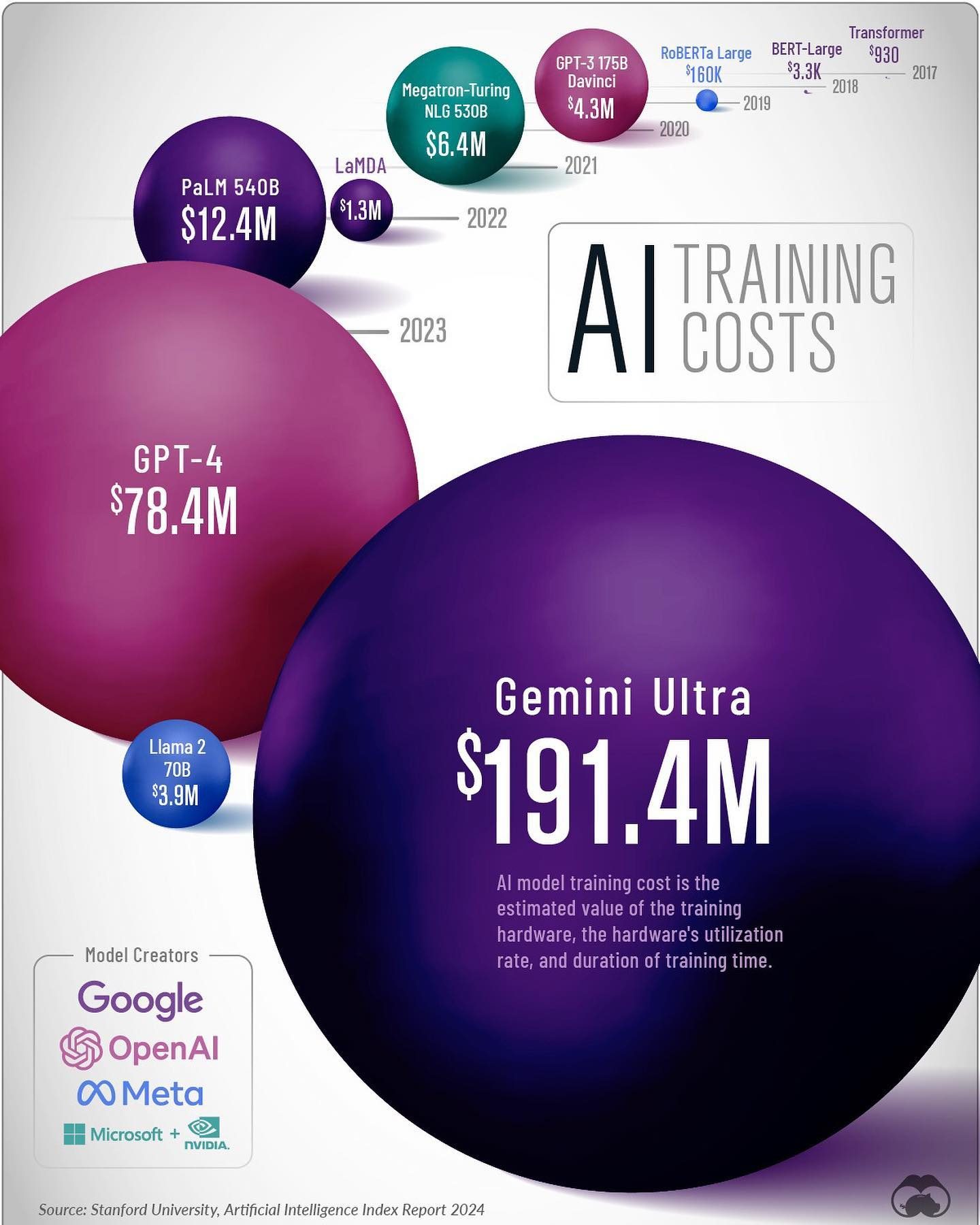
The cost of training advanced artificial intelligence (AI) models has surged dramatically in recent years. This trend is highlighted by the significant investment required for models like OpenAI’s GPT-4, which cost $78.4 million to train. To put this into perspective, developing the early AI model Transformer cost Google only $930 in 2017. This stark contrast underscores the rapid escalation in the financial resources needed to develop cutting-edge AI technology.
Why This Matters
The escalating cost of training AI models has profound implications for the tech industry and beyond. It reflects the increasing complexity and resource-intensive nature of modern AI development. Understanding these costs is crucial for grasping the economic landscape of AI research and development, as well as the strategic decisions made by tech giants.
The Surge in AI Training Costs
The Evolution of AI Models
The evolution of AI models over the past decade has been rapid and transformative. Models like BERT and RoBERTa, developed in the early 2010s, were relatively inexpensive to train. Google's BERT-Large, for example, cost around $160,000 to develop, while RoBERTa Large cost approximately $3,300. These models laid the groundwork for more advanced architectures that would follow.
As the field progressed, models like PaLM 540B and Llama 2 70B emerged, reflecting a significant leap in complexity and capability. PaLM, developed by Google, cost about $12.4 million to train, while Meta's Llama 2 70B cost around $3.9 million. These figures underscore the increasing financial investment required to push the boundaries of AI.
The Financial Landscape
The most striking example of this trend is the cost of training models like GPT-4 and Gemini Ultra. OpenAI's GPT-4, a model renowned for its advanced natural language processing capabilities, cost a staggering $78.4 million to train. Gemini Ultra, developed by Microsoft and NVIDIA, tops the list with an estimated training cost of $191.4 million. These costs reflect not only the increasing size and complexity of the models but also the advanced hardware and extensive training time required.
Factors Driving the Cost Increase
Several factors contribute to the rising cost of training AI models. These include the increasing size of the models, the advanced hardware required, and the duration of the training process. Larger models generally require more computational power and time to train effectively. Additionally, the cost of hardware, such as high-performance GPUs and specialized AI accelerators, has risen significantly.
The estimated value of the training hardware, the hardware’s utilization rate, and the duration of training time are critical factors in determining the overall cost. For instance, models like PaLM and GPT-4 require extensive computational resources and prolonged training periods, driving up the costs.
Practical Tips for Managing AI Training Costs
Optimizing Hardware Utilization
Efficient use of hardware is crucial for managing the high costs associated with AI training. Techniques such as parallel processing and distributed training can help maximize the utilization of available resources. Utilizing cloud-based solutions can also provide scalable and cost-effective hardware options, allowing researchers to scale up or down based on their needs.
Leveraging Pre-trained Models
Using pre-trained models as a starting point can significantly reduce the cost and time required for training. Models like BERT and RoBERTa have already been trained on vast datasets and can serve as strong foundations for more specialized models. Fine-tuning these pre-trained models for specific tasks can be more efficient and cost-effective than training a model from scratch.
Efficient Data Management
Effective data management practices can also help in reducing costs. Curating high-quality, relevant datasets and ensuring data efficiency can minimize the training time and computational resources required. Implementing data augmentation techniques can further enhance the training process without necessitating additional data collection.
Important Takeaways
-
The cost of training advanced AI models has escalated significantly, with models like GPT-4 and Gemini Ultra costing tens to hundreds of millions of dollars.
-
The increasing complexity and resource-intensive nature of AI models drive these high costs.
-
Several factors, including model size, hardware requirements, and training duration, contribute to the rising costs.
-
Efficient use of hardware, leveraging pre-trained models, and effective data management are practical steps to mitigate these costs.
Conclusion
The surge in AI training costs reflects the rapid advancements and increasing complexity of AI models. Understanding the factors driving these costs is essential for researchers, developers, and industry stakeholders. By optimizing hardware utilization, leveraging pre-trained models, and implementing efficient data management practices, it is possible to navigate the financial challenges of AI development. As the field continues to evolve, managing these costs will be critical for sustaining innovation and progress in AI technology.
Watch the Reel
Questions readers ask
What factors contribute to the rising costs of training advanced AI models?
The rising costs of training advanced AI models are driven by several factors, including the need for more powerful and numerous computational resources, increased data requirements, and the growing complexity of model architectures. Additionally, the demand for specialized talent and infrastructure to manage these resources also contributes to the overall cost.
How do the training costs of models like GPT-4 compare to earlier AI models?
The training costs of models like GPT-4 are significantly higher than those of earlier AI models. For instance, GPT-4 cost approximately $78.4 million to train, while the Transformer model, developed by Google in 2017, cost around $930. This disparity highlights the exponential increase in resource demands and complexity over time.
What are some of the key implications of high AI training costs for the tech industry?
High AI training costs have several implications for the tech industry. They can lead to consolidation, where only large corporations with substantial financial resources can afford to develop advanced AI models. It also encourages collaboration and partnerships, as smaller entities may need to pool resources to compete. Furthermore, it drives innovation in cost-efficient training methods and hardware optimization.
How do companies like OpenAI and Google manage the high costs of AI model training?
Companies like OpenAI and Google typically manage the high costs of AI model training through a combination of strategies. These include investing in proprietary hardware and software optimizations, leveraging massive datasets, and employing highly skilled teams. Additionally, they often secure significant funding from investors and strategic partnerships to support these costly endeavors.
What insights can be gained from AI model training cost trends over the years?
AI model training cost trends over the years provide insights into the rapid advancement and increasing complexity of AI technology. They show how the need for more data, computational power, and skilled labor has grown exponentially. These trends also highlight the potential for future innovations in cost-efficient training methods and the economic barriers that smaller entities may face in developing advanced AI models.
How do AI training costs impact the broader economic landscape?
AI training costs impact the broader economic landscape by influencing investment decisions, research priorities, and market dynamics. High costs can lead to concentrated market power among companies that can afford to invest heavily in AI research. It also affects job markets, as there is a growing demand for specialized talent in AI development and optimization.
What resources are available to help understand and compare AI model training costs?
Several resources are available to help understand and compare AI model training costs. Reports such as the Stanford AI Training Index and various AI model training infographics provide detailed analyses. Additionally, publications on models like LLama and PALM offer specific insights into their training costs and methodologies, helping to benchmark and compare different approaches in the field.
Related deep dives
Similar reads based on topic and creator.


Recent articles
Fresh deep dives from the latest Reels we unpacked.




Comments
Be the first to comment.