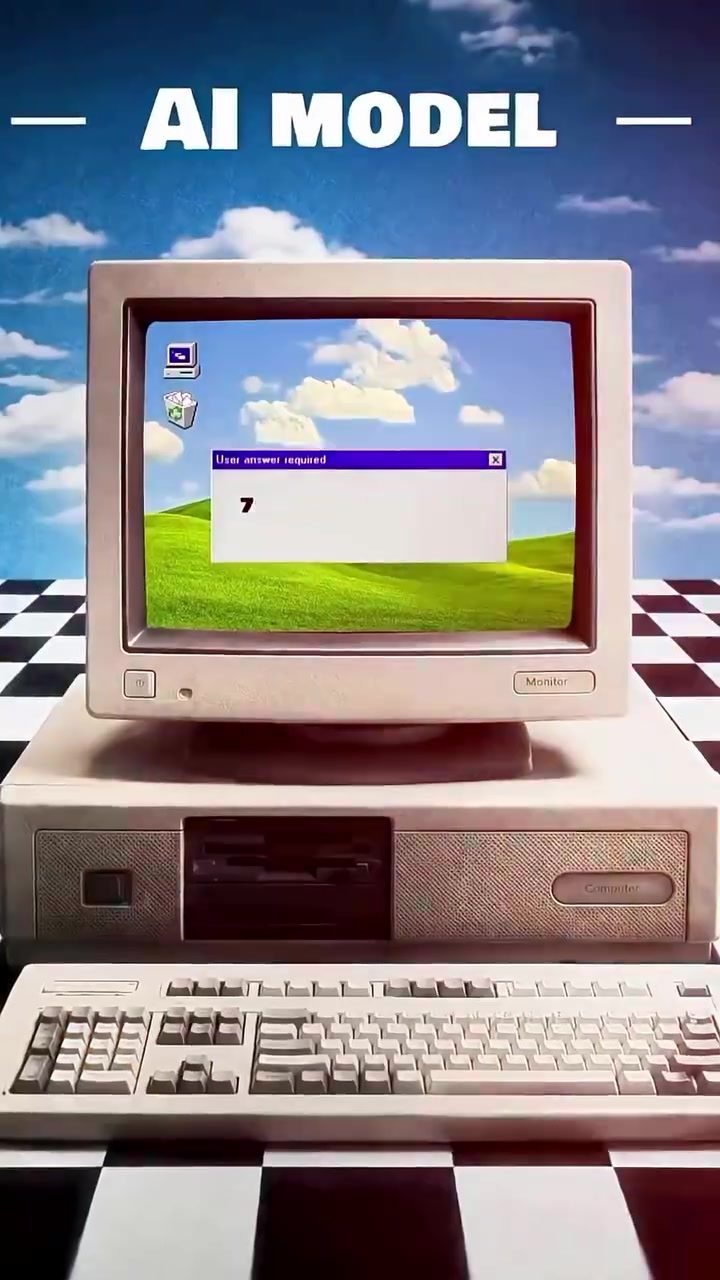
The Intersection of Retro Computing and Modern GPU Capabilities
Retro computing has always held a special place in the hearts of tech enthusiasts. The sight of a vintage beige computer, often juxtaposed with modern advancements, brings a unique charm to the world of technology. This is especially true with the advent of new GPU capabilities. Recently, a groundbreaking tool called RLLM has emerged, enabling the running of a 70-billion parameter AI model on a graphics card with just 4 GB of VRAM. This innovation is reshaping the landscape for researchers, students, and AI enthusiasts.
Why This Matters
The ability to run such massive AI models on limited hardware opens up new possibilities for a wide range of users. Traditionally, running a model of this size required over 100 GB of GPU memory, which was prohibitively expensive for most individuals. With RLLM, however, this barrier is significantly lowered. By loading the model layer by layer, this tool makes it possible to utilize hardware that was never designed to handle such tasks. This democratization of AI research and experimentation is a game-changer.
Diving into RLLM and GPU Capabilities
The Technology Behind RLLM
RLLM stands out by addressing the fundamental issue of GPU memory limitations. The tool loads the AI model in segments rather than all at once. This approach, though slower, allows for the execution of massive AI models on older, less powerful hardware. The innovation lies in its ability to make efficient use of existing resources, bridging the gap between retro computing and modern AI capabilities.
How It Compares to Traditional Methods
Conventional methods of running AI models require substantial GPU memory. This often means investing in high-end, expensive graphics cards. RLLM, on the other hand, can operate with as little as 4 GB of VRAM, making it accessible to a broader audience. This shift is particularly beneficial for educational institutions and individual researchers who may not have the budget for top-tier hardware.
The Benefits for Researchers and Students
One of the most significant advantages of RLLM is its accessibility. Researchers and students can now experiment with powerful open-source AI models without the need for high-end GPUs. This democratizes AI research, allowing more people to contribute to advancements in the field. The ability to use older hardware for such complex tasks also promotes sustainability by extending the lifespan of existing equipment.
Practical Tips for Getting Started with RLLM
Setting Up Your Environment
To get started with RLLM, you'll need a computer with a compatible GPU and the necessary software environment. While specific system requirements can vary, most modern computers with a graphics card should be sufficient. Ensure your system meets the minimum requirements for running AI models.
Installing RLLM
The installation process for RLLM is straightforward. Begin by downloading the tool from its official repository. Follow the installation instructions provided in the documentation. This typically involves setting up a virtual environment and installing the necessary dependencies.
Running Your First Model
Once you have RLLM installed, you can start running your first AI model. The tool supports a variety of open-source models, so you can choose one that aligns with your research or project goals. The layer-by-layer loading process may take longer than traditional methods, but it allows you to leverage your existing hardware effectively.
Important Takeaways
- Accessibility: RLLM makes running massive AI models accessible to users with limited hardware resources.
- Efficiency: By loading models layer by layer, RLLM optimizes the use of available GPU memory.
- Innovation: This tool opens new possibilities for researchers, students, and AI enthusiasts, promoting broader participation in AI development.
- Sustainability: Extending the lifespan of existing hardware aligns with sustainable practices in technology.
Conclusion
The intersection of retro computing and modern GPU capabilities, exemplified by RLLM, is a testament to the evolving landscape of technology. By making powerful AI models accessible to a wider audience, RLLM not only democratizes AI research but also encourages innovation and sustainability. As we continue to push the boundaries of what our hardware can do, tools like RLLM pave the way for a more inclusive and efficient future in AI development.
Watch the Reel
Questions readers ask
What is RLLM and how does it enable running large AI models on limited hardware?
RLLM is a tool that allows users to run massive AI models, such as those with 70 billion parameters, on graphics cards with as little as 4 GB of VRAM. It achieves this by loading AI models in segments, making it possible to handle complex AI tasks on hardware with limited VRAM.
Can I use RLLM for my AI research project with an old graphics card?
Yes, RLLM is designed to work with older hardware, enabling you to run large AI models on retro computing equipment. This makes it an excellent tool for researchers and students who may not have access to high-end GPUs.
How does RLLM reduce the dependency on expensive, high-end GPUs?
RLLM reduces the need for expensive, high-end GPUs by optimizing the use of available VRAM. By loading AI models in segments, it allows users to run complex AI tasks on graphics cards with as little as 4 GB of VRAM, making AI research more accessible.
What are the benefits of using RLLM for AI enthusiasts and students?
RLLM benefits AI enthusiasts and students by providing a cost-effective way to run large AI models. It allows them to use older hardware for AI tasks, which can be crucial for learning and experimentation without the need for expensive GPUs.
What kind of AI tasks can be performed using RLLM on a 4GB VRAM graphics card?
With RLLM, a wide range of AI tasks can be performed on a graphics card with 4 GB of VRAM. This includes running massive AI models with billions of parameters, making it possible to conduct complex AI research and projects on limited hardware.
How does RLLM optimize the use of VRAM in old hardware?
RLLM optimizes VRAM usage by segmenting AI models into smaller parts. This process allows the hardware to handle larger models efficiently, even when the available VRAM is limited to 4 GB. It essentially breaks down the model into manageable pieces that can be processed sequentially.
Can RLLM be used for AI projects that require a lot of computational power?
Yes, while RLLM is designed to work with limited VRAM, it can still handle computationally intensive AI projects. By efficiently managing VRAM usage, RLLM ensures that even complex AI tasks can be performed on older hardware with 4 GB of VRAM, making it a versatile tool for AI researchers and students.
Related deep dives
Similar reads based on topic and creator.




Recent articles
Fresh deep dives from the latest Reels we unpacked.



Comments
Be the first to comment.