AI Image Generation and Skill Adaptation
AI image generation has rapidly transformed the creative landscape, making skills that once required years of practice instantly accessible. This shift, driven by tools like ChatGPT's image generation capabilities, has significant implications for how we approach and value creative work. Understanding this transformation is crucial for anyone looking to stay relevant in a rapidly evolving market.
Context / Why this matters
The rise of AI-driven image generation tools has democratized creative skills, allowing anyone to produce high-quality art, illustrations, and even filmic portraits with minimal effort. This democratization, while empowering, also poses challenges. As skills become instantly accessible, they risk devaluation, leading to a saturated market where individual skills are no longer the differentiator.
Main discussion
The Instant Accessibility of Creative Skills
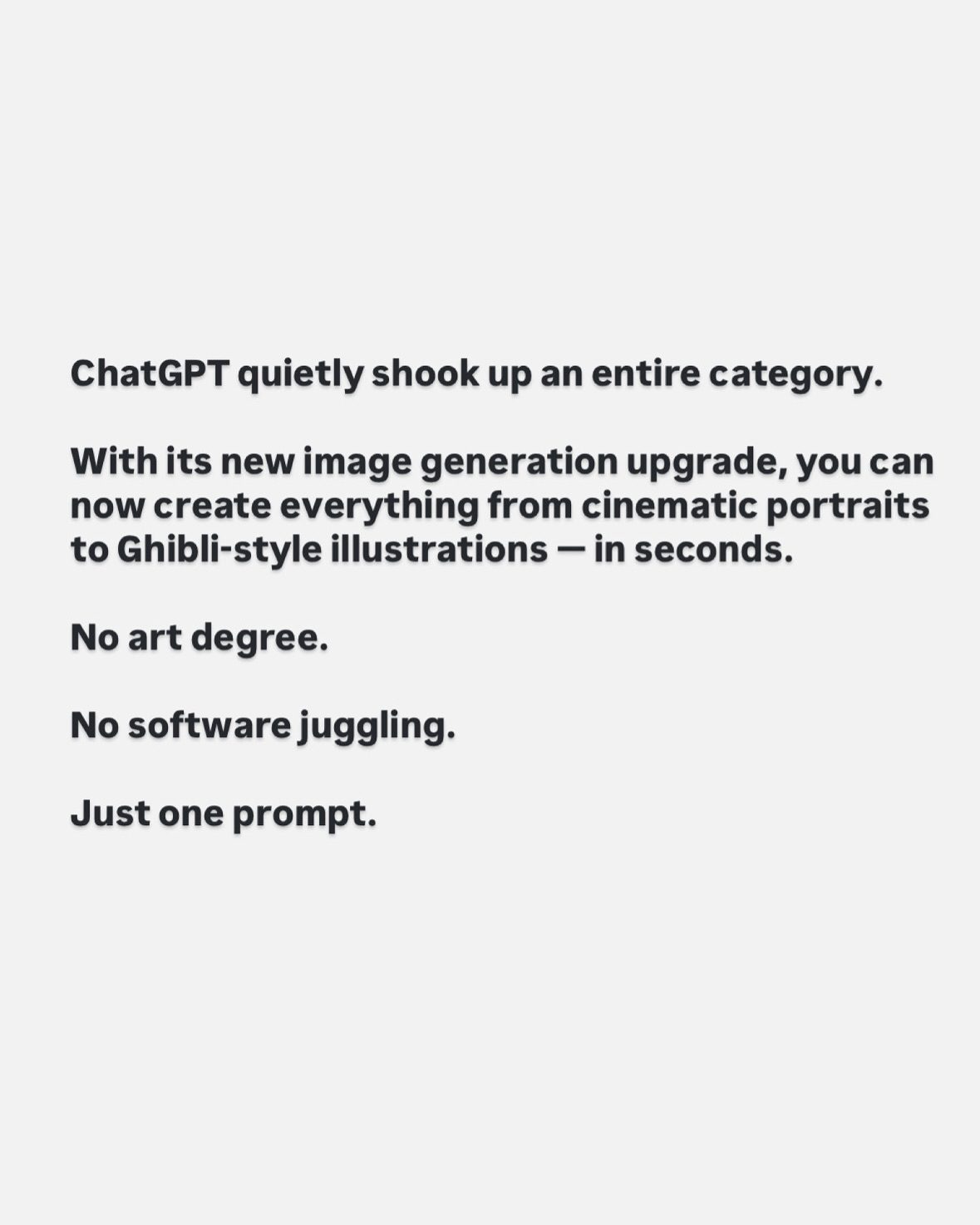
With the advent of AI, skills that once required years of study and practice are now available at the touch of a button. For instance, ChatGPT’s image generation capabilities allow users to create cinematic portraits, Ghibli-style illustrations, and more, all with just a single prompt. This instant accessibility means that anyone can produce professional-level art without needing an art degree or extensive software knowledge. While this opens up creative possibilities for many, it also means that the barrier to entry is lower, which can lead to a saturation of the market.
The Devaluation of Creative Skills
When something becomes instant, it often becomes cheap and common. This devaluation is a natural consequence of increased accessibility. As more people gain the ability to create high-quality images, the uniqueness and value of these skills diminish. This shift means that theedge of a creative professional is no longer in their skill set, but in how they orchestrate and adapt to new tools and market demands.
The Importance of Orchestration and Adaptation
In a rapidly changing market, the ability to orchestrate skills and adapt to new tools becomes paramount. The tools will keep upgrading, and the market will keep adapting. Therefore, it's crucial to focus on more than just prompting AI tools. Creatives need to think about how to integrate these tools into their workflow, how to adapt to new market demands, and how to leverage these tools to create unique and valuable content.
Staying Ahead in a Changing Market
The key to staying ahead in a market dominated by AI tools is to think beyond the tools themselves. It's about understanding the market, anticipating trends, and orchestrating skills in a way that adds value. This means not just relying on AI to do the work but also using it as a tool to enhance and elevate your creative process.
Practical tips
Embrace the Tools
AI image generation tools are here to stay, and they offer incredible potential. Embrace them as part of your creative toolkit. Experiment with different tools and see how they can enhance your workflow.
Think Beyond the Tool
While AI tools can generate impressive images, they are just one part of the creative process. Think about how you can use these tools to add value to your work. This could mean using them to generate ideas, create drafts, or even final pieces.
Stay Adaptable
The creative landscape is constantly evolving, and new tools and trends will continue to emerge. Stay adaptable and be open to learning new skills and tools as they become available.
Orchestrate Your Skills
Rather than relying on a single skill or tool, think about how you can orchestrate a range of skills and tools to create unique and valuable content. This could mean combining AI-generated images with traditional art techniques, or using AI to enhance your digital design work.
Keep Learning
Even as AI tools become more powerful, there will always be a need for human creativity and expertise. Keep learning and honing your skills to stay ahead of the curve.
Important takeaways
- AI image generation tools are democratizing creative skills, making them instantly accessible to anyone.
- This instant accessibility can lead to devaluation and commoditization of creative skills.
- The key to staying ahead in a changing market is to focus on orchestration and adaptation, rather than just prompting AI tools.
- Embrace new tools and technologies, but think beyond them to add unique value to your work.
- Stay adaptable and keep learning to stay relevant in a rapidly evolving market.
Conclusion
As AI image generation tools continue to evolve, the creative landscape will undoubtedly change. While this poses challenges, it also offers incredible opportunities. By embracing these tools, thinking beyond them, and focusing on orchestration and adaptation, creatives can stay ahead in a rapidly changing market. The future of creativity is not about the tools themselves, but about how we use them to create unique and valuable content.
Watch the Reel
Questions readers ask
How can I get started with AI image generation tools?
To begin with AI image generation, you can start by exploring popular tools. Some of the most user-friendly AI image generation platforms are ChatGPT, DALL-E 2, and Midjourney. These tools often have tutorials or community forums to help you understand their features and capabilities, making it easy to dive into creating art with AI.
What impact does AI image generation have on the traditional art market?
AI image generation has disrupted traditional art markets by making professional-quality art more accessible. This shift can lead to an influx of AI-generated art, which may affect the demand for and value of traditionally crafted pieces. However, it also opens up new avenues for collaboration and innovation in the art world.
How might artists adapt to the rise of AI image generation?
Artists can adapt by integrating AI tools into their workflow to enhance creativity and efficiency. They might use AI for inspiration or to handle repetitive tasks, allowing them to focus on more unique and personal aspects of their work. Additionally, artists can explore new markets and opportunities that emerge from AI-generated content.
What are the ethical considerations surrounding AI art generation?
Key ethical considerations include the originality of AI-generated art and the potential impact on human artists. Questions arise about who owns the rights to AI-generated content and how to ensure that human creators are fairly compensated for their contributions to AI development.
How can AI image generation tools enhance creativity for non-artists?
For non-artists, AI image generation tools can unlock new creative possibilities. These tools allow individuals to generate visual concepts quickly, which can be useful for brainstorming, designing, and communicating ideas in fields like marketing, product development, and writing. They provide a way to transform abstract ideas into concrete visuals.
What are the key differences between various AI image generation tools?
Different AI image generation tools offer unique features and capabilities. For instance, DALL-E 2 is known for its ability to generate highly detailed and imaginative images, while Midjourney focuses on community collaboration and interaction. ChatGPT, on the other hand, provides a versatile platform with various creative features.
Recent articles
Fresh deep dives from the latest Reels we unpacked.




Comments
Be the first to comment.