AI-Powered Grading Systems in Chinese Schools
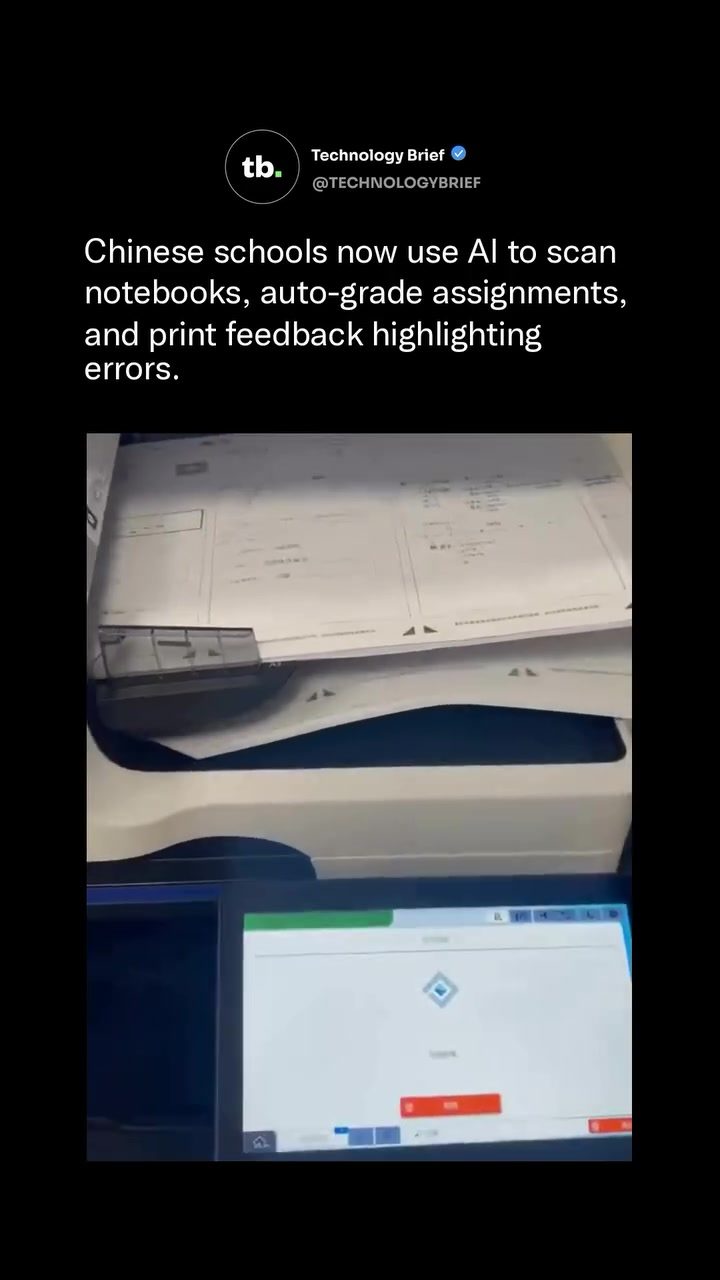
Chinese schools are at the forefront of integrating AI into the education system, particularly with the adoption of AI-powered grading machines. These innovative systems scan handwritten assignments and automatically mark answers, revolutionizing the way teachers handle grading tasks.
Context / Why this matters
The rapid adoption of AI in grading is part of a broader initiative by China’s Ministry of Education to modernize the education system. The ministry launched pilot programs in 2018 and 2021, and by the end of 2024, had trained nearly 3 million teachers in AI literacy. This push coincides with a white paper issued in May 2025, which declared 2025 the start of a nationwide effort to integrate AI into every layer of the education system. Approximately 1 in 4 schools in China are now testing some form of AI auto-grading.
Main discussion
The Technology Behind AI Grading
The AI-powered grading machines use computer vision to read handwriting, check answers, and flag errors. The process is straightforward: teachers feed stacks of papers into a document scanner, and the system processes them in minutes. The AI can automatically identify errors and print feedback directly onto the assignments, marking correct answers with checkmarks and incorrect ones with crosses. This technology is particularly effective for objective problems, such as calculation and multiple-choice math questions, where there is a clear correct answer to compare against.
Benefits for Teachers and Students
One of the primary benefits of AI grading systems is the time-saving aspect. Teachers can quickly spot which problems students miss most, allowing them to focus on areas where students need the most help. This efficiency can lead to more personalized instruction and better use of classroom time. Additionally, the immediate feedback provided by the system can help students understand their mistakes more quickly, potentially improving their learning outcomes.
Implementation and Challenges
The implementation of AI grading systems has been supported by extensive training programs for teachers. By the end of 2024, nearly 3 million teachers had been trained in AI literacy, and over 700 AI tools for classrooms had been developed. However, the rapid adoption of AI in schools also raises concerns about data privacy. Critics warn that rushing AI into the education system without strong data privacy protections could put students' personal information at risk. Ensuring that student data is secure and that AI systems are used ethically is a critical challenge that must be addressed as this technology becomes more widespread.
Future Prospects
The future of AI in education looks promising, with the potential to automate not just grading but other administrative tasks as well. As AI systems become more sophisticated, they could handle more complex grading tasks, including subjective assessments. However, the success of these systems will depend on how well they are integrated into the existing educational framework and how effectively they address concerns about data privacy and ethical use.
Practical tips
For schools considering the adoption of AI grading systems, here are some practical tips to ensure a smooth transition:
- Invest in Training: Ensure that teachers are well-trained in using AI tools and understand their potential benefits and limitations.
- Prioritize Data Privacy: Implement robust data privacy measures to protect student information. This includes encryption, secure data storage, and clear guidelines on data usage.
- Start Small: Begin with pilot programs in a few schools or classes to gather feedback and identify potential issues before scaling up.
- Engage Stakeholders: Involve teachers, students, and parents in the decision-making process. Their input can provide valuable insights and ensure smoother implementation.
- Monitor and Evaluate: Regularly monitor the performance of AI systems and evaluate their impact on student learning and teacher workload. Make adjustments as needed based on feedback and results.
Important takeaways
- AI grading systems can significantly reduce the time teachers spend on grading, allowing them to focus more on teaching and personalized instruction.
- The technology is most effective for objective problems but has the potential to handle more complex assessments as it evolves.
- Data privacy and ethical use of AI are critical concerns that must be addressed to ensure the safe and effective use of these systems.
- Successful implementation requires comprehensive training, robust data privacy measures, and continuous evaluation.
Conclusion
The adoption of AI-powered grading systems in Chinese schools represents a significant step towards modernizing the education system. While the technology offers numerous benefits, including time savings and immediate feedback for students, it also presents challenges that must be addressed. By prioritizing data privacy, investing in teacher training, and carefully monitoring the implementation process, schools can harness the power of AI to enhance the educational experience for both teachers and students.
Watch the Reel
Questions readers ask
How does AI grading benefit teachers in Chinese schools?
AI grading systems significantly reduce the time teachers spend on grading handwritten assignments. By automating this process, teachers can focus more on lesson planning, student interaction, and other essential teaching tasks, enhancing their overall efficiency.
What types of assignments can be graded by AI systems in China?
AI grading systems in China are designed to handle various types of assignments, including math problems and other subjects that involve structured, handwritten answers. These systems can interpret and grade handwritten responses, ensuring accuracy and consistency in evaluation.
How does AI grading improve student outcomes in Chinese schools?
By providing instant feedback, AI grading systems allow students to quickly understand their mistakes and areas for improvement. This rapid feedback loop helps students refine their skills and improve their performance more effectively than traditional grading methods.
What is the significance of the 2025 white paper in China's AI integration in schools?
The 2025 white paper marks a pivotal moment in China's AI integration in schools, signaling a nationwide effort to incorporate AI into every aspect of the education system. This initiative aims to enhance teaching methods, streamline administrative tasks, and improve overall educational experiences.
How accurate are AI grading systems in assessing handwritten assignments?
AI grading systems have shown high levels of accuracy in assessing handwritten assignments, reducing the likelihood of grading errors. These systems are trained on extensive datasets and employ advanced algorithms to ensure precise and fair evaluations.
Are there concerns or challenges associated with AI grading systems in China?
While AI grading systems offer numerous benefits, there are concerns about potential biases in the algorithms and the dependence on technology. Additionally, some argue that AI may not fully capture the nuances of student learning, such as creativity and critical thinking, as effectively as human teachers.
What role do teachers play in the AI grading process in Chinese schools?
Teachers continue to play a crucial role in the AI grading process, especially in reviewing and validating the automated grades. Their expertise ensures that the grading process remains fair and accurate, and they can intervene when necessary to address any discrepancies or complexities in the grading process
Recent articles
Fresh deep dives from the latest Reels we unpacked.




Comments
Be the first to comment.