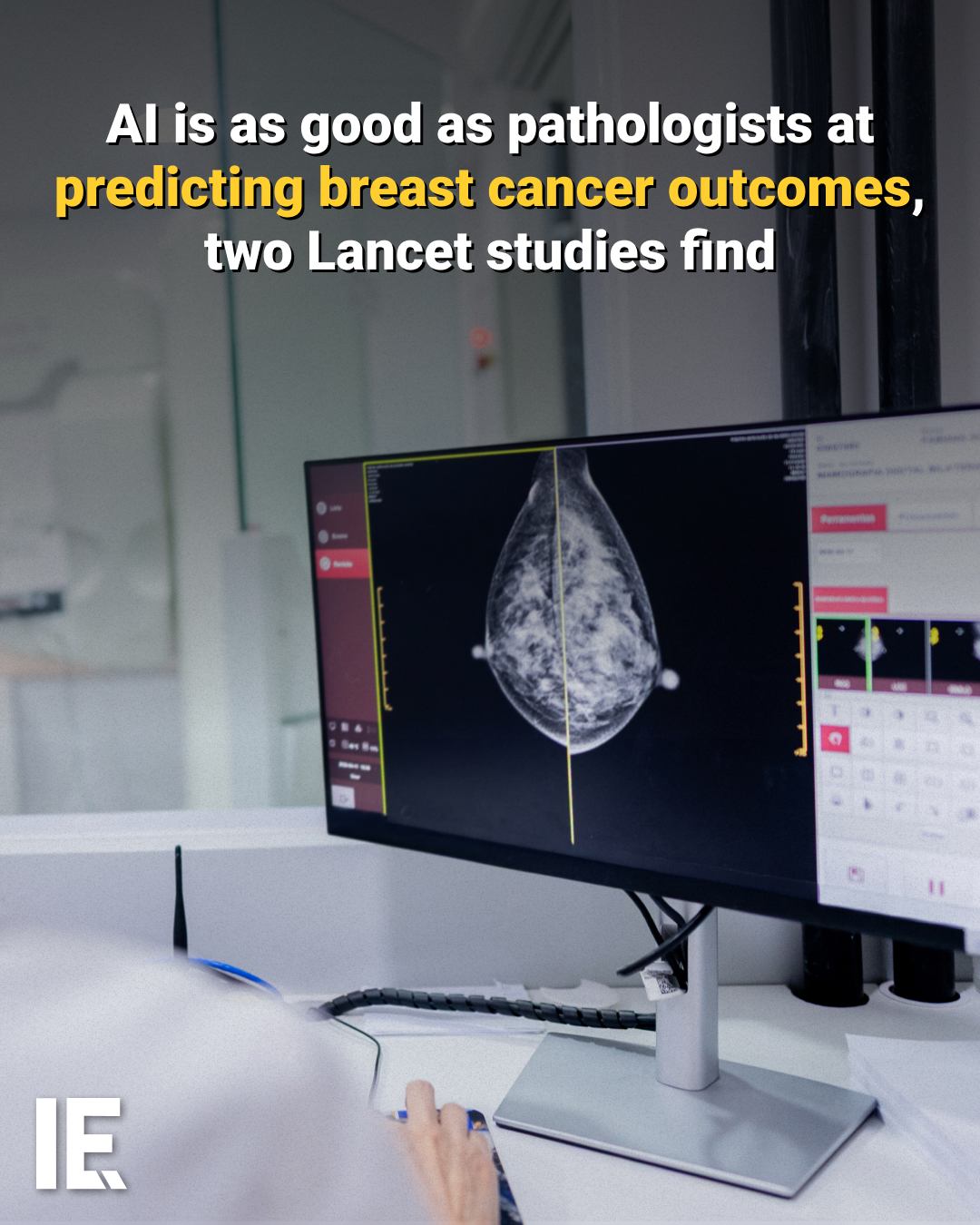
Predictive Power of Breast Cancer AI
Artificial intelligence is revolutionizing breast cancer detection, and a cutting-edge study confirms that AI algorithms can match human pathologists in predicting cancer outcomes. The evidence, based on two clinical trials published in The Lancet , marks a milestone in how technology can augment medical diagnostics.
How AI Predicts Breast Cancer Outcomes
This AI tech is designed to parse through mammography data and pinpoint subtle signs that might indicate cancer. At least two Lancet studies found that AI's predictive power compares favorably with that of trained human pathologists. AI, as the on-screen text makes clear, effectively analyzes mammograms and generates predictions that can be as accurate as those from a physician. Beyond diagnostic support, AI-driven tools are rapidly becoming part of everyday cancer prevention. The integration of AI into medical workflows is transforming how health-care professionals process and interpret mammogram data. As a digital tool, AI algorithms can compare millions of mammograms in seconds. This rapid analysis yields consistent results, unaffected by fatigue or bias that can influence human readings. What makes this AI notably effective in breast cancer prediction are its computational abilities. They can handle large datasets of mammogram information. These algorithms can spot patterns in images that may be impossible for the human eye to see.
A Paradigm Shift in Cancer Detection
AI's role in healthcare is part of a wider trend toward automating complex decision-making tasks. Its ability to enhance the accuracy of cancer and other medical diagnoses could significantly improve patient outcomes. As medical professionals integrate AI-driven tools into their practice, the technology is poised to become indispensable in early detection and prevention. Medical professionals and researchers alike are taking note of AI's potential to transform healthcare. Specifically, AI detects patterns better than humans, even though it relies on human-provided data. The tech holds particular promise for alleviating the burden on overworked healthcare staffs. AI does not replace human judgment but rather augments it. One key challenge remains: ensuring the accuracy of the algorithms. Bias in training data could lead to incorrect diagnoses. Ensuring AI systems are trained on diverse and inclusive data sets is crucial. Experts are already anticipating these concerns. This means providing equitable access to the technology and ensuring that the algorithms are trained on diverse datasets.
AI vs. Pathologists: A Comparative Analysis
The foundational claim of AI's medical efficacy is based on comparisons with pathologists. The comparison highlights AI's ability to analyze and predict outcomes from mammograms. It calls for a more collaborative approach between digital tools and medical professionals. The AI's ability to harness complex data is what sets it apart in this context. AI's rapid and consistent data processing capabilities complement, and in some cases complement, the nuance of human diagnosis. AI systems analyze patterns that might not be obvious to an expert. Human pathologists, however, offer unique insights and contextual understanding that AI cannot replicate. Experts caution that AI's potential is not without limitations. The numerous studies also acknowledge the limitations of AI technology. AI can process large amounts of data quickly but still requires oversight. Mistakes, though rare, can still incite serious consequences.
Recent Studies Bring AI into Focus
Studies using systems to analyze mammograms reveal AI’s potential in cancer diagnostics. Early diagnostic systems depend on cutting-edge algorithms. Nevertheless, medical professionals and researchers alike emphasize the importance of balance. Ensuring the reliability of AI's algorithms requires rigorous testing and oversight. Several studies have demonstrated AI's effectiveness, but experts advocate for a balanced approach. Philips Health and similar healthcare manufacturers are building AI systems to assist health professionals. At the same time, medical professionals can generate insights and decisions that AI cannot replicate.
The Role of AI in Informed Decisions
As clinical studies continue to validate AI predictions of breast cancer outcomes, many experts are looking at how this technology can be scaled to different healthcare environments. Given the potential for AI to revolutionize medical diagnostics, the integration of these tools into everyday medical practice offers a promising outlook on improving healthcare. As the technology continues to improve, AI will become an invaluable tool for clinicians and patients, enabling early detection and better outcomes.
Watch the Reel
Questions readers ask
How exactly does AI analyze mammograms to predict breast cancer outcomes?
AI algorithms are trained to scrutinize mammogram images and identify subtle patterns that might indicate cancer. They can process vast amounts of data quickly, comparing millions of mammograms in seconds to detect anomalies that might be missed by human eyes. This rapid and consistent analysis helps in generating accurate predictions similar to those made by trained pathologists.
Can AI completely replace human pathologists in breast cancer detection?
No, AI is not meant to replace human pathologists but to augment their capabilities. While AI can analyze data rapidly and consistently, human judgment is still crucial for nuanced diagnosis and decision-making. The goal is to create a collaborative approach where AI tools support and enhance the work of medical professionals.
What are the potential drawbacks of using AI in breast cancer prediction?
One of the main concerns is the potential for bias in the training data, which could lead to incorrect diagnoses. Ensuring that AI systems are trained on diverse and inclusive datasets is crucial to mitigate this risk. Additionally, there are challenges in integrating AI into existing medical workflows and ensuring equitable access to the technology.
How does AI's predictive accuracy compare to that of human pathologists?
Recent studies published in The Lancet show that AI algorithms can match the predictive accuracy of human pathologists in analyzing mammograms and predicting breast cancer outcomes. This means that AI can provide results that are as reliable as those from trained medical professionals, making it a valuable tool in cancer detection.
What makes AI particularly effective in breast cancer prediction?
AI's computational abilities allow it to handle large datasets and spot patterns in images that might be impossible for the human eye to see. This capability, combined with its rapid and consistent data processing, makes AI a powerful tool in breast cancer prediction, enhancing the accuracy and efficiency of medical diagnostics.
How is AI being integrated into medical workflows for breast cancer detection?
AI-driven tools are becoming part of everyday cancer prevention by supporting healthcare professionals in processing and interpreting mammogram data. These tools can analyze mammograms quickly and consistently, providing valuable insights that help in early detection and prevention of breast cancer. The integration of AI into medical workflows is transforming how healthcare professionals approach cancer diagnostics.
What steps are being taken to ensure the accuracy and fairness of AI in breast cancer prediction?
Experts are already addressing concerns about bias in AI training data by emphasizing the importance of diverse and inclusive datasets. Efforts are being made to ensure equitable access to AI technology and to train algorithms on comprehensive data sets that reflect the diversity of the patient population. This ensures that the AI tools are accurate and fair, providing reliable support to medical professionals.
Related deep dives
Similar reads based on topic and creator.

Recent articles
Fresh deep dives from the latest Reels we unpacked.


Comments
Be the first to comment.