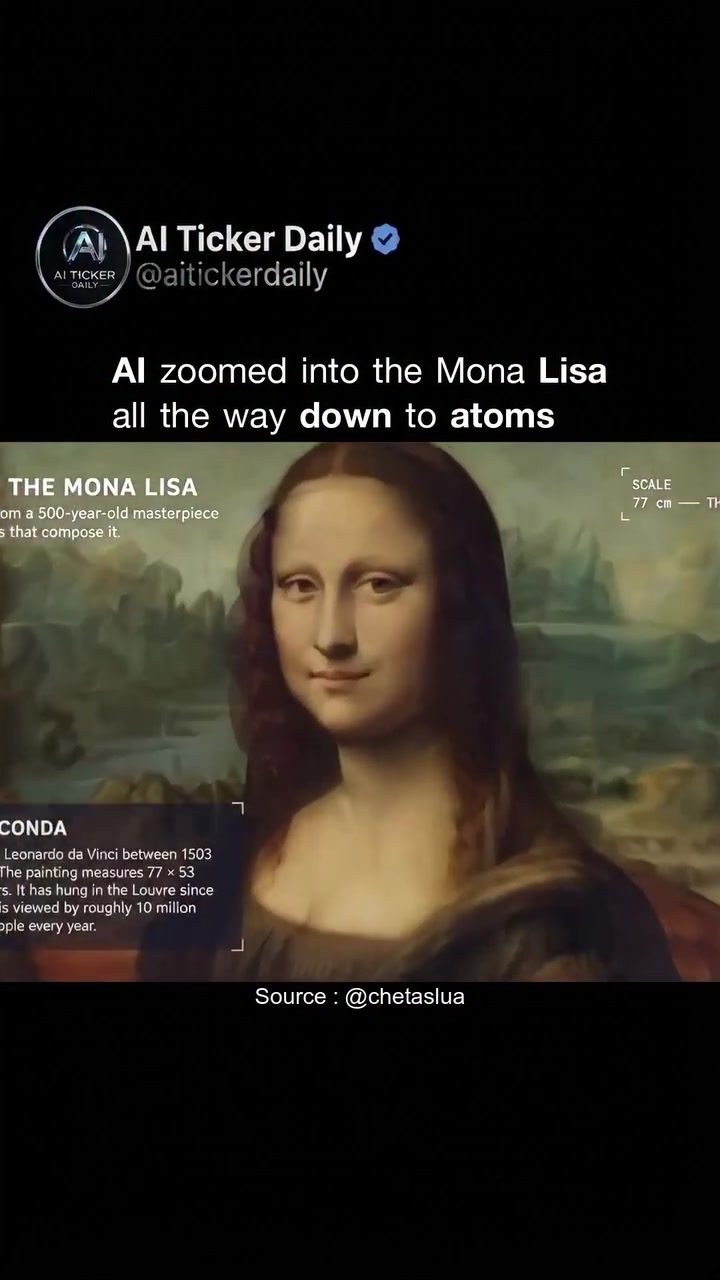
Zooming into the Mona Lisa
The Mona Lisa, painted by Leonardo da Vinci, is one of the most iconic and enigmatic works of art in the world. Recently, AI has provided an unprecedented way to explore this masterpiece, zooming in from the full painting down to the atomic level, revealing every layer and structure along the way. This deep dive into the Mona Lisa's molecular composition offers a new perspective on understanding art and the materials used in its creation.
Context: Why this matters
The Mona Lisa, created between 1503 and 1517, is a quintessential example of Renaissance art, renowned for its technical mastery and mysterious subject. By zooming into the painting, AI has opened up a new avenue for artistic and scientific exploration. This advancement is not just about seeing the painting in a new light but about understanding its physical composition in a way that was previously unimaginable.
Main discussion
The Journey from Macro to Micro
The journey begins at the macroscopic level, where the entire painting is visible. As the zoom progresses, the first noticeable features are the fine cracks, known as craquelure, that form as oil paint contracts over centuries. These cracks are a natural part of the aging process of oil paintings and add to the painting's character and authenticity.
Moving deeper, the paint layers become visible. Here, the pigments used by Leonardo da Vinci come into focus. These pigments, characteristic of Renaissance art, include various minerals and organic compounds that create the vibrant colors seen in the Mona Lisa. The transition from the surface level to the pigment level shows the intricate chemical composition that makes up the painting.
The Molecular and Atomic Levels
As the zoom continues, the molecular structure of the pigments becomes apparent. This level reveals the chemical bonds and molecular arrangements that give the painting its color and texture. The AI labels these structures with scientific accuracy, providing a detailed understanding of the chemistry at work.
Finally, the zoom reaches the atomic level, where the fundamental building blocks of the pigments are visible. The atomic bonds and structures are clearly defined, offering a glimpse into the nanoscale world that underpins the visual beauty of the painting. This level of detail showcases the precision and accuracy of AI in dissecting the physical composition of art.
The Role of AI
The tool used for this exploration is Google's new Gemini Omni Flash, an advanced AI technology capable of analyzing and interpreting complex visual data. This technology not only zooms into the painting but also labels each layer with scientific accuracy, making the process both informative and captivating. The AI's ability to generate this information in seconds highlights its potential as a revolutionary tool in the study of art and materials.
Practical tips
For those interested in exploring art at a deeper level, consider the following tips:
-
Utilize AI Tools: AI technologies like Google's Gemini Omni Flash can provide unprecedented insights into art and materials. Look for similar tools that offer detailed analysis and interpretation.
-
Study the Chemistry: Understanding the chemistry behind pigments and materials can enhance your appreciation of art. Delve into the chemical composition of Renaissance pigments and their properties.
-
Explore Digital Resources: Many museums and art galleries offer digital resources and virtual tours that provide detailed information about artworks. Use these resources to explore different layers and aspects of famous paintings.
-
Engage with Experts: Reach out to art conservators, scientists, and historians who specialize in the study of art. Their expertise can provide a deeper understanding of the materials and techniques used in art.
Important takeaways
-
Art and Science Convergence: The intersection of art and science is a powerful way to understand both fields. AI technology bridges this gap, offering new perspectives and insights.
-
Accessibility: With tools like Gemini Omni Flash, detailed analysis of art is no longer confined to experts. This accessibility democratizes the study of art and materials, making it available to a broader audience.
-
New Dimensions of Art: Exploring art at the molecular and atomic levels adds new dimensions to our appreciation of masterpieces like the Mona Lisa. This layered understanding enriches our experience and knowledge of art.
Conclusion
The AI-driven exploration of the Mona Lisa, from the full painting down to the atomic level, offers a groundbreaking way to understand and appreciate art. This technology not only reveals the intricate layers and structures of the painting but also provides a detailed, scientific understanding of its composition. As AI continues to evolve, its role in the study and interpretation of art will become increasingly significant, opening up new dimensions of exploration and discovery.
Watch the Reel
Questions readers ask
What are some of the secrets that AI has revealed about the Mona Lisa?
AI has uncovered details about the molecular composition of the paint, and the various layers and structures used by Leonardo da Vinci in creating the Mona Lisa. This includes insights into the surface structure of the painting and the materials employed.
How does AI zoom into the Mona Lisa?
The AI technology used for this purpose starts with a view of the full canvas and progressively zooms in, allowing viewers to explore the painting down to the atomic level. This deep zoom process reveals intricate details that are invisible to the naked eye.
What is the significance of examining the Mona Lisa at the atomic level?
Examining the Mona Lisa at the atomic level provides a comprehensive understanding of the painting's surface structure, molecular composition, and the techniques used by Leonardo da Vinci. This level of detail offers new insights into the artistic and scientific aspects of the painting.
What materials does the AI analysis of the Mona Lisa reveal?
The AI analysis sheds light on the specific materials and molecular composition that were used in the creation of the Mona Lisa. By analyzing these components, researchers can gain a deeper appreciation for the materials and techniques that Leonardo da Vinci employed.
How does AI contribute to the exploration of Renaissance art?
AI opens up new avenues for exploring Renaissance art by providing detailed, atomic-level insights into masterpieces like the Mona Lisa. This technology allows for a deeper understanding of the methods and materials used by artists of that era, enhancing our appreciation of these works.
What are the benefits of using AI for art analysis?
Using AI for art analysis enables a more detailed and comprehensive examination of artworks, revealing hidden structures and compositional elements. This technology allows for an in-depth exploration of the molecular composition of paint, revealing secrets that would be otherwise impossible to discern.
What does the AI analysis reveal about Leonardo da Vinci's techniques?
The AI analysis provides detailed insights into the techniques used by Leonardo da Vinci in creating the Mona Lisa, such as the layering of paint and the specific materials he employed. This information enhances our understanding of his artistic process and the mastery behind the painting's creation.
Related deep dives
Similar reads based on topic and creator.

Recent articles
Fresh deep dives from the latest Reels we unpacked.




Comments
Be the first to comment.