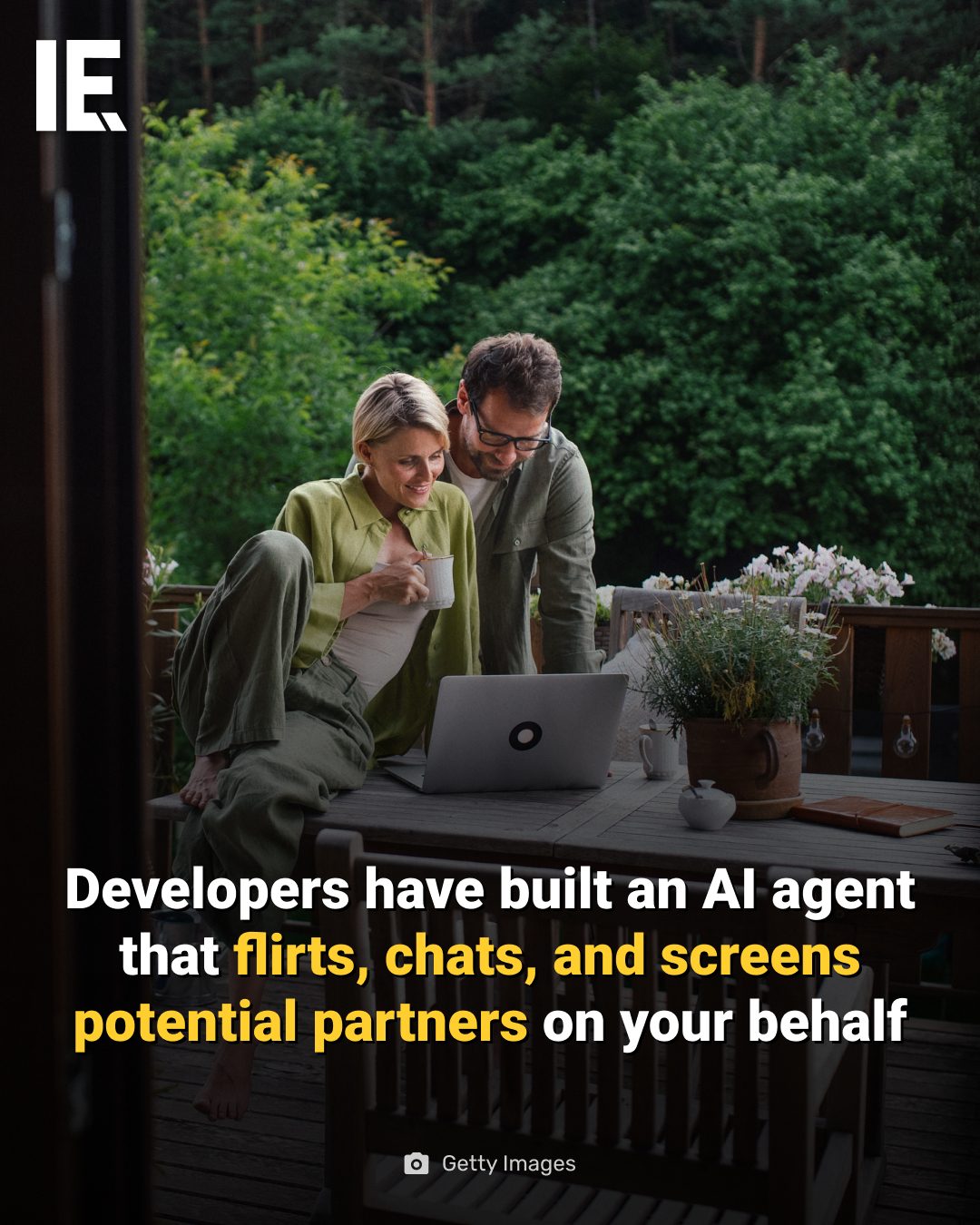
AI in Dating: The Rise of AI Agents for Matchmaking
AI agents are changing the game in the dating world. These sophisticated digital assistants, trained to mimic your personality, speech patterns, and interests, are now interacting with other people's agents to find compatible partners. This innovative concept, known as Pixel Societies, is a simulation platform developed by a team of London-based developers. It allows digital twins to cycle through social interactions at scale, flagging real-world matches based on virtual chemistry. As AI continues to evolve, it's natural to wonder whether compatibility between two people can be predicted before they've even met.
Why This Matters
We've all wondered whether there's a way to ensure compatibility with potential partners. Can AI solve this complex human problem? The platform raises a crucial question: can compatibility between two people be accurately predicted before they meet? Traditionally, psychologists and researchers have struggled with this question. According to UC Davis psychologist Paul Eastwick, the most reliable predictor of romantic compatibility isn't shared values or interests—it's the time two people spend together and whether they click early in their first encounter. This insight underscores the challenge AI faces in accurately simulating human interactions.
Understanding AI Agents in Dating
The Concept of Pixel Societies
Pixel Societies is a groundbreaking simulation platform where personalized AI agents interact on behalf of their human counterparts. These agents are designed to reflect your unique personality, speech patterns, and interests, making them incredibly effective at navigating social interactions. The system allows these digital twins to engage in numerous social interactions, scanning for potential real-world matches based on the chemistry they exhibit in virtual environments.
How AI Agents Operate
AI agents are programmed to flirt, chat, and screen potential partners. They operate on your behalf, using advanced algorithms to simulate human interactions and determine compatibility. This process involves analyzing vast amounts of data to predict how well two people might get along. The AI can then flag real-world matches, suggesting potential friends, colleagues, or romantic partners.
The Role of Personality and Interests
The success of these AI agents relies heavily on their ability to mimic individual personalities and interests. By training on your unique traits, the AI can more accurately gauge compatibility with others. This personalized approach ensures that the matches suggested by the AI are more likely to align with your preferences and values, increasing the chances of a successful connection.
Practical Tips for Using AI in Dating
Setting Up Your AI Agent
To get started with an AI dating agent, you'll need to provide detailed information about your personality, speech patterns, and interests. This data forms the foundation of your digital twin, enabling accurate interactions with other AI agents. Be as specific and truthful as possible to ensure your AI agent accurately represents you.
Interpreting Match Results
When your AI agent finds potential matches, it's important to approach the information with an open mind. While the AI can predict compatibility based on virtual interactions, real-world chemistry can still be unpredictable. Use the AI's suggestions as a starting point, but remember that personal interactions are crucial.
Managing Expectations
AI agents can greatly enhance your dating experience, but they aren't a guarantee for success. It's essential to manage your expectations and understand that while AI can help, the final decision should always be yours. Embrace the process and enjoy the journey of meeting new people.
Important Takeaways
AI agents offer a unique and innovative approach to dating, leveraging advanced algorithms to predict compatibility. This technology has the potential to revolutionize how we form relationships, providing a more efficient and personalized way to find compatible partners. However, it's important to remember that while AI can assist in the process, human interactions and chemistry are still vital.
Conclusion
Pixel Societies represents a significant step forward in the use of AI for dating. By creating personalized AI agents that can interact on your behalf, this platform offers a unique way to find compatible friends, colleagues, and romantic partners. As AI continues to evolve, it's exciting to think about the potential applications and how it might transform the way we approach relationships. Whether you're looking for love, friendship, or professional connections, AI agents could be the key to unlocking new opportunities.
Watch the Reel
Questions readers ask
How do AI agents mimic a user's personality for dating purposes?
AI agents are programmed to replicate a user's personality traits, speech patterns, and interests by analyzing data from the user's online interactions and preferences. This allows the AI to act as a digital twin, interacting with other agents in a way that mirrors how the user would behave in real-life social situations.
What is the Pixel Societies platform, and how does it work?
Pixel Societies is a simulation platform developed by a London-based team that enables AI agents to interact and engage in social encounters at scale. These digital twins mimic their users' behaviors to simulate chemistry and predict compatibility, before suggesting real-world matches based on these virtual encounters.
Can AI accurately predict romantic compatibility?
While AI can provide insights based on patterns and data, predicting romantic compatibility is complex and uncertain. AI agents can help identify potential matches by simulating social interactions, but the chemistry between two people in real life may still vary. Caution is needed when relying on AI as a definitive predictor of romantic compatibility.
How do AI agents facilitate flirting and social interactions?
AI agents are designed to engage in conversations and social interactions that mimic human behavior. They can initiate flirting, respond to social cues, and even joke around, all while adhering to the personality traits and preferences programmed by their users. This helps in creating a natural, engaging interaction in a simulated environment.
What role do London-based developers play in AI matchmaking?
The London-based development team has been instrumental in creating the Pixel Societies platform, which is at the forefront of AI matchmaking. Their work involves developing sophisticated algorithms that enable AI agents to interact convincingly, simulate social encounters, and identify potential matches based on virtual chemistry.
How do AI agents handle the screening process in dating apps?
AI agents can significantly enhance the screening process by interacting with other agents on behalf of their users. They can gauge compatibility by simulating conversations and social encounters, providing users with a more refined list of potential matches based on these virtual interactions. This helps users save time and focus on meaningful connections.
What are the potential benefits and challenges of using AI agents for matchmaking?
AI agents offer the benefit of streamlining the matchmaking process by simulating social interactions and predicting compatibility. However, challenges include the potential for misinterpretation of user preferences, over-reliance on AI predictions, and the need for continuous updates to ensure accurate personality mimicry. Users should approach AI matchmaking as a supplementary tool rather than a definitive solution.
Related deep dives
Similar reads based on topic and creator.


Recent articles
Fresh deep dives from the latest Reels we unpacked.




Comments
Be the first to comment.