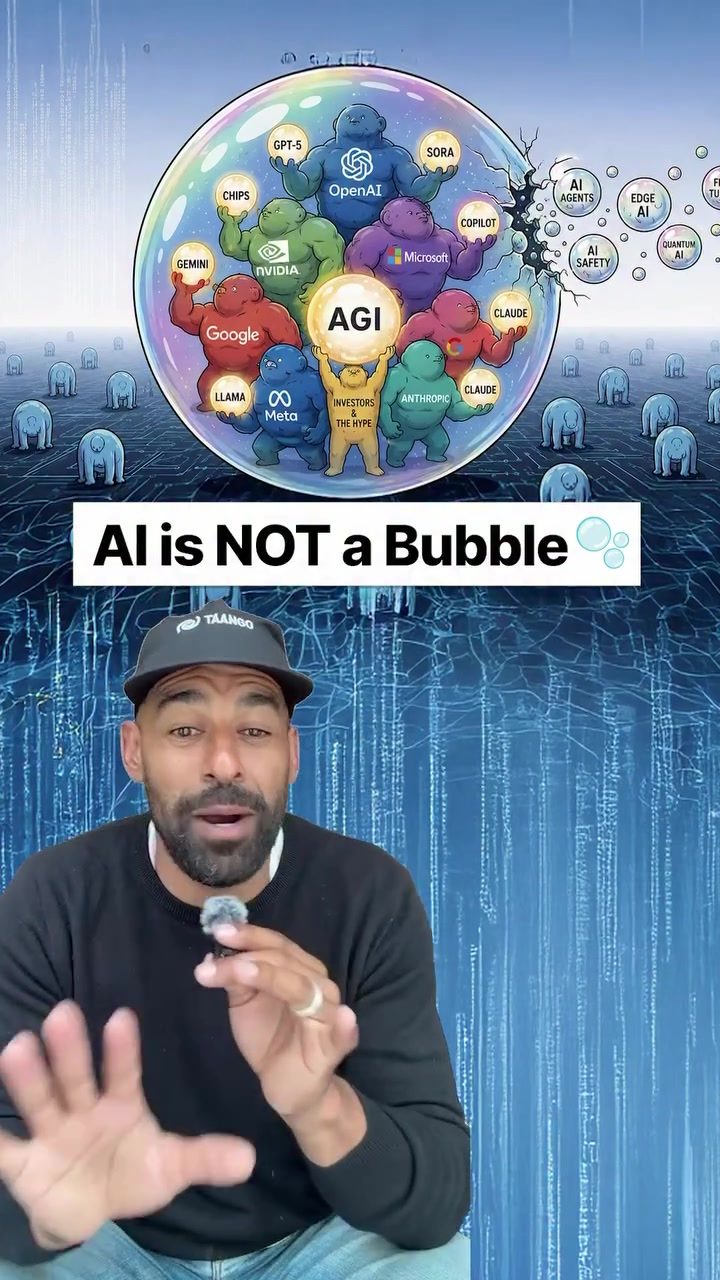
AI Adoption: The Global Picture and Misconceptions
AI, or artificial intelligence, is a technology that is often discussed in the tech community, especially when it comes to its current adoption and future. The conversation frequently circles around the idea of an AI bubble, with many people debating whether it has burst or is about to. However, the reality of AI adoption on a global scale paints a very different picture.
The Current State of AI Adoption
To understand the current state of AI, it's essential to look at the data. The world's population is roughly 8 billion people. Out of these, a staggering 84% of the global working-age population has never used AI. This translates to approximately 6.8 billion people who have never typed a single prompt into any AI interface. To put this into perspective, only about 16% of the global population has interacted with a free chatbot even once or twice. The number of people who pay for AI services is even smaller, constituting only about 0.3% of the global population, or roughly 20 million people.
The AI User Base
The serious user base of AI, which includes those who actively build and pay for AI technologies, is relatively small. Of the global population of 8 billion, only a fraction is actively engaged with AI. The active AI builders are estimated to be around 2 to 5 million people. This small user base, though significant in terms of innovation and development, represents a tiny percentage of the global population.
The AI Bubble Misconception
The idea of an AI bubble is often discussed in tech circles, but it is largely a misconception. The bubble talk comes from those who live in environments where AI usage is ubiquitous, such as tech Twitter. In these circles, it feels like everyone is using AI daily, leading to the perception that the market is saturated and the technology is overhyped. However, stepping outside of this echo chamber reveals a very different reality. The truth is that AI adoption is still in its very early stages.
Why the Current Perception is Misleading
The misconception arises because the tech community often overlooks the vast majority of the global population who have not yet adopted AI. The impression that AI is overhyped and the bubble is bursting is based on a skewed perspective. In reality, AI adoption is far from reaching its peak. The companies and technologies being developed for the 84% who have not yet engaged with AI are the ones that hold the most significant opportunities. These are the trades that matter, not the late ones that some might fear.
AI Adoption Across Industries
AI has the potential to transform every industry and business model. From healthcare to finance, from manufacturing to customer service, AI technologies can bring about significant changes. However, the current adoption rates suggest that we are still at the very beginning of this journey. The companies that are focusing on bringing AI to the 84% of the world who have not yet used it are in a prime position to capture the largest opportunities.
The Gold Rush Analogy
The idea of a gold rush is often used to describe the current state of technology, particularly AI. However, it's essential to understand that we are not late to this gold rush. Most people have not yet reached the mountain, meaning there is still a vast, untapped market for AI technologies. The opportunities are abundant, and the companies that are working to bring AI to a broader audience are the ones that will reap the most significant benefits.
The Importance of AI Integration
AI integration is not just about creating new technologies; it's about making them accessible to everyone. The companies that are building AI solutions for the uninitiated are the ones that will shape the future of AI. These companies are focusing on user-friendly interfaces, affordable pricing, and practical applications that can benefit a broad audience.
Practical Tips for Investing in AI
For investors and entrepreneurs, the current state of AI adoption presents a unique opportunity. Here are some practical tips:
- Focus on Accessibility: Ensure that your AI solutions are accessible to a broad audience. This means creating user-friendly interfaces and affordable pricing models.
- Identify Untapped Markets: Look for industries and regions where AI adoption is still low. These are the areas where your solutions can have the most significant impact.
- Innovate for Real-World Applications: Focus on practical applications that can solve real-world problems. This will help you attract a broader user base.
- Collaborate and Network: Engage with other AI companies, investors, and technology experts. Collaboration can help you stay ahead of the curve and identify new opportunities.
- Stay Informed: Keep up with the latest developments in AI. The technology is evolving rapidly, and staying informed will help you make better investment decisions.
Important Takeaways
- AI Adoption is in Its Early Stages: Despite the hype, AI adoption is still in its infancy. The majority of the global population has not yet engaged with AI.
- The AI Bubble is a Misconception: The idea of an AI bubble is largely a misconception arising from a skewed perspective. The reality is that AI adoption is far from reaching its peak.
- Opportunities Abound: The companies focusing on bringing AI to the uninitiated are the ones that hold the most significant opportunities.
- AI Can Transform Every Industry: From healthcare to finance, AI has the potential to revolutionize every industry. The key is to focus on practical applications and accessibility.
- Stay Informed and Innovate: To succeed in the AI landscape, it's essential to stay informed about the latest developments and innovate for real-world applications.
Conclusion
AI is a transformative technology that has the potential to change the world. However, the current state of AI adoption is far from reaching its peak. The misconception of an AI bubble arises from a skewed perspective that overlooks the vast majority of the global population who have not yet engaged with AI. The companies that are focusing on bringing AI to the uninitiated are the ones that hold the most significant opportunities. By staying informed, innovating for real-world applications, and focusing on accessibility, investors and entrepreneurs can capitalize on the vast potential of AI.
Watch the Reel
Questions readers ask
Why is the AI adoption rate so low globally?
The low AI adoption rate can be attributed to several factors, including lack of accessibility, high costs of AI services, and limited awareness about AI technology. Many people may not even realize that they are using AI in their everyday lives, and the tech discussions around AI may not be reaching a broad audience.
How many people worldwide have paid for AI services?
Surprisingly, only about 0.3% of the global population has ever paid for AI services. This small percentage indicates that while AI is discussed widely, it is not yet a part of many people's daily lives or budgets.
What is the size of the serious AI user base?
The serious AI user base, which consists of individuals who actively use AI and engage with it, is estimated to be between 2 to 5 million. These users are likely early adopters and professionals who use AI in specific contexts.
What does the AI user base look like?
The AI user base is quite small, particularly in comparison to other technologies. People who use AI tend to be in tech communities and are often early adopters. They might be professionals who use AI for specialized tasks or enthusiasts who follow AI tech discussions closely.
Is there an AI bubble and is it about to burst?
The concept of an AI bubble is a topic of debate. While some believe that AI is overhyped and its current state of adoption does not meet expectations, others argue that AI is still in its early stages and has yet to reach its full potential. The reality of AI adoption globally suggests that it is not yet widespread, and it may take time for AI to become more integrated into daily life.
Why is AI not ubiquitous in most people's lives?
AI is not ubiquitous because it is not yet widely accessible or affordable. Most people have not been exposed to AI in a meaningful way, and many do not understand how to use it. As a result, AI remains a niche technology for early adopters and professionals, rather than a mainstream tool for everybody.
What can be done to increase AI adoption?
To increase AI adoption, it is crucial to make AI more accessible and affordable. Increasing awareness about AI and its benefits can also help. Additionally, developing user-friendly AI interfaces and integrating AI into more everyday applications can encourage more people to adopt and use AI technology.
Related deep dives
Similar reads based on topic and creator.




Recent articles
Fresh deep dives from the latest Reels we unpacked.


Comments
Be the first to comment.