AI-Driven Digital Twins in Industry: A Growing Trend
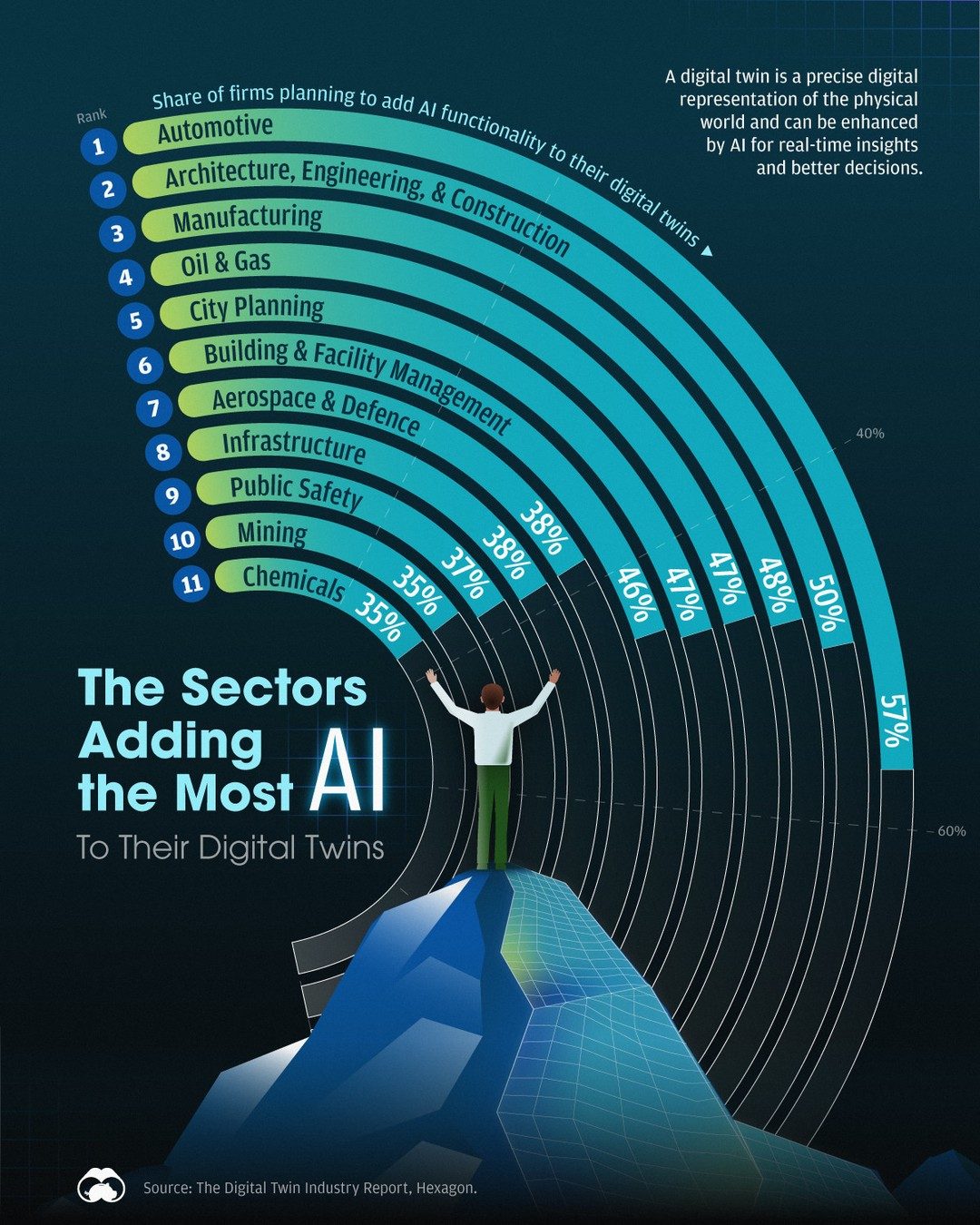
AI-driven digital twins are revolutionizing industries by providing virtual replicas of physical systems, assets, or environments. These digital counterparts help optimize production, enhance safety testing, and improve overall efficiency through advanced simulations. According to a survey by Hexagon, over half of the automotive industry executives plan to integrate AI into their digital twins, highlighting a significant shift towards leveraging AI for operational improvements.
Context: Why This Matters
Digital twins are increasingly crucial in today's industrial landscape. They enable organizations to create detailed, real-time models of physical assets, allowing for more accurate predictions, better decision-making, and enhanced performance. By incorporating AI, these digital twins become even more powerful, capable of learning from data and adapting to changing conditions. This makes them invaluable for sectors looking to stay competitive and innovative.
Main Discussion
Understanding Digital Twins
Digital twins are virtual representations that mimic the behavior of physical objects or processes. Essentially, they allow companies to test, optimize, and predict outcomes in a digital environment, reducing the need for costly and time-consuming physical trials. By integrating AI, these digital replicas can analyze vast amounts of data, identify patterns, and make autonomous decisions. This convergence of digital twin technology and AI is driving a new era of industrial automation and efficiency.
Key Industries Embracing AI-Driven Digital Twins
Automotive
According to the survey, the automotive sector is at the forefront of AI adoption in digital twins, with 46% of executives planning to integrate AI. This focus on AI-driven digital twins allows automotive companies to simulate various production scenarios, optimize supply chains, and test vehicle designs for safety and performance. The virtual environment also facilitates the rapid prototyping of new vehicle models, which can significantly reduce time-to-market.
Chemicals
The chemicals sector leads the way with 57% of executives planning to use AI in their digital twins. This high adoption rate is likely due to the complex and hazardous nature of chemical processes. AI-driven digital twins provide a safe and cost-effective way to simulate chemical reactions, optimize production processes, and ensure compliance with safety regulations. This technology can also help in predicting equipment failures and maintenance needs, thus minimizing downtime.
Other Sectors
Other industries are also recognizing the benefits of AI-driven digital twins. The architecture, engineering, and construction (AEC) sector, for example, uses these digital replicas to simulate building designs, optimize structural integrity, and manage project timelines. Similarly, the public safety sector can leverage AI-driven digital twins to simulate emergency response scenarios, planning and training for real-world events.
The Role of AI in Digital Twins
AI enhances digital twins by providing advanced analytics, machine learning, and predictive capabilities. These technologies enable digital twins to learn from operational data, adapt to changes, and continuously improve their performance. AI can also help in:
- Predictive Maintenance: By analyzing sensor data from physical assets, AI can predict equipment failures and schedule maintenance before issues arise, reducing downtime and repair costs.
- Optimization: AI algorithms can optimize processes by identifying inefficiencies, suggesting improvements, and simulating the impact of changes in a virtual environment.
- Quality Control: AI-driven digital twins can simulate various scenarios to ensure product quality, reducing the need for physical testing and minimizing waste.
Practical Tips for Adopting AI-Driven Digital Twins
1. Identify Key Use Cases
Start by identifying the key areas where digital twins can provide the most value. This could be in production optimization, safety testing, or supply chain management. Clearly define your objectives and the expected outcomes.
2. Invest in the Right Technology
Select the right technology stack that supports AI integration. This includes sensors for data collection, powerful computing resources for data processing, and robust AI algorithms for analysis and decision-making.
3. Foster a Culture of Innovation
Encourage a culture that embraces new technologies and continuous improvement. Training your workforce to understand and leverage AI-driven digital twins is crucial for successful implementation.
4. Ensure Data Integrity
High-quality data is essential for the effectiveness of AI-driven digital twins. Implement robust data management practices to ensure data accuracy, completeness, and reliability.
5. Collaborate with Experts
Consider partnering with experts in digital twin technology and AI. Collaborations can provide valuable insights and expertise, helping you navigate the complexities of adoption and implementation.
Important Takeaways
AI-driven digital twins are transforming industries by providing powerful, predictive, and adaptive virtual models of physical assets. Key sectors like automotive and chemicals are leading the way in adopting this technology, recognizing its potential to optimize operations, enhance safety, and drive innovation. By integrating AI, digital twins become smarter and more effective, offering significant benefits across various industries.
Conclusion
The adoption of AI-driven digital twins is a significant trend across multiple sectors. As companies recognize the benefits of leveraging virtual replicas of physical systems, the integration of AI further enhances their capabilities, making them indispensable tools for optimization, safety, and innovation. Whether in the automotive, chemical, or any other sector, AI-driven digital twins are set to revolutionize the way industries operate, enabling them to stay competitive and efficient in an ever-evolving landscape.
Watch the Reel
Questions readers ask
What are AI-driven digital twins and how do they benefit industries?
AI-driven digital twins are virtual replicas of physical systems, assets, or environments created using artificial intelligence. They benefit industries by enabling real-time optimization, enhancing safety through virtual testing, and improving overall efficiency. This technology allows for better decision-making and accurate predictions, making it a valuable tool for various sectors.
Why are AI-driven digital twins particularly important in the automotive industry?
In the automotive industry, AI-driven digital twins help simulate production scenarios, optimize supply chains, and test safety features virtually. This not only improves efficiency but also reduces the need for physical prototypes, saving time and resources. The technology is increasingly being adopted by automotive executives to enhance their production processes.
How does AI integration in digital twins improve industrial efficiency?
AI integration in digital twins enhances industrial efficiency by providing real-time data and simulations. This allows for continuous improvement, better resource allocation, and faster response to issues. Industries can run numerous scenarios to find the most efficient processes without disrupting actual operations, leading to significant efficiencies.
What role do digital twins play in improving safety in industrial settings?
Digital twins allow for comprehensive safety testing in a virtual environment before implementing changes in the physical world. This helps identify and mitigate potential risks, reducing the likelihood of accidents and ensuring a safer work environment. By simulating hazardous scenarios, industries can develop and test safety protocols more effectively.
What are some key industries adopting AI-driven digital twin technology?
Key industries adopting AI-driven digital twin technology include the automotive, aerospace, and chemical sectors. These industries leverage digital twins for real-time optimization, improved production planning, and supply chain management. The technology's ability to create detailed, dynamic virtual replicas makes it highly beneficial for these complex and safety-critical sectors.
How can AI-driven digital twins optimize supply chain management?
AI-driven digital twins optimize supply chain management by enabling real-time monitoring and simulation of processes, from production to delivery. This allows for more accurate demand forecasting, better inventory management, and proactive issue resolution. By continuously analyzing data, digital twins can identify bottlenecks and suggest improvements, leading to a more efficient and responsive supply chain.
What are the latest trends in AI-driven digital twin technology?
The latest trends in AI-driven digital twin technology include increased integration of real-time data, more advanced simulations, and broader adoption across various industries. Executives are increasingly focusing on leveraging AI for real-time optimization, supply chain improvements, and enhanced safety testing. The market is also seeing a rise in the use of digital twins for predictive maintenance and asset management.
Related deep dives
Similar reads based on topic and creator.


Recent articles
Fresh deep dives from the latest Reels we unpacked.




Comments
Be the first to comment.