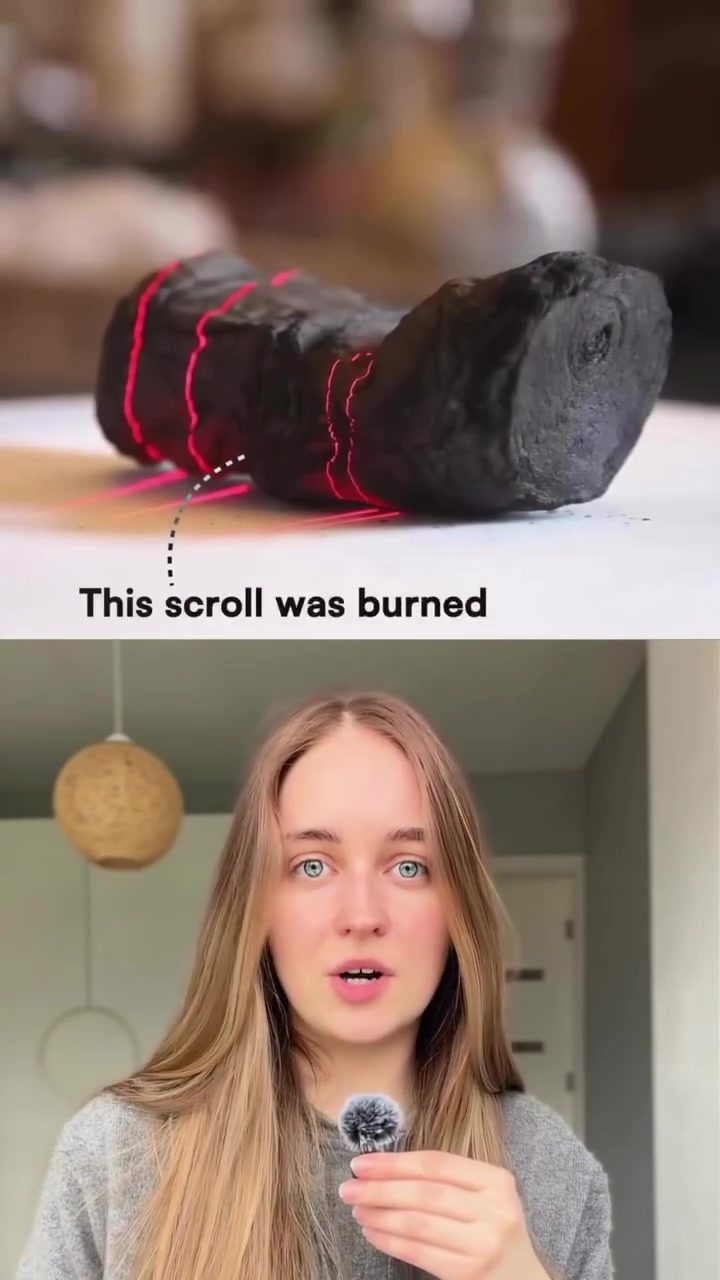
Ancient Texts Unveiled: AI and 3D Printing Revolutionize Archaeology
The intersection of cutting-edge technology and ancient history has led to a groundbreaking advancement in how we read and interpret historical artifacts. Recent innovations in 3D printing and AI have enabled researchers to virtually unroll and decode texts from scrolls that have remained unreadable for nearly 2,000 years. This remarkable achievement not only sheds light on previously inaccessible ancient texts but also sets a new precedent for preserving and studying fragile historical artifacts.
VIRTUAL UNROLLING AND 3D PRINTING: A REVOLUTION IN ARCHAEOLOGY
The most exciting developments in this field revolve around the use of 3D printing and AI to virtually unroll and read ancient scrolls. This technique has been particularly impactful for scrolls that were damaged or charred during the eruption of Mount Vesuvius in 79 AD. The eruption buried a Roman villa and scorched an entire library of scrolls, making them unreadable for centuries. Traditional methods of unrolling these scrolls caused the brittle layers to disintegrate, but new advancements have changed the game.
TECHNOLOGICAL INNOVATIONS IN READING ANCIENT SCROLLS
The process used to read these scrolls involves high-resolution x-rays and AI. Researchers are able to virtually unroll the scrolls, revealing hidden texts without ever physically touching the fragile artifacts. This innovative technique has been successfully applied to a scroll that was burned into solid charcoal. The AI was able to detect faint traces of ancient ink that are invisible to the naked eye, effectively picking out the text from the charred layers.
This breakthrough was powered by the Vesuvius Challenge, a global contest launched in 2023. The challenge has paid teams hundreds of thousands of dollars to develop technology capable of reading these scrolls. It built on a groundbreaking discovery by computer scientist Brent Seals, who proved that machine learning could detect ink hidden inside layers by spotting tiny differences in the fibers.
THE IMPORTANCE OF STOICISM IN ANCIENT TEXTS
The text revealed from the virtually unwrapped scroll is about Stoicism, a philosophical movement that originated in ancient Greece. It is believed to be written by an ancient Greek philosopher, offering insights into the philosophical thoughts of the period. The ability to read this text without damaging the artifact is a significant advancement in the field of archaeology, as it allows researchers to delve into historical texts without the risk of degradation.
Researchers hope that this technique will be used to read other buried scrolls, revealing more about ancient societies and philosophies. The development of this technology is a testament to the potential of 3D printing and AI in transforming how we interact with and understand historical artifacts. The ability to virtually unroll and read these scrolls is a major step forward in preserving and interpreting ancient texts.
THE FUTURE OF 3D PRINTING AND AI IN ARCHAEOLOGY
The successes of 3D printing and AI in archaeology are far-reaching. These technologies not only allow for the reading of ancient texts but also for the creation of intricate and layered designs. Researchers are actively involved in developing new techniques that can be used to uncover more hidden artifacts.
3D printing technology, in particular, has the capability to create complex and intricate structures. This makes it a valuable tool for reproducing artifacts and recreating historical settings. With further advancements, 3D printing and AI could revolutionize the way we study and interpret ancient texts, leading to new discoveries and a deeper understanding of our past.
PRACTICAL TIPS FOR DEVELOPING AND APPLYING AI TECHNOLOGIES
As these technologies continue to evolve, it is important to understand how to effectively develop and apply them. Here are some practical tips:
INVEST IN RESEARCH AND DEVELOPMENT
Investing in research and development is crucial for advancing these technologies. Funding global contests like the Vesuvius Challenge can encourage innovation and drive progress in the field. Collaborating with experts in machine learning and 3D printing can also lead to breakthroughs that push the boundaries of what is possible in archaeology.
COLLABORATE WITH EXPERTS
Collaboration with experts in various fields can provide valuable insights and expertise. Working with computer scientists, historians, and archaeologists can help develop techniques that are both technologically advanced and historically accurate. This interdisciplinary approach can lead to more effective and comprehensive solutions.
LEVERAGE OPEN SOURCE TECHNOLOGIES
Leveraging open-source technologies can make these advancements more accessible and affordable. Open-source tools and software can be adapted and improved upon by a global community of developers, driving innovation and progress in the field.
IMPORTANT TAKEAWAYS
This breakthrough in using AI and 3D printing to read ancient scrolls marks a significant milestone in the field of archaeology. Here are some key takeaways:
-
Preservation of Fragile Artifacts: The ability to virtually unroll and read ancient scrolls without damaging them is a major advancement in preserving fragile historical artifacts.
-
Revealing Hidden Texts: The use of machine learning to detect faint traces of ancient ink has revealed previously inaccessible texts, offering new insights into ancient philosophies and societies.
-
Innovative Techniques: The development of new techniques for reading and interpreting hidden artifacts is a testament to the potential of 3D printing and AI in transforming how we interact with and understand historical artifacts.
-
Future Potential: The advancements in 3D printing and AI in archaeology have the potential to lead to new discoveries and a deeper understanding of our past, paving the way for further innovations.
Conclusion
The recent advancements in 3D printing and AI are revolutionizing the way we study ancient texts and artifacts. These technologies not only allow for the reading of previously inaccessible ancient texts but also for the creation of intricate and layered designs. As these technologies continue to evolve, they hold the promise of unlocking even more hidden treasures from the past, providing new insights and a deeper understanding of our history. By investing in research, collaborating with experts, and leveraging open-source technologies, we can continue to push the boundaries of what is possible in the field of archaeology.
Watch the Reel
Questions readers ask
How does AI help in reading ancient scrolls that have been damaged over centuries?
AI assists in reading ancient scrolls by analyzing high-resolution images and virtually unrolling the scrolls without harming the fragile artifacts. This enables researchers to decode hidden inscriptions that were previously inaccessible due to the damage.
What role does 3D printing play in the study of ancient scrolls?
3D printing allows researchers to create physical models of the scrolls, which can be studied in detail. These models are crafted based on the data obtained from virtual unrolling, providing a tangible way to analyze the scrolls without risking further damage to the original artifacts.
What are the Mount Vesuvius scrolls and why are they significant?
The Mount Vesuvius scrolls are ancient texts preserved by the eruption of Mount Vesuvius in 79 AD. They are significant because they offer unique insights into the daily life and culture of ancient Roman society. However, due to their charred and fragile condition, they have long remained unreadable until recent advancements in AI and 3D printing.
How does the process of virtually unrolling scrolls work?
Virtual unrolling involves using high-resolution imaging to capture detailed images of the scrolls. AI algorithms then analyze these images, reconstructing the scroll's layers and decoding the text. This process allows researchers to read the scrolls without physically manipulating them, preserving their integrity.
What new insights can be gained from reading these ancient scrolls?
By reading these ancient scrolls, researchers can gain new insights into ancient history, culture, and society. The texts may contain previously unknown information about literature, philosophy, and daily life, enriching our understanding of the past.
What are the benefits of using AI and 3D printing in archaeology?
AI and 3D printing in archaeology offer several benefits, including the ability to decode fragile and damaged artifacts without causing further harm, creating detailed replicas for study, and revealing hidden inscriptions that were previously inaccessible. This technology opens new avenues for understanding ancient history.
Related deep dives
Similar reads based on topic and creator.


Recent articles
Fresh deep dives from the latest Reels we unpacked.

Comments
Be the first to comment.