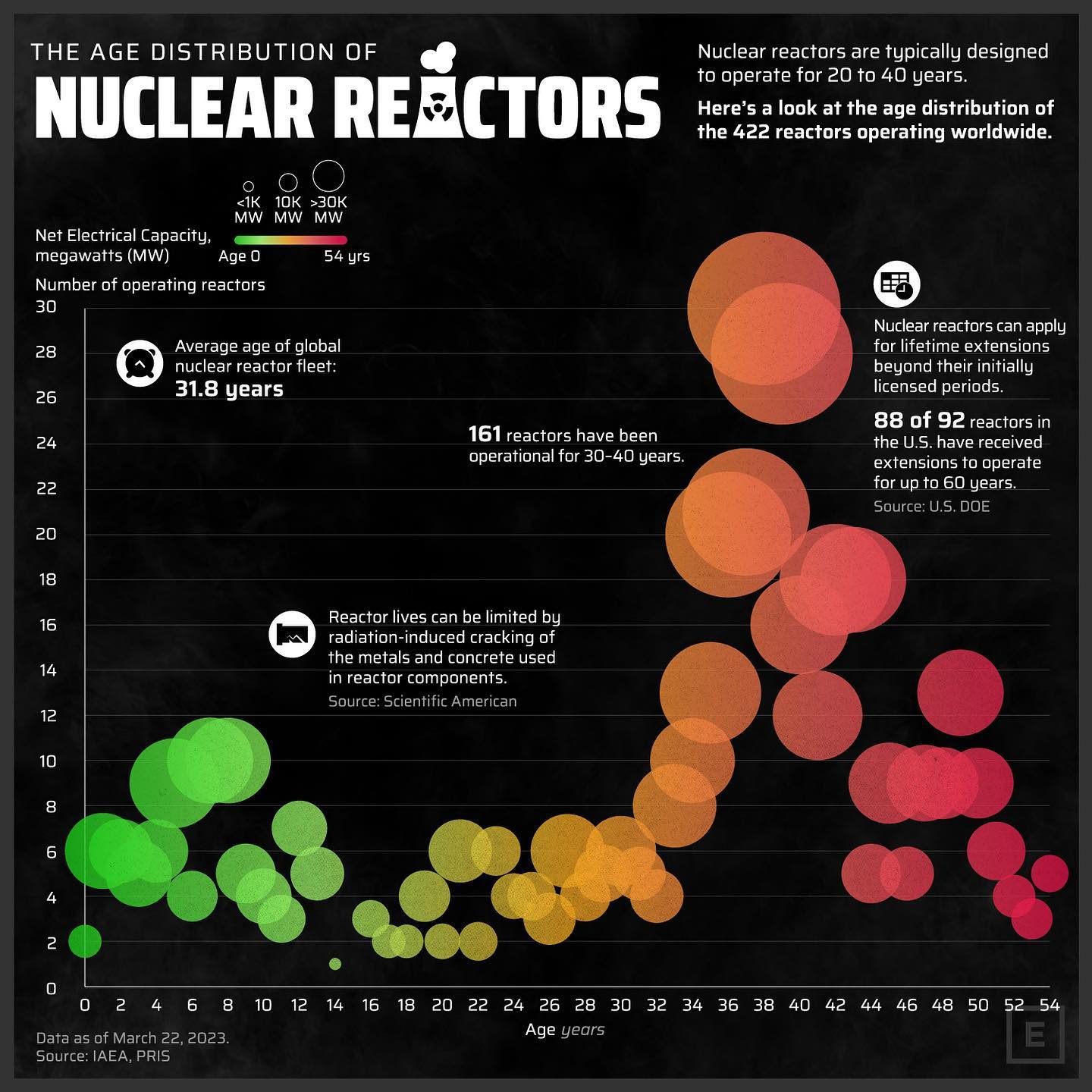
Nuclear Reactor Age Distribution
Nuclear reactors around the world have a varied age distribution, with many nearing or exceeding their initial operational lifespan. Understanding the age distribution of these reactors is crucial for evaluating the current state of nuclear power generation and planning for future energy needs.
Context / Why this matters
Nuclear power experienced a slowdown in growth at the turn of the 21st century, but recent years have seen a resurgence of interest in nuclear energy. This renewed interest is driven by the need for reliable, low-emission power sources. Nuclear reactors are designed to operate for decades, typically licensed for 20 to 40 years, and can last even longer with license renewals. This longevity is a significant factor in the economic and operational planning of nuclear power plants.
Age Distribution and Operating Conditions
Global Nuclear Reactor Fleet
The world's current nuclear reactor fleet has an average age of 31.8 years. This reflects a mix of older reactors that have been operational for several decades and newer ones that have come online more recently. The age distribution of these reactors is an essential indicator of the overall health and stability of nuclear energy production.
Reactors Operational for 30-40 Years
A significant number of reactors, 161 to be precise, have been operational for 30 to 40 years. This group represents a substantial portion of the global nuclear fleet and includes many reactors that have undergone or are scheduled for extensive maintenance and safety upgrades. These reactors are critical for maintaining current power generation levels and ensuring a stable energy supply.
Lifetime Extensions and Aging Reactors
The United States has taken a proactive approach to managing its aging nuclear fleet. 88 of the 92 reactors in the U.S. have received lifetime extensions, allowing them to operate for up to 60 years. These extensions are granted after rigorous safety assessments and upgrades, ensuring that the reactors can continue to operate safely and efficiently. This practice is becoming more common in other countries as well, reflecting a broader trend towards extending the operational lifespan of existing reactors.
Factors Limiting Reactor Lifespan
Reactor lifespans can be limited by various factors, including radiation-induced cracking of the metals and concrete used in reactor components. This degradation can compromise the integrity and safety of the reactor, making regular inspections and maintenance critical. Advanced materials and technologies are being explored to mitigate these issues and extend the operational lifespan of reactors further.
Practical Tips for Managing Aging Nuclear Reactors
Regular Inspections and Maintenance
Regular inspections and maintenance are essential for managing aging nuclear reactors. These activities help identify and address potential issues before they become significant problems. Advanced inspection techniques, such as non-destructive testing, can provide detailed information about the condition of reactor components without disrupting operations.
Safety Upgrades and Modernization
Safety upgrades and modernization are critical for extending the lifespan of aging reactors. These improvements can include enhanced safety systems, better monitoring technologies, and the use of advanced materials. Modernization efforts help ensure that reactors can operate safely and efficiently for extended periods.
Advanced Materials and Technologies
Using advanced materials and technologies can significantly enhance the longevity and safety of nuclear reactors. Materials resistant to radiation-induced cracking and advanced monitoring systems can provide better protection and more reliable performance. Research and development in this area are ongoing, with the goal of improving reactor performance and safety.
License Renewals and Extensions
License renewals and extensions are crucial for maintaining the operational lifespan of nuclear reactors. These processes involve thorough safety assessments and upgrades to ensure that reactors can continue to operate safely. Engaging with regulatory bodies and stakeholders is essential for a smooth and successful renewal process.
Important Takeaways
Understanding the age distribution of nuclear reactors worldwide is vital for planning future energy needs and ensuring the safety and reliability of nuclear power. With a significant number of reactors approaching the end of their initial operational lifespan, proactive management and modernization efforts are crucial. The United States' approach to lifetime extensions and safety upgrades serves as a model for other countries looking to maintain their nuclear fleets.
Conclusion
The age distribution of the world's nuclear reactor fleet highlights the need for ongoing management and modernization. By addressing the challenges associated with aging reactors and implementing advanced technologies, it is possible to extend their operational lifespan and ensure a stable and reliable supply of nuclear energy. This approach not only supports current energy needs but also paves the way for a sustainable energy future.
Watch the Reel
Questions readers ask
What is the typical operational lifespan of a nuclear reactor?
Nuclear reactors are typically designed and initially licensed to operate for 20 to 40 years. However, many reactors have received lifetime extensions, allowing them to continue operating safely for longer periods.
How does the age distribution of nuclear reactors impact global energy stability?
The age distribution of nuclear reactors is a key factor in planning for future energy stability. As many reactors near the end of their initial operational lifespan, understanding this distribution helps in determining when and where new reactors may be needed to maintain consistent power generation.
Which countries have the most nuclear reactors nearing the end of their operational lifespan?
While the article does not specify countries, it mentions that many reactors in the U.S. have received lifetime extensions. This implies that a significant number of reactors in the U.S. are approaching or have surpassed their initial operational lifespan.
What is the significance of nuclear reactor lifetime extensions?
Lifetime extensions allow nuclear reactors to continue operating safely beyond their original design life. This is important for maintaining current power generation capacity and for planning future energy needs, as it delays the need for new reactor construction.
How can visual data on nuclear reactor ages help in understanding global nuclear power generation?
Visual data, such as charts or graphs, can provide a clear overview of the age distribution of nuclear reactors worldwide. This information aids in assessing the current state of nuclear power generation and in making informed decisions about future reactor deployments and retirements.
Why has there been a renewed interest in nuclear energy in recent years?
The resurgence of interest in nuclear energy is primarily due to the need for reliable, low-emission power sources. This renewed interest is driving efforts to extend the lifespan of existing reactors and to build new ones.
Related deep dives
Similar reads based on topic and creator.


Recent articles
Fresh deep dives from the latest Reels we unpacked.




Comments
Be the first to comment.