Whales and Their Filter Feeding Technique
Whales are remarkable creatures, known for their immense size and fascinating behaviors. One of the most intriguing aspects of whale biology is their feeding mechanism. Many species of whales are filter feeders, using specialized structures called baleen plates to strain small prey from the water. This method allows them to consume large quantities of food efficiently, making it a critical adaptation for their survival.
Why this Matters
Understanding the feeding habits of whales is crucial for several reasons. Firstly, it helps us appreciate the intricate balance of marine ecosystems. Whales play a significant role in these ecosystems, and their feeding behaviors can influence the distribution and abundance of other marine life. Additionally, knowledge of whale feeding habits is essential for conservation efforts, as many whale species are threatened by human activities such as whaling, pollution, and climate change.
Main Discussion
Baleen Plates: The Anatomy of Filter Feeding
Baleen plates are the key to the filter-feeding mechanism of many whale species. These plates are made of keratin, the same material that makes up human hair and fingernails. They hang from the upper jaw of the whale, forming a curtain-like structure. When a whale opens its mouth to feed, water flows in, and the baleen plates act as a sieve, trapping small fish, krill, and plankton while allowing the water to flow out.
The Process of Filter Feeding
The process of filter feeding involves several steps. First, the whale opens its mouth wide and takes in a large volume of water. As the water flows in, the baleen plates trap the prey. The whale then closes its mouth and pushes the water out through its baleen plates, leaving the prey inside. This process is repeated multiple times to ensure the whale gets enough food.
The Role of Prey
The prey that whales feed on varies depending on the species and location. Common prey items include small fish, krill, and plankton. These organisms are abundant in the ocean, providing a sustainable food source for whales. The prey's density and distribution can influence the whale's feeding patterns and migration routes.
The Visual Impact
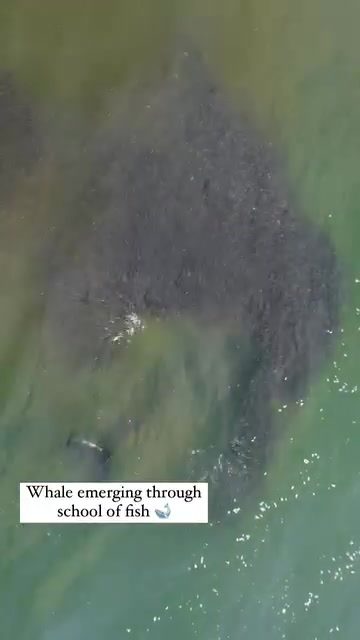
Viewing a whale emerging from the water, especially when surrounded by a school of fish, is a visually striking experience. This behavior not only showcases the whale's power and grace but also highlights the complexity of marine ecosystems. The disturbance created by the whale's emergence can be seen from an aerial view, giving a unique perspective on the interaction between the whale and its environment.
The Importance of Conservation
Given the critical role that whales play in marine ecosystems, it is essential to prioritize their conservation. Threats such as whaling, pollution, and climate change can disrupt the delicate balance of these ecosystems. Efforts to protect whale habitats, reduce pollution, and mitigate climate change are crucial for ensuring the survival of these magnificent creatures.
Practical Tips
How to Observe Whales Responsibly
If you have the opportunity to observe whales in their natural habitat, it is essential to do so responsibly. Here are some practical tips:
- Maintain a safe distance: Use binoculars or a telephoto lens to observe whales from a distance. Avoid getting too close, as this can disturb the whales and their natural behaviors.
- Follow guidelines: If you are on a whale-watching tour, follow the guidelines provided by the tour operator. These guidelines are designed to ensure the safety and well-being of both the whales and the observers.
- Be aware of the environment: Pay attention to the surroundings and any potential hazards, such as rocks, waves, or other vessels. Always prioritize safety.
Supporting Conservation Efforts
Supporting conservation efforts is another practical way to help protect whales. This can include:
- Donating to organizations: Consider donating to organizations that work to protect whales and their habitats. These organizations often rely on public support to fund their conservation efforts.
- Volunteering: If you have the time and skills, volunteering for a whale conservation organization can be a rewarding experience. This can involve tasks such as data collection, habitat restoration, or public outreach.
- Reducing your carbon footprint: Climate change is a significant threat to marine ecosystems. By reducing your carbon footprint, you can help mitigate the impacts of climate change on whales and other marine life.
Important Takeaways
- Whales use baleen plates to filter feed, trapping small prey while allowing water to flow out.
- Filter feeding is a crucial adaptation for many whale species, enabling them to consume large quantities of food efficiently.
- The process of filter feeding involves taking in water, trapping prey, and expelling the water.
- The prey that whales feed on varies depending on the species and location.
- Viewing a whale emerging from the water is a visually striking experience that highlights the complexity of marine ecosystems.
- Conservation efforts are essential for protecting whales and their habitats.
- Responsible whale observation and supporting conservation efforts are practical ways to help protect whales.
Conclusion
Whales are fascinating creatures with unique adaptations that allow them to thrive in marine environments. Their filter-feeding mechanism, using baleen plates to strain small prey from the water, is a testament to the intricate balance of marine ecosystems. Understanding and appreciating these behaviors is essential for conservation efforts and ensuring the survival of these magnificent creatures. By observing whales responsibly and supporting conservation efforts, we can all play a role in protecting these incredible animals and their habitats.
Watch the Reel
Questions readers ask
How do whales use baleen plates for feeding?
Whales employ baleen plates to filter small prey from water. These plates act like a sieve, allowing water to pass through while trapping small fish, krill, and other tiny organisms. This efficient mechanism lets them consume vast amounts of food with minimal effort.
What types of prey do whales typically consume?
Whales primarily feed on small prey such as krill, small fish, and other tiny marine organisms. Their diet is largely composed of these small creatures, which they capture using their efficient filter-feeding mechanism.
How does whale feeding behavior impact marine ecosystems?
Whale feeding behaviors significantly influence marine ecosystems. By consuming large quantities of small prey, whales help control the populations of these organisms, which in turn affects the balance of the ecosystem. Their feeding habits also contribute to nutrient cycling, as they distribute nutrients through their waste.
What is the significance of whales surfacing with fish?
When whales surface with fish, it often indicates successful feeding events. This behavior can provide insights into their feeding patterns and the health of marine ecosystems. Observing these interactions helps researchers understand the dynamics between whales and their prey.
How do baleen plates differ from teeth in whale feeding?
Baleen plates are unique to whales and are composed of keratin, the same material as human hair and nails. Unlike teeth, baleen plates are used for filtering small prey from water, allowing whales to consume large quantities of tiny organisms efficiently.
What role do plankton play in the diet of whales?
Plankton, including krill and other small organisms, are a primary component of the whale diet. Whales consume vast amounts of plankton, which provides essential nutrients. This consumption is a critical part of the marine food web, as it helps regulate plankton populations and supports the health of ocean ecosystems.
How do whales adapt their feeding mechanisms to different prey types?
Whales adapt their feeding mechanisms based on the type and availability of prey. For instance, some whales employ lunge feeding to capture large schools of fish, while others use skimming or gulp feeding for smaller organisms. This adaptability ensures they can thrive in various marine environments.
Related deep dives
Similar reads based on topic and creator.




Recent articles
Fresh deep dives from the latest Reels we unpacked.




Comments
Be the first to comment.