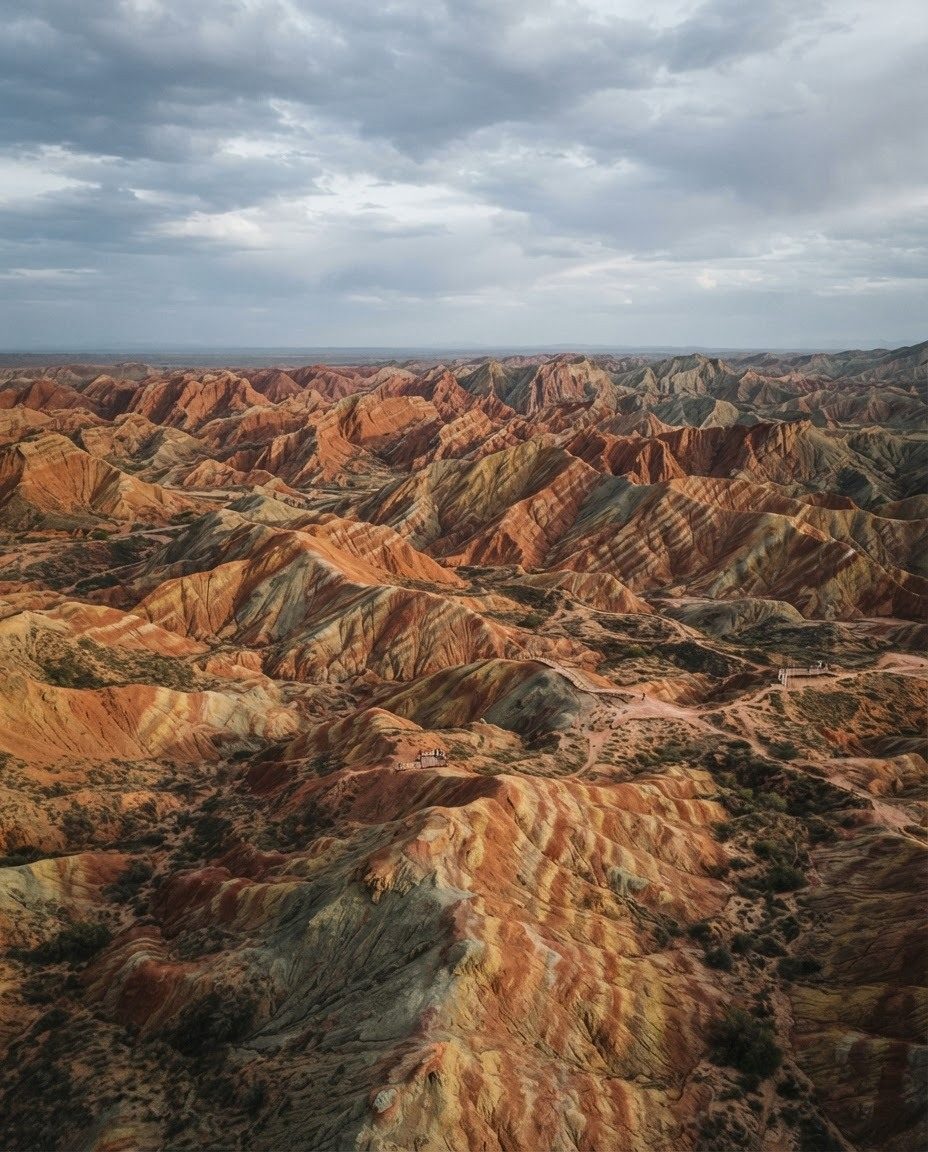
Geological Wonder
The Grand Canyon, Arizona’s world-renowned natural wonder, is celebrated for its panoramic wilderness, geologic history, and geological formations. More than 2 billion years of Earth’s geological history has been revealed in the vibrant striped layers of red, orange, yellow, and green. The distinct bands of color are called the Grand Canyon Supergroup — this individually distinctive component is split into several layers, with each layer representing a different geological formation from a particular period. The Supergroup’s lower layer is the Unkar Group, a formation believed to date back 1.2 billion years, the topmost layer of the Bright Angel Group, which dates back 525 million years. Roughly 70 million years ago, the Colorado River cut through this landscape and formed the canyon. The different hues and shades are due to the different minerals that make up each layer. Shades of red and orange occur where there is a higher iron concentration. The pale layer is probably limestone, while the darker layer is probably shale. These layers are are well preserved for several reasons. One major reason is that it lies in a desert where nothing is growing to erode the soil.
Tableaux vs. Geological Structure
A landscape can capture attention and amaze people but when it offers the opportunity to show how the Earth has changed over time and the evidence of what was changed, the landscape is transformed from a mere pretty tableau to an invaluable tool. The canyon is composed of many layers of rock, each with a different mineral composition. These layers were formed over millions of years, and each layer tells a different story about the Earth at that time. Thanks to the rock layers, we can learn about the climate and weather changes of ancient Earth.
Stratigraphic Order
Stratigraphic layers are roughly horizontal. In areas of the canyon, the layers can be straight, haphazard, or draped. The erosion can reveal the ancient story of Earth. Many of the canyon’s rock formations have been tilted; fractured or folded, or distorted in some other way. The erosion unveils the many different unalike layers. The Grand Canyon is the perfect example of the law of superposition, which asserts that in an undisturbed sequence of strata, the lowest layers are the oldest and the highest layers are the youngest. The Grand Canyon Supergroup is uplifted and eroded by the Colorado River, but the strata were deposited in horizontal layers over hundreds of million years.
Resonant Echos
The Grand Canyon captures the imagination and resonates with visitors through the canyon’s visual grandeur. The Colorado River flows 277 miles (446 km) through the canyon, swinging through the landscape like a ribbon, often appearing to tap into the horizon. The iconic Grand Canyon National Park has welcomed more than 5 million visitors yearly, many of whom are thrilled to see the majesty of the layered canyon landscape.
Watch the Reel
Related deep dives
Similar reads based on topic and creator.




Recent articles
Fresh deep dives from the latest Reels we unpacked.


Comments
Be the first to comment.